Learn more about animal behaviour and training
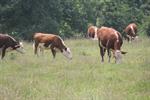 Understand what motivates an animal to behave in a certain way can help the animal handler to adapt his management procedures to benefit the animal and the handler. This understanding will help reduce the stress in human-animal relationships.
- Learn about motivation, animal perception and behaviour.
- Learn about environmental impacts on animal behaviour.
- This course is relevant to pet owners, veterinary assistants, or people who work with animals on farms, zoos, pet shops and trainers.
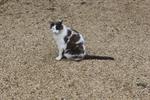 Animal behaviour provides a foundation for animal training, or more generally, animal care. It also provides very real insights and a foundation for understanding human behaviour.
This course focuses 75% on understanding how animals think. The remainder has more of a practical application, looking at things such as training, handling and dealing with abnormal behaviours.
COURSE STRUCTURE AND CONTENT
Course Duration: 100 hours.
Start Date: You can start our Animal Behaviour course at any time - study at a pace that suits you, and with full tutor support for the duration of your studies.
Lessons: The course comprises 8 lessons as detailed, below.
1. Introduction: Influences and motivation
- What is behaviour.
- Causes of behaviour (e.g. genetics, learning, external and internal influences).
- Reactive, active and cognitive behaviour.
- Conditioning.
2. Genetics and Behaviour
- Understanding biology.
- Natural selection.
- Genetic variation.
- Development of behaviour.
- Behavioural genetics.
3. Animal Perception and Behaviour
- How animals perceive things.
- What stimulates them and how do those stimuli function.
- Instinct.
- Neural control.
- Sensory processes, sight, sound, hearing etc.
4. Behaviour and the Environment
- Coordination.
- Orientation.
- Homeostasis.
- Acclimatisation.
- Circadian rhythms.
- Biological clocks.
- Reproductive cycles etc.
5. Social Behaviour
- Animal Societies.
- Aggression.
- Social constraints.
- Social order.
- Play.
- Biological clocks.
- Communication.
6. Instinct and Learning
- Conditioning and learning.
- Extinction and habituation.
- Instrumental learning.
- Reinforcement.
- Operant behaviour.
- Biological and cognitive aspects of learning.
7. Handling Animals
- Psychological affects of different handling techniques.
- Training animals (horses, cats, dogs, etc.).
- The student has a choice of which types of animals to focus on, though a variety will still be covered.
8. Behavioural Problems
- Abnormal behaviour (e.g. psychotic, neurotic).
- Domestication of animals.
- Reducing human contact.
- Reducing human dependence.
WHY STUDY ANIMAL BEHAVIOUR?
It is assumed that all animal behaviour is an adaptation designed to support survival, either directly or indirectly. However, this is not always the case. Animals can behave self-destructively, out of habit, or out of boredom, just as humans can. When you understand animals, you then have a foundation for handling or training them. To better understand the behaviour, we should also consider what motivates it.
What Motivates Behaviour?
Genetics is of prime importance (i.e. inherited characteristics). Genetic characteristics are also sometimes referred to as “inborn”, “innate” or “instinctive”. Most animals are genetically programmed to act in certain ways in certain situations.
Experience (i.e. learned characteristics). Experience may encompass terms including: “acquired”, “experiential” or “environmental”. Behaviours can be learned through the experience of interacting with the environment (which includes the people or other creatures in it), or it can be learned through personal, subjective experience (perceptions, thoughts and feelings). In the case of animals, these latter factors are usually difficult to identify.
Since genetic and environmental factors both influence behaviour, it is impossible to distinguish particular causes for a behaviour. Particularly in regard to animals, no behaviour can ever be characterised as totally instinctive or totally learned. Even though learned and genetic factors both play a role in all behaviours, the relative significance of each is variable.
Some behaviours in animals can be relatively unlearned and therefore, almost impossible to modify. In such cases, we can determine that genetics is the major influence. Other behaviours are relatively easy to modify, thus mostly learned. In such cases, we can determine that genetics has a minor influence.
Kinds of Behaviour
Three general categories of behaviour are reactive behaviours, active behaviours, and cognitive behaviours.
Reactive Behaviour
Reactive behaviour includes stereotypic behaviour which is largely automatic. These are the most primitive types of behaviours which have been fully established in the animal well before it is born. Animal tropisms (automatic orientation responses) such as balancing and positioning are reactive behaviours. Other tropisms include things such as breathing, avoiding heat or opening the eyes.
Active Behaviours
Active behaviours are developed from inherited potentials. The animal is born with a tendency to act a certain way, but a degree of learning must occur for that behaviour to develop. The process is a little like a computer which delivers pre-programmed responses on demand; the way to act might be built into the animal’s genetic make-up, but it requires a certain stimulus before the action happens. These behaviours in part occur through parental training (e.g. flying, walking, grooming). This is a more elaborate type of behaviour than reactive behaviour. It is believed to occur only in more advanced animals (i.e. arthropods and vertebrates), though there is some evidence that lower order animals can also learn behaviour.
Cognitive Behaviours
Cognitive behaviours are the most advanced forms of behaviour. Genetics provides only a very general influence, and the actual behaviour is more influenced by the environment and experience. Cognitive behaviour is more or less “deliberate” activity. The animal doesn’t just respond to stimuli, it can also “invent” its own actions. Simple cognitive behaviours are encountered in many (but not all) arthropods, and all vertebrates.
Exploration is a simple cognitive behaviour which allows an animal to familiarize itself with new conditions in the environment. Objects are approached, inspected and then moved away from. This action is generally repeated, but with reduced frequency. The most complex environmental factors tend to stimulate the greatest exploratory activity. If mammals are prevented from exploration for long periods, their behaviour can become abnormal.
Play is a more advanced type of cognitive behaviour which occurs to some degree in most vertebrates; but more so in mammals. Play may involve more complex and diverse activity than exploration. Play and exploration together help animals adapt to both their physical and social environment. Lack of play in young animals can lead to social problems later in life (i.e. they make poor parents or don’t react well with other animals). Another more complex cognitive behaviour seen in mammals is manipulative behaviour.
HOW THE COURSE WORKS
You can start the Animal Behaviour course at any time.
It is studied by distance learning, so you can study in the comfort of your own home. But this doesn't mean you are all alone in your studies. Our highly qualified and friendly tutors are there to help you every step of the way. If you have any questions at all, they are always happy to help.
Each lesson includes set tasks, and is completed with an assignment which the student submits to their course tutor. The tutor will mark the assignment and return this to the student with comments and suggestions for further reading.
THE ADVANTAGES OF STUDYING WITH ACS
- Our courses are written and taught by experienced professionals, so you know you can expect a high quality of teaching and support.
- You can start the course at any time and study at your own pace.
- Fit your studies around your own busy lifestyle - we provide full tutor support for all the time you are studying.
- Study where you want to - online studies offer the flexibility for you to determine where and when you study.
Why Study This Course?
- The course will provide you with detailed knowledge and understanding of the way in which animals think and behave.
- You will gain insight into how to deal with negative behaviours, and how to train animals.
- The course can be studied at a time and location to suit you. It is flexible and convenient, fitting in with you and your lifestyle.
- Improve your job and career prospects in the field of animal behaviour and animal training.
The course is useful for -
- anyone who owns animals
- students wanting to work with animals
- students who already work with animals, but want to update and improve their knowledge of animal behaviour
QUESTIONS ?
If you have any questions at all about the course, please click to contact one of our Animal Behaviour Tutors.