Learn Dairy Cattle Husbandry Online
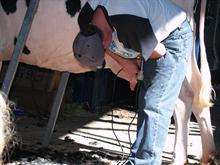 Understand the theory and practice of animal husbandry. Learn more about dairy breeds,dairy products,breeding,feeding and much more.
Understanding modern dairy production requires knowledge of -
- technology
- science
- animal husbandry
This is an excellent course for anyone wanting to improve their knowledge of dairy cattle or start to work in the dairy cattle industry.
COURSE STRUCTURE AND CONTENT
Course Duration: 100 hours.
Start Date: Start at any time - study at a pace that suits you, and with full tutor support for the duration of your studies.
Lessons: The course comprises 9 lessons as detailed, below.
Lesson 1. Dairy Breeds
Comparison of dairy breeds: the Ayrshire, Guernsey, jersey, Holstein – Friesian, A.F.S. (Australian Friesian Sahiwal), Illawarra, judging cattle: general appearance, dairy character, the udder.
Lesson 2. Dairy Products
The composition of milk: protein, lactose, ash, factors affecting the composition of milk: environmental and physiological factors.
Lesson 3. The Lactation Cycle
Explain the management of the lactation cycle in dairy cattle, on a farm property. The influence of the farmer on lactation, infertile cows, feeding, the milking shed, planning for feed- flow.
Lesson 4. Pests & Diseases of Dairy Cattle
Manage the wellbeing of a dairy cow, including consideration of its health and vigour, to optimise quality and quantity of production (Part a – pests & diseases), mastitis, correct treatment techniques, dry cow therapy, viral & bacterial diseases in cattle, disease types in cattle.
Lesson 5. Feeding Dairy Cattle
Manage the wellbeing of a dairy cow, consideration of its health and vigour, to optimise quality and quantity of production (Part b - nutrition), working out dairy rations, maintenance requirements for a dairy cow, the dairy ration, working out the cost of dairy rations.
Lesson 6. Managing Dairy Cattle
Manage general husbandry operations for the dairy cow, managing the heifer, age of breeding, management of the dairy cow, factors affecting the milk yield.
Lesson 7. Breeding Dairy Cattle
Explain the significance of animal breeding programs for milk production, selection, artificial selection, regression, disadvantages of inbreeding, performance testing, artificial insemination, ova transplants.
Lesson 8. Managing Dairy Facilities
Explain the management of the facilities, including buildings and machinery at a farm dairy, basic requirements of all dairies, cooling of milk, machine milking, components of a milking machine, choosing a system, different types of systems.
Lesson 9. Dairy Business Planning
Develop a business plan for the management of a dairy property, economics of dairying, business plan example.
LEARNING AIMS
Upon completion of the course, students will be able to:
- Select appropriate dairy breeds for different farming situations.
- Describe the different characteristics, including their nature and scope, of dairy products.
- Explain the management of the lactation cycle in dairy cattle, on a farm property.
- Manage general husbandry operations for the dairy cow.
- Manage the wellbeing of a dairy cow, including consideration of its health and vigour, to optimise quality and quantity of production.
- Explain the significance of animal breeding programs for milk production.
- Explain the management of the facilities, including buildings and machinery, at a farm dairy.
- Develop a business plan for the management of a dairy property.
WHAT THE DAIRY CATTLE COURSE COVERS
Here are just some of the things you will be doing:
- Distinguish between different breeds of dairy cattle.
- Evaluate the suitability of different dairy cattle breeds to a specified property, in a locality with which the learner is familiar.
- Select three appropriate dairy cattle breeds for each of four specified situations, with regard to - pasture varieties, climatic conditions (e.g. temperature and weather patterns), locality, market requirements for the product.
- Judge a dairy cow, using a standard score card, such as the dairy cow unified score card produced (and revised in 1982) by the Purebred Dairy Cattle Association.
- Describe the composition of milk, with reference to different characteristics, including - sediment, bacteria count, chemical impurities, somatic cell count, added water, flavour.
- Describe the lactation cycle of a dairy cow.
- List the farm husbandry factors which can influence the lactation cycle.
- Produce a log book record of management tasks carried out, over a period of 1 month, to control the lactation cycle in dairy cattle on a specified property.
- Compare the management of heifers with that of milking cows on a specified dairy farm.
- Describe the management of dairy cattle for meat production on a specified dairy farm.
- Evaluate a production system on a dairy farm, in a locality familiar to the learner.
- Develop a checklist for the signs of ill health, which should be routinely checked, in dairy cattle.
- Distinguish between a maintenance ration and production ration for a dairy cow.
- Prepare a collection of pasture plant species from two different dairy properties, and including - samples of plants (i.e. pressings of different plants in the pasture), comments on the suitability of the pasture for dairy cattle.
- Produce a twelve month plan to manage the vigour of dairy cattle, on a specified property, which includes - a list of disease management procedures, feed program variations throughout the year.
- List the minimum physical facilities required for a viable dairy farm.
- List factors affecting the siting of a dairy on a farm.
- Prepare a plan for the construction of dairy facilities on a specified site, including - sketch or concept plans of buildings, fencing surrounding buildings, and interior layout, a list of materials, a list of equipment to be installed, a schedule of construction tasks.
- Develop a profile of an ideal dairy farm site.
- Develop procedures for control of goods on a typical dairy farm, including - ordering, receipt, dispatch.
- Report on research, conducted by the learner from an information search, into innovations in the dairy industry.
- Prepare or evaluate a dairy farm budget for a specified property.
- Prepare or evaluate a dairy farm financial report for a specified property.
- Analyse marketing systems for marketing dairy products produced by a specified enterprise.
- Explain factors affecting sales of dairy products on a specified farm.
- Develop a business plan for a specified dairy property.
- Describe how the sale of dairy meat can be managed, in accordance with a business plan, while adhering to relevant regulations.
HOW THE COURSE WORKS
You can start the Dairy Cattle course at any time.
It is studied by distance learning, so you can study in the comfort of your own home. But this doesn't mean you are all alone in your studies. Our highly qualified and friendly tutors are there to help you every step of the way. If you have any questions at all, they are always happy to help.
Each lesson includes set tasks, and is completed with an assignment which the student submits to their course tutor. The tutor will mark the assignment and return this to the student with comments and suggestions for further reading.
STUDENT TESTIMONIAL
Just one of the many comments we receive from our Dairy Cattle students -
"(This course)... has given me confidence in that I can understand the farmers I will be dealing with as a vet."
H. Thorneycroft
WHY STUDY DAIRY CATTLE WITH ACS?
Our courses -
- high quality - they are developed, written and tutored by experienced dairy cattle professionals, with real world experience.
- flexible - you can study from anywhere in the world, work at your own pace and start at any time to suit you.
- offer choice - study online or by e-learning
- develop your career - you can also use this course as a stepping stone to higher qualifications, such as certificates and diplomas
WHO SHOULD STUDY THIS COURSE?
- Anyone wanting to work in the farming industry with dairy cattle
- Existing farm staff who want to improve their knowledge of dairy cattle
- Smallholders
- Farmers
- Anyone who needs knowledge of dairy cattle husbandry, such as vets, veterinary assistants, rescue workers
Really, anyone interested in gaining detailed and thorough knowledge of dairy cattle.
QUESTIONS?
If you have any questions at all, our Dairy Cattle tutors are more than happy to help.