Learn more about producing
High Quality Cut Flowers
- Start the Cut Flower Production course at any time, to suit you.
- Work with our highly experienced and well qualified tutors and learn more about good soils and nutrition, pest control, culture, greenhouse production, harvesting and post-harvesting.
Course Aim
To develop your technical and management skills for cut flower production.
COURSE STRUCTURE
There are 10 lessons as outlined below:-
1. Introduction to Cut Flower Production
- To develop a broad perspective on the nature and scope of the cut flower industry.
2. Soils & Nutrition
- Determine soil and nutrition requirements for cut flower growing
3. Cultural Practices
- Determine the cultural requirements for commercial production of a cut flower crop
4. Flower Initiation & Development
- Explain the physiological processes which affect flower development in plants
5. Pest & Disease Control
- Determine the cultural requirements for commercial production of a cut flower crop
6. Australian Natives & Related Plants
- Evaluate the suitability of different plants as cut flower crops
7. Greenhouse Culture
- Determine the cultural requirements for commercial production of a cut flower crop
8. Harvest & Post Harvest
- Determine harvest and post-harvest management practices for cut flower crop
9. Developing A Production Plan
- Develop a production plan for a cut flower crop
10. Export Marketing
- Develop a production plan for a cut flower crop
Each lesson culminates in an assignment which is submitted to the school, marked by the school's tutors and returned to you with any relevant suggestions, comments, and if necessary, extra reading.
SUMMARY OF COMPETENCIES DEVELOPED
On successful completion of the course you should be able to do the following:
- Explain the physiological processes which affect flower development in plants.
- Identify plant varieties suitable for commercial cut flower production.
- Evaluate the suitability of different plants as cut flower crops.
- Determine soil and nutrition requirements for cut flower growing.
- Determine the cultural requirements for commercial production of a cut flower crop.
- Determine harvest and post-harvest management practices for cut flower crops.
- Develop a production plan for a cut flower crop.
- Determine export market opportunities for cut flowers.
WHAT THE COURSE COVERS
Here are just some of the things you will be doing:
- Describe the botanical mechanisms involved in the process of flower initiation for different plant genera.
- Explain the effect of carbon dioxide enrichment on flowering for a specified plant species.
- Determine the factors causing aging of flowers in different genera of commercially grown cut flowers.
- Compare three different treatments to preserve cut flowers after harvest, including: *Glycerine *Drying *Pressing.
- Determine procedures to produce cut flowers out of season for different cut flower species.
- Compile a resource file of different sources of information regarding commercial cut flower varieties, including: *Publications *Suppliers of seed and/or planting stock *Industry associations *Relevant government contacts.
- Describe herbaceous perennials suitable to cut flower growing in a specific locality.
- Describe annuals and biennials suitable to flower growing in a specific locality.
- Describe bulbs, corms, rhizomes or tubers suitable for cut flower growing in a specific locality.
- Describe plant varieties commonly used as fillers in the floristry trade.
- Differentiate between twenty different plant varieties suitable as cut flowers, including: *Family, genus, species & variety name (if applicable) *a description of the physical characteristics of the plant *a flower description, flowering season and length of flowering.
- Develop criteria for the selection of plant varieties to be grown as cut flower crops on a specified property.
- Determine Australian native plants with potential as a cut flower crop in a specific locality.
- Determine different exotic plants with potential as cut flower crops in a specific locality.
- Explain the success of specified Australian plant varieties as cut flowers.
- Describe different plant varieties suited to grow as cut flowers, including; Family, genus, species & variety name (if applicable) a description of the physical characteristics of the plant *flower description, flowering season and length of flowering.
- Analyse the commercial viability of different cut flower crops being produced in a specified situation.
- Perform simple tests on different soils to determine: *Soil type *pH *Drainage *Water holding capacity.
- Compare the performance of a specified variety of cut flower in different soil types.
- Determine appropriate cut flower crops to grow in different types of soils from your region.
- Recommend soil preparation techniques for a specific site, for a specified cut flower crop.
- Compare the suitability of different types of fertilisers for use with different cut flowers.
- Analyse the nutritional management being practiced by different growers, on specified cut flower crops.
- Identify nutrient disorders on different cut flowers.
- Explain the results of a plant tissue analysis to provide fertilizing recommendations.
- Compare plant establishment techniques for five different cut flowers, including planting and staking.
- Explain the applications for different types of irrigation system, for cut flower production, on sites you visit.
- Differentiate between greenhouse and open field growing of a specified cut flower crop, grown in a specific locality.
- Develop guidelines for the pruning of different flower crops.
- Determine common pest and disease problems, on specified cut flower crops, in your locality.
- Prepare pest and disease management plans, for a twelve month period (or the life of crop), for different cut flower crops.
- Compare commercially available propagation methods for different species of cut flowers.
- Evaluate the use of ground and tap water for use on a specific cut flower crop.
- Develop an integrated pest management program for a specific cut flower crop.
- Describe common harvesting techniques for cut flowers.
- Compare alternative post-harvest storage facilities for cut flowers.
- Explain the commercial grading procedures for different types of cut flowers.
- Determine the quality of five different cut flowers inspected by the learner, using a standard judging system.
- Describe methods to extend cut flower life during storage and transport.
- Evaluate the market value of different specified cut flower crops.
- Determine cut flower crops with under developed commercial potential in the learner's locality.
- Describe appropriate post-harvest techniques for a selected flower crop.
- Determine factors which effect the marketability of a selected flower crop.
- Describe appropriate marketing methods for a selected flower crop.
- Prepare a management plan, including: *materials and equipment lists *schedules of crop husbandry tasks *estimates of production costs *marketing strategies *contingency plans, for three selected flower crops.
- Describe the production requirements for exporting cut flowers to a specified country.
- Describe the market requirements for cut flower exporting to a specific country.
- Analyse the current export market for cut flowers, including; quantities and types of flowers being exported, where cut flowers are being exported to, prices growers are obtaining and trends in the market.
Do you have any questions for our Cut Flower Production tutors?
CLICK TO CONTACT US
Flowers for Special Occasions
Flowers are sold all year round. The hospitality industry, natural romantics, funeral homes and others may buy flowers all year round; but the demand will always spike at special times such as Mothers Day and St Valentines Day.
At these special times; all sorts of flowers can be sold; but fashions do come and go; and a successful grower will monitor and cater to trends. At times, potted colour may be all the rage (ie. growing, flowering plants, in pots. Roses may be the "in demand" flower one year; and "carnations" the next. The colours that are most in demand may to some extent follow clothing fashions. When neutral colours are fashionable with clothes, there may be a trend for cooler colours in flowers.
St Valentines Day
St Valentines day is the one day in the year when you’d better not get it wrong. Giving your partner a “death lily” is not going to achieve the same result as a bunch of 12 long-stemmed red roses. Similarly, you will score a lot more points if you give your partner a flower that survives beyond the next day.
So then, what do different flowers mean, and what flowers are going to remain healthy and be admired for a long time after they are given?
WHAT DO DIFFERENT FLOWERS MEAN?
- Bluebell - constancy
- Forget-me-not – true love
- Honeysuckle – devoted affection
- Jasmine – amiability
- Lily - purity
- Lily-of-the-valley – return of happiness
- Nasturtium – patriotism
- Poppy - consolation
- Rose – pure love
- Snowdrop - hope
- Violet – modesty
- Wallflower - fidelity
- Zinnia – thoughts of absent friends
WHICH FLOWERS LAST THE LONGEST?
This depends not only on the variety, but also the stage at which they are picked, how old they are when you buy them and how they are cared for.
- Orchids will often last for quite a while (some Cymbidiums have been known to last up to a month or more).
- A potted plant (eg. African violet, gloxinia), or a flowering rose in a pot will last longer than a cut flower. If you give something like this you might attach a romantic note like “I wanted to give you something that would go on forever, like our love” … then explain how to care for it. (Your plant supplier should be able to advise you.)
- Some tropical flowers like Globba gingers are known to last anywhere from one month to three months as a cut flower in water. Flower recipients are surprised to find roots have been produced in their vases after this period of time.
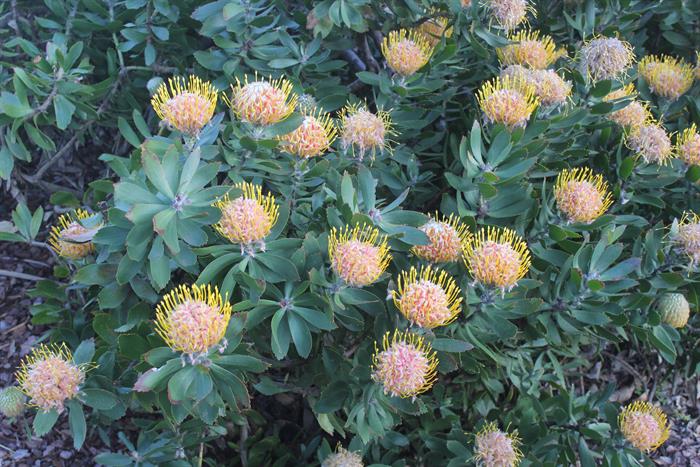
- Proteaceae related flowers like Banksia, Protea and Leucodendron can last a couple of weeks.
- ‘Green Goddess’ lily (Zantedeschia) and Oriental lily are known to last very well up to 14 days in water.
- Anthuriums with their plastic looking flowers are favoured by florists for their colour and lasting ability.
- Statice lasts very long in bouquets and can be used in dried floral displays after all the others have died.
What to look for
- Avoid flowers if the leaves are wilting or petals are dropping
- The plant tissue (stems, flowers & foliage) should be turgid (ie. firm). Avoid buying flowers that are starting to droop, or the foliage doesn’t have any resilience (spring) in it if you lightly squeeze it
- The base of stems should not be rotting or showing signs of discolouring
- Flowers that are completely open when you buy them will not last nearly as long as flowers just starting to open. Most buds should be starting to show colour, although a few closed buds are OK because this means you will have flowers for a longer period.
Tips for Buyers
- Avoid buying flowers that have been left outside on display, especially if left in full sun. Check to see if they have more of the same plant inside in a more protected position.
- Buying early in the morning will usually get you fresher flowers, but make sure you keep them in a cool, protected position if you are holding on to them before giving them to your “special person”.
- Make sure you give yourself enough time to buy the flowers you want, in case your local suppliers run out.
How to Care for Cut Flowers
If you can’t put the flowers in a vase straight away, put them in a bucket filled with deep, cool water. They can also be stored for a short time in a cool room, or the lower part of a domestic refrigerator. Before arranging the flowers in the vase, recut the stems to the required length on a slant, using a sharp knife or secateurs. Make sure the vase doesn’t receive direct hot sun and remember to change the water every few days (sooner with daisies because they may produce an unpleasant smell).
Various additives can be placed in the water to prolong the life of cut flowers. Some people use sugar or aspirins. Chemical preparations are also available, such as Chrysal. These are often supplied by your florist when you buy flowers from them, or you can usually obtain some from them for a small price.
You can also make your flowers last longer by treating the stems. Different methods are used for different plants, and are based on the type of stem - soft, hard, woody or hollow. Some examples Are:
- Aster – Remove the lower leaves and make a slit in the ends of stems and place in deep water for one hour.
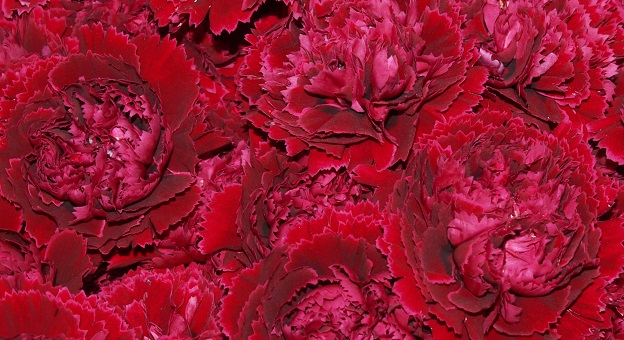
- Carnation – Stand stems in deep water and then dip flowers in water for a few minutes.
- Chrysanthemum – Crush the lower stems up to 8 cm then stand in deep water for 2 hours.
- Dahlia – Scald the ends of stems in hot water for 30 seconds then stand in deep water for 1-2 hours.
- Daisy – Scald the ends of stems.
- Lilies – Cut the stems at an angle and stand in deep water for one hour.
- Poppy – Scald the stems then stand in deep water for 30 minutes.
- Rose – Scrape the ends of stems for 2-3 cm and then split them.
- Wallflower – Split the ends of stems then crush lightly. Scald the ends with hot water for 30 seconds then stand in deep water for 30 minutes.
WHAT ABOUT FLOWERS FOR GUYS?
Traditionally flowers have been given by guys to their wives, girlfriends or partners.
In these enlightened (hopefully) times, it is more common now for girls to buy flowers for their guys.
The meaning of flowers given above tend to be more appropriate to women, whereas men see flowers more as aesthetics and an emotional connection between the giver and receiver without the various interpretations.
For most males, acceptable flowers to give them include:
- A carnation for the lapel.
- A plant for the garden (for a garden lover), with a note attached saying “something to grow along with our love”.
- Proteas, banksias, waratahs and other native flowers.
- A colourful indoor plant for their house or flat, or perhaps a plant in flower to remind them of you to go on an office desk.
- Anthuriums (naughty and suggestive!)
- Bold tropical flowers like heliconias and gingers
- Roses – yes men appreciate roses too!
WHAT NEXT?
Register to Study -Go to panel toward top of this page (right column)
or
Get Advice -Use our FREE COUNSELLING SERVICE to contact a tutor
CLICK TO CONTACT US