BUILD YOUR PLANT KNOWLEDGE
Plant knowledge is at the base of all great horticulture
Plant knowledge is one of the most valued skills in the horticulture industry. Whether you work in landscaping, nursery, turf, crop production or elsewhere -this course gives you skills that can set you apart and vastly improve your job opportunities or business prospects.
- Learning to identify plants can be much easier once you understand the system behind their names.
- This course teaches the system and gets you started on identifying hundreds of different plant
There is actually a system to identifying plants; and for most people, once you understand that system, it can become much easier to remember plant names; and the cultural peculiarities of different plant species.
This course lays the foundation, and significantly boosts the number of plants you can identify. With a proper foundation you can then go forward and more readily build your plant knowledge into the future.
COURSE CONTENT
There are ten lessons in this course plus one Special Assignment (see later for details). The content of each of the ten lessons is outlined below:
1. The Groups of Plants - setting a framework for the whole subject.
To identify plants from a wide range of taxonomic and cultural groups, using a range of different techniques.
2. Use of Plants - plant selection, soils.
3. Australian Native Plants
To determine techniques for the growing of native shrubs and trees, including the selection, culture and use of different species.
 4. Exotic Ornamental Plants
To determine techniques for the growing of exotic ornamental shrubs and trees, including the selection, culture and use of different species.
5. Indoor & Tropical Plants
To determine techniques for the growing of indoor plants, including selection, culture and use of different varieties
6. Bedding Plants
To determine techniques for the growing of bedding plants, including selection, culture and use of different varieties.
7. Vegetables
To develop techniques for the growing of edible crop plants, including selection, culture and use of vegetables, fruit, berries and nuts (Part A).
8. Fruits, Nuts & Berries
9. Herbs
10. Alternative Growing Techniques - hydroponics, container growing, terrariums.
To determine appropriate applications for a range of alternative growing methods
AIMS
- Identify plants from a wide range of taxonomic and cultural groups, using a range of different techniques.
- Determine techniques for the growing of native shrubs and trees, including the selection, culture and use of different species.
- Determine techniques for the growing of exotic ornamental shrubs and trees, including the selection, culture and use of different species.
- Determine techniques for the growing of indoor plants, including selection, culture and use of different varieties.
- Determine techniques for the growing of bedding plants, including selection, culture and use of different varieties.
- Develop techniques for the growing of edible crop plants, including selection, culture and use of vegetables, fruit, berries and nuts.
- Determine appropriate applications for a range of alternative growing methods.
INTRODUCTION TO PLANT CLASSIFICATION
In the scientific system of plant classification there are over half a million species of pants. What is a species though?
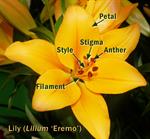
Classification of plants, like classification of anything else, is based on the idea of grouping things which are similar together. Species are plants that have a range of similar characteristics and are capable of freely interbreeding
with each other (i.e. pollen from the flower of one plant can successfully fertilize the egg cells of another plant so that they will grow to produce seed which will germinate and produce a new plant).
Species are grouped together into collections of species which are fairly similar.
These groups are called genera (singular - Genus). Genera are grouped into collections of genera which have a relatively great similarity to each other. These are called families.
The only way to be able to gain a fair grasp of plant identification and culture is to learn plants by their family as well as their genus and species names. Familiarisation with plant families enables a person with no prior knowledge of a particular plant to be able to place it in a family, and make an educated guess as to its growing requirements, susceptibilities and other likely characteristics.
Some plant families are of a much greater significance and importance than others in amenity horticulture. It is very worthwhile learning the characteristics of the following important families:
ARACEAE
The "Aroids" are usually characterised by roughly heart shaped leaves, and flowers which have a single large finger-like protrusion (e.g. Anthurium, Caladium, Diffenbachia, Philodendron, Syngonium etc).
ASTERACEAE (= Compositae)
The "Daisies" comprise a very large family of about 800 genera and 12,000 species. The flowers are actually a composite of several small flowers fused together to appear as one flower. If the flower is pulled apart it can be seen that it is made up of several individual units, each one having its own set of floral parts (i.e. petal, stamen, stigma, ovary etc). Some Asteraceae flowers are incomplete and have only some of the floral parts (eg. Helichrysum, Dahlia, Zinnia, Marigold, Tansy, Chrysanthemum, Lettuce, Sunflower etc).
LAMIACEAE (= Labiatae)
The "Mints" include around 160 genera and 3000 species. The stems are roughly four sided (i.e. similar to a square or rectangle in cross section). The leaves are simple (i.e. not divided like a pinnate leaf), and are whorled. The flowers are two lipped. Often mints can be identified by their smell when the leaves are crushed (e.g. Common winter mint, Peppermint, Prostranthera, Thyme, Westringia, Sage, Marjoram, Lavender, Coleus, Rosemary etc).
FABACEAE (= Leguminosae)
The 'Peas' or 'Legumes' were reclassified in recent years, splitting the one old family "Leguminosae" into three new families (i.e. Caesalpinaceae, Mimosaceae and Papilionaceae). Many people still use the old name though. Legumes are characterised by a pod type fruit. Leguminosae includes around 500 different genera (e.g. Acacia, Genista, Lotus, Wisteria, Clover, Pea, Bean, Peanut etc).
RANUNCULACEAE
The "Buttercups" have about 300 genera and 1200 species mainly in temperate and arctic regions. They include Delphinium, Aquilegia, Paeonia, Ranunculus, Anemone, and Clematis). Flower parts are regular and hypogenous (i.e. flower parts occur one above the other in the following order...sepals, petals, stamens, carpels).
How Can this Course Help Your Future In Horticulture?
There are different pathways people follow to become a plants expert. Whatever path you follow you need to learn the same fundamental things about plant identification. Those things can be learned in this course. Some people start out as a gardener or labourer, learning on the job. This can be a great start but you still need a grounding in the theory to underpin what you encounter at work. Without that, you risk lacking a complete and accurate understanding of the plants you come across. This course can make all the difference, making what is learned at work far more valuable.
Once you know how to identify plants you will have skill and knowledge that is extremely valuable in many areas of work, such as:
- Nurseries & propagation
- Landscaping
- Garden design
- Parks & gardens
- Horticulture management
- Environmental officer
This course will also be of value to people in any career that deals with plants as well as amateurs and enthusiasts who wish to extend their plant knowledge.
WHAT NEXT?
Register to Study - Go to panel toward top of this page (right column)
or
Get Advice - Use our FREE COUNSELLING SERVICE to contact a tutor
CLICK TO CONTACT US