Learn the Fundamentals of Propagation
- Professional training laying the foundation for a career in propagation.
- Learn about all of the different techniques used to propagate plants, from cuttings and seed to grafting and tissue culture
- Improve your plant identification skills, and learn to choose an appropriate propagation technique to match a plant you wish to propagate.
- Lay a foundation to work in a nursery, start a nursery or take more advanced studies
- 100 hour, self paced course, with tuition from internationally renowned propagation experts
What Students said about Studying with us: "This is the first correspondence course I have done and I have thoroughly enjoyed it and I just wanted to say a big THANK YOU. I appreciate everyone's effort in such a professionally-run organisation with seamless administration. The office staff's happy can-do attitude, their fast responses to all queries, tutor Shane Gould's quick turnaround in assignment marking and his supportive and motivational feedback and last but not least, the sound subject guides. Most importantly I hope my thanks and appreciation can be communicated to all the staff who have supported me along the way of my learning! I work full time and study on the weekend but really don't stop thinking about what gardening solution I need in order to answer my assignments every day of the week. Thank you for such a great learning experience and I can't wait to start the second half of my course!!" - Skye
" Thanks for the videos, they are great! I got a lot of information from them. The Turf Management video is practical and easy to understand. Plant Propagation is a video every student should watch because out here in the real world no-one would give out such information. The Rose Growing Tape was very beneficial to me as I have about 60 odd roses. I thought I knew a little about them but this tape is a real eye-opener." - Kelvin
COURSE STRUCTURE and CONTENT
There are 10 lessons in this course:
- Introduction to Propagation
- Asexual and sexual propagation
- Aseptic Micropropagation, Runners, Suckers, Layering, Separation, Division, Grafting, Budding, Cuttings, Seed
- Genotype versus Phenotype
- Plant life cycles -phases of the sexual cycle; phases of the asexual cycle
- Annual, Perennial, Biennial Life Cycles
- Propagation Terminology
- Nursery production systems
- Operational Flow Chart for Seed Propagation
- Seed Propagation
- Seed Sources
- Maintaining Genetic Identity of Seed -Isolation, Rogueing, Testing, Hand Pollination
- Hybrid Seed Production
- Storing Seed
- Types of Seed Storage
- Seed Biology -Endospermic, Non Endospermic
- Dormancy Factors Affecting Germination
- Germination Treatments -boiling water, stratification
- Terminology
- Seed Raising Technique
- Potting Media
- Characteristics of Potting and Propagating Media
- Media derived from rock or stone
- Media derived from synthetics
- Organic Media
- Soil Media
- The UC System
- Chemical Characteristics -eg. pH, Cation Exchange Capacity, Salinity, Conductivity
- Laboratory Testing of Media
- Physical Characteristics
- Potting Mixes
- Propagating Media
- Nutrition at the Propagation Stage
- Nutrition Management and Fertiliser Application
- Vegetative Propagation I
- Reasons to propagate by cuttings
- Types -softwood, hardwood, semi hardwood, herbaceous
- Stem Cuttings, Tip, heel, nodal, basal
- Leaf and Leaf-bud cuttings
- Cane cuttings
- Root Cuttings
- Bulb Cuttings
- Hormone Treatments for Cutting Propagation
- Other Cutting Treatments; basal wounding, anti-transpirants, fungicides, disinfectants, mycorrhyza, etc
- Artificial Light for Propagation
- Cutting Propasgation Efficiency
- Rockwool Propagation
- Vegetative Propagation II
- Care of stock plants
- Layering
- Division
- Terminology
- Managing Watering
- Vegetative Propagation III
- Terminology
- Budding and grafting
- Reasons for Grafting
- How a Graft forms
- Grafting Techniques; Types of Grafts
- What Plant to Graft on What
- Grafting Materials
- Root Grafting, Bench Grafting, Soft Tissue Grafting
- Establishing Rootstocks
- Tissue culture: Applications, Problems, Nutrient Media, Cleanliness, Growing Conditions
- Tissue Culture Procedures and Techniques
- Laboratory Requirements
- Terminology
- Biotech applications in Horticulture
- Propagation Structures and Materials
- Growing in a Greenhouse
- Growing Structures: Types of Greenhouses, Cold Frames, Shadehouses
- Propagating equipment -Heaters, Bottom Heat, Misting, Light Control, Benches etc
- Managing a Greenhouse
- Risk Management
- Nursery hygiene
- Risk assessment and management
- Safety -tools, equipment handling, electricity, etc
- Pest and Disease Management
- Environmental Problems and management
- Nursery Management I
- Plant modification techniques
- Management policies
- Keeping Propagation Records
- Nursery Production Systems
- Nursery Management II
- Nursery standards, cost efficiencies, site planning and development
Course Aims
- Plan the propagation of different plant species from seeds, using different seed propagation methods.
- Plan the propagation of different types of plants from cuttings, using different cutting propagation methods.
- Plan the propagation of various types of plants using a range of propagation techniques, excluding cuttings and seed.
- Determine the necessary facilities, including materials and equipment, required for propagation of different types of plants.
- Determine a procedure to minimise plant losses during propagation.
- Determine the management practices of significance to the commercial viability of a propagation nursery.
- Design a propagation plan for the production of a plant.
 Scope of Propagation
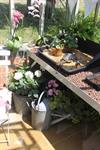
Propagation is an important step in the nursery production process, since it is through this step that plants are produced. Protected nursery environments are used in the production of plant-stock for a wide variety of purposes including:
- Growing on to produce mature potted stock for retail and wholesale sales
- Transplanting to in-ground nursery beds
- To provide seedlings for horticulturalists such as landscape gardeners and market gardeners.
Some nurseries choose not to undertake on-site propagation because it requires a high level of skill and is an area of commercial vulnerability. They find it easier to purchase ‘rooted cuttings’, ‘tube-stock’ or ‘tissue cultured plants’ and to simply grow them on for resale. As a result of this, there is a market for propagated stock in the nursery industry, and a niche exists for nurseries that choose to concentrate on propagation.
Propagators need to be highly conscious of the costs and benefits of their production methods since there is increasing industry pressure to keep product costs down and an ongoing need to achieve profitable returns. Production methods need to be intelligent and take account of the return for labour input.
There are many different ways of producing plants though most plants are produced commercially by either seed or cutting propagation. ‘Tissue culture’ or ‘micropropagation’ techniques carried out in a laboratory are sometimes used where very large numbers of one plant variety are required quickly, or where limited propagation stock is available. Other plants (eg. roses, deciduous fruit and ornamental trees) are traditionally produced by budding and grafting onto seed or cutting grown rootstocks. Division and separation are commonly used for the propagation of bulbs and herbaceous perennials.
Other propagation techniques (eg. layering or marcotting) may be important in the propagation of some specific types of plants; however they are relatively insignificant when taking a broad view of the nursery industry.
TIPS FOR POTTING PROPAGATED PLANTS
Following propagation, nursery plants are transplanted to appropriate growing media. Transplanting is the taking of newly propagated plants from the propagating media and placing them in a growing media of some sort, in a manner that minimises damage, or reduces any setback in growth of the transplanted plant. It is not always as straightforward as might be expected, particularly with tissue cultured plants. When plants are taken from one environment to a different one, the plant may experience, which under extreme circumstances can cause the plant to die. You need to pay careful attention to where plants came from and ease them into their new environment. The nursery must have facilities to do this (eg. greenhouses, shade-houses and heating).
Tissue cultured plants are the most difficult to transplant and establish in soil. Plants taken from a greenhouse, or propagated in a warm climate and moved into areas with cooler climates can also be difficult to establish and maintain. Two critical factors at this stage are cleanliness – so you don't expose the plant unnecessarily to diseases or pests – and a good quality growing media because this will support the plant until it sells.
Transplanting Seedlings
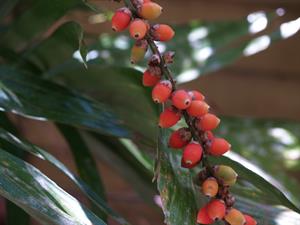 Ideally, seedlings should be transplanted as soon as possible after they have emerged. This will vary to some degree according to the type of plant you are growing. Species with larger seedlings can generally be handled earlier than smaller ones. Normally seedlings will be transplanted once the first or second true leaves have appeared.
Trays or flats of seedlings can be removed to a protected propagation area still in their containers. They should be well watered and, if possible, allowed to drain for a short time prior to lifting the seedlings. The seedlings can then be carefully lifted from their containers and gently pulled apart, taking great care to minimise damage to roots. Retain as much of the propagating media as possible around the roots, and only remove small clumps or groups of seedlings at a time to prevent roots drying out excessively.
Seedlings grown in-ground or in large beds to be grown on in containers can be carefully lifted immediately prior to transplanting and quickly transferred to a protected area for transplanting. These seedlings can be kept moist by temporarily storing them in a container of water, a plastic bag, or other moist materials. If possible, only lift small amounts of these seedlings at a time to ensure that they are not exposed for any length of time.
The containers (eg. flats, pots, punnets) in which seedlings are to be grown on should be sterilised, and filled with a suitable growing media, but not quite to the top. A hole is made in the medium with a dibble-stick of some sort, and the roots of the seedling are inserted into the hole. Then, the growing media is pressed lightly around the roots to ensure good contact. For large flats or containers, dibble boards can be used to make large numbers of holes at the one time. The transplanted seedlings should be watered immediately and, as soon as possible, placed in a protected ‘growing on’ environment.
Transplanting Cuttings
Rooted cuttings can be transplanted in a similar manner to seedlings. Containers of cuttings are removed from propagation areas and the cuttings are carefully 'knocked' out of the container. If root development is evident, cuttings can be carefully pulled apart, retaining as much propagation media as possible around the roots. Those cuttings with sufficient root development can be transplanted on into suitable containers as with seedlings, while those cuttings with little or no root development can be placed back into propagation media, and returned to the propagation house or area. Cuttings with obvious rotting of their base or stem should be discarded. All of the cuttings, struck or unstruck, should be watered thoroughly immediately after transplanting.
What This Course Could Do For You
This course is a step up form our Propagation (Beginners) course. It is aimed at professionals and therefore goes into greater depth. It introduces all types of propagation from seed growing to tissue culture so students get a taste of everything that is possible. If you only study one of our propagation courses, either by itself or as part of a certificate or higher level qualification, then this should be the one. The course is aimed at people in the following areas:
Nursery & propagation
Parks & gardens
General horticulture
Market gardening
Crops
Hydroponics
Botanic gardens
WHAT NEXT?
Register to Study - Go to “It’s Easy to Enrol” box at the top of the page and you can enrol now.
or
Get Advice – Email us at info@acsedu.co.uk OR
Use our FREE COUNSELLING SERVICE to contact a tutor
CLICK TO CONTACT US