Study the Propagation of Seeds
This course is relevant to all aspects of seed propagation, all types of seeds, and any climatic situation you might find yourself in.
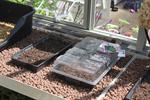
Seeds can be propagated in many different ways, including:
- Sowing directly into the open ground.
- Sowing into natural soil, improved soil in a controlled environment (eg. in a greenhouse, with heating cables in the ground or in raised beds, and with irrigation).
- Sowing into specialised propagating media in a controlled propagating environment.
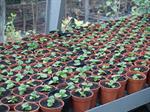
Many seedling production nurseries (both private and commercial) specialise in the production of specific types of plants for example:
- vegetable seedlings
- colourful annuals
- forestry trees
- natives trees for re-vegetation projects
- seedling trees for use as root stock
- ferns
- perennials
- biennials
- cut flowers
- herbs
COURSE STRUCTURE
There are nine lessons in this module as follows:
-
Introduction - scope, open ground propagation, controlled environment propagation
-
Seed Botany - anatomy and physiology, pollination, hybridisation, genetic purity, etc.
-
Seed Sources - selection, collection, timing, wild collecting
-
Seed Storage – treatments; cleaning, drying, storage, disease control, germination testing
-
Dormancy - and breaking dormancy
-
Germinating Annuals, Perennials and Vegetables
-
Propagating selected Woody Species
-
Direct Seeding - grasses, woody species, revegetation projects, etc.
-
Seedling Management
Duration: 100 hours
Aims
-
Discuss the scope and nature of commercial seed propagation.
-
Explain the botany of seeds, and processes that occur when a seed germinates.
-
Determine appropriate procedures for harvesting different seeds.
-
Determine appropriate treatments for different types of seeds following harvest to sustain viability.
-
Determine treatments for breaking dormancy to initiate germination with a range of different seeds.
-
Determine how to sow and germinate seed of commonly grown herbaceous plants including vegetables, annuals and perennials.
-
Determine techniques for woody plants including trees, shrubs, ground covers and climbers.
-
Determine strategies for developing a variety of different types of plantings using direct seeding.
- Manage the development of germinated seedlings to optimise the plants survival.
Seed Storage Behaviour
Seeds are alive and like any living thing they can be harmed by adverse conditions. Seeds of some species do not store for very long at all - propagation should be done with fresh seed only. This group particularly includes spring-ripening seeds of certain temperate zone plants. Most seeds however will store for at least 6 months without loss of viability, provided the environmental conditions of their storage are right.
Seed storage behaviour refers to the capacity of seeds to survive desiccation (drying). The periods which seed survives (ie. its longevity) varies quite a lot among species. It also tends to vary among accessions (collections) within a species, because of differences in genotype and provenance. The influence that provenance and genotype have on the longevity of seed also depends on the following:
-
the cumulative effect of environment during seed maturation eg. the weather
-
harvesting, drying and the pre-storage environment
-
seed harvest times
-
time it takes to dry the seed
-
the time taken between drying and storage
|
Accession
Accession is the process of increasing a seed collection or group. It involves collecting seeds from various groups and/or locations of groups, combining them into a single seed lot with the view to storage or planting. This enables the collector or person that later plants the seed to readily determine provenance. Seed can be selected for disease resistance and certain morphological characteristics, (however this could alter in future generations if seed from differing geographical areas are combined; it does however extend the gene-pool). Seed accessions that are collected officially will be allocated a unique number and a Certificate of Provenance.
|
Species of seeds do not all respond to the environment before or during storage in the same way. Today scientists recognise three main categories of seed storage behaviour:
- Orthodox species - seeds in this category can be conserved off-site (ie. outside of their natural environment) for long periods, in appropriate conditions. Collections (accessions) of seeds may vary considerably in their longevity however, irrelevant of the environment in which they are kept. These seeds can be dried to low moisture contents without damage – even lower then they would dry out in nature. The longevity of these seeds increases as the storage environment aids reductions in moisture content and temperature. These are also the easiest seeds to keep long-term. The vast majority of seeds are orthodox species.
-
Recalcitrant species – storage of species with recalcitrant storage behaviour are only viable for the short-term also only in appropriate, well controlled environments. These species do not survive drying to any large degree or freezing – long term storage is not suitable.
-
Moisture levels critical for survival however does vary between species within this group. Seed of recalcitrant species is sometimes processed by cutting out the growing part of the seed, optimising the water content and then rapidly cooling it. Plants from the tropics, riparian zone and temperate zone forests are included for example; oaks, citrus and wild rice.
-
Intermediate species – storage of species which present with intermediate storage behaviour is feasible for the medium-term but only in appropriate, well controlled environments. These seeds tolerate drying better then the recalcitrant species but not as much as the orthodox species. They can withstand partial dehydration but they are cold-sensitive and drying does not increase longevity; they tend to lose viability much more rapidly at low temperatures. They vary from orthodox seeds in the predictability of their longevity in relation to drying and cooling. Intermediate seeds include tropical plants such as such as the oil palm (Elaeis guinensis) and coffee (Coffea arabica), and the Neem tree.
It is essential to know which groups species belong to, in order to determine the most suitable storage facilities, environment and storage length.
Comment from a Student:
"This is the first correspondence course I have done and I have thoroughly enjoyed it and I just wanted to say a big THANK YOU. I appreciate everyone's effort in such a professionally-run organisation with seamless administration. The office staff's happy can-do attitude, their fast responses to all queries, tutor Shane's quick turnaround in assignment marking and his supportive and motivational feedback and last but not least, the sound subject guides. Most importantly I hope my thanks and appreciation can be communicated to all the staff who have supported me along the way of my learning! I work full time and study on the weekend but really don't stop thinking about what gardening solution I need in order to answer my assignments every day of the week. Thank you for such a great learning experience and I can't wait to start the second half of my course!!"
- Skye
 Seed Propagation is a Valuable Skill to Learn
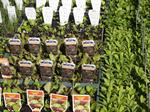
Coaxing the germ of life from a seed can sometimes be a tricky business. While it might seem simple – just add water, soil and sunshine – there are many factors that contribute to seed germination. This course in seed propagation is relevant to horticulturists, nurserymen and gardeners in appropriate techniques for seed harvesting, treatment, storage, planting and germination.
ACS Principal John Mason said the course was suitable for gardeners of all levels of experience.
“The course assumes a basic understanding of plant propagation but anyone with an interest in growing plants from seeds will find this course informative and useful,” he said.
“For people with industry or significant amateur experience, some introductory sections may be revision, whereas anyone with little or no knowledge of seed propagation may find that they need to do additional reading to get the most out of the course.”
The course is divided into nine modules and covers everything from the anatomy and physiology of a seed through to breaking dormancy and managing seedlings. With a duration of 100 hours, the course provides a comprehensive picture of seed propagation for anyone seeking specialist information in the field.
Where This Course Could Lead You
Every plant can be grown from seed, but not all plants are easily grown form seed. Often dormancy has to be broken in order for seeds to germinate. Sometimes a combination of treatments is necessary to break dormancy. Some seed only germinate when environmental conditions are within a tiny range. Students of this course develop a thorough grounding in methods and techniques of seed propagation. This is an ideal accompaniment to our other specialist propagation courses, but may also be studied by itself. The course will appeal to enthusiastic amateurs as well as people in the following fields:
- Nursery & Propagation
- Crops
- Hydroponics
- Market Gardening
- Garden Establishment
- General Horticulture
- Landscaping
WHAT NEXT?
Register to Study - Go to “It’s Easy to Enrol” box at the top of the page and you can enrol now.
or
Get Advice – Email us at info@acsedu.co.uk OR
Use our FREE COUNSELLING SERVICE to contact a tutor
CLICK TO CONTACT US