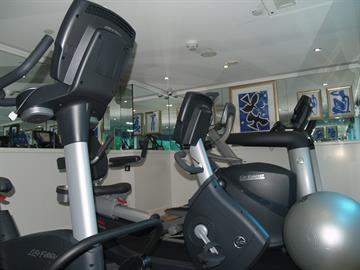
GYM MAINTENANCE
The health and safety of gym users is affected by how the gym is designed:
Equipment must be designed ergonomically (i.e. to fit the shape of the body using it). Everyone has a different shape, therefore the best equipment is that which is designed with the flexibility to be adapted to the shape (and personal needs) of the individual using it.
Degree of difficulty (e.g. resistance) should be adjustable over a wide range. (I.e. The least and most capable persons must both be able to use the equipment).
The machine must be adaptable for the persons size & shape (e.g. seats on bikes should raise and lower). (NB: If equipment does not properly adjust, a user may attempt to use it when it is not right for them...and that can lead to injury).\
Equipment should be spaced well apart so that:
- movement around the gym doesn't interfere with a user
- use of one piece of equipment does not interfere with use of other equipment.
Adequate floor space should be provided for stretching and abdominal exercises to be carried out well away from other equipment, and out of walkways.
How the equipment is being used:
- Users must be properly informed about how to use equipment.
- Signs, instruction cards, posters etc. are valuable tools for doing this
- Patrons may be given a video to borrow on how to use a piece of equipment
- A well managed gym will instruct users on equipment use before allowing them into the facility.
- Fitness leaders may need to supervise the use of a gym to correct any misuse of equipment by patrons.
Maintenance issues
- Equipment should be solid and well maintained
- There should be no loose, slippery, wobbly or sharp parts on any item of equipment.
Routine maintenance
The things outlined below should be checked, and where necessary replaced, as part of the routine maintenance of any gym.
Things which are inclined to deteriorate in a gymnasium include:
a/ Any moving parts on machines
- Cables can lose strength, wear & break.
- Connections can weaken & break
- Sharp or abrasive surfaces may develop
- Screws or bolts can loosen (and even be lost).
b/ Surfaces which frequently are touched:
- Rubber hand grips on bikes
- Seats on bikes, rowing machines etc.
- Treads on stepping machines
- Hand grips on weight machines
- Any such surfaces need to remain non slip, and non abrasive.
c/ Floor surfaces which receive frequent traffic
- Carpets can wear thin
- Timber floors can loose their grip or "slipperiness"
- Timber floors may splinter in extreme cases
- In extreme situations, holes may develop or parts of a floor covering may lift (someone may trip on such things)
d/ Electrical
- Batteries can run down on heart monitors or similar equipment.
- Electrical cords and plugs may become frayed, may be tripped on, wires can become loose, etc.
- Intermittent errors may arise in electrical machines such as treadmills, rowing and stepping machines, etc.
REPAIRS
Certain things in a gym will wear out, and should be replaced periodically.
The frequency of replacing such items will depend on:
- Quality/nature of original equipment or item
- Amount of use (wear & tear)
Such routine maintenance will include:
- Replacing a power point
- Replacing wires/cables on machines, chains on bikes etc.
- Replacing worn, damaged or lost bolts, screws etc.
Over Use
If a gym is over used, equipment will deteriorate faster. Damaged equipment is more likely to be used. People get in each others way, and accidents are more likely to occur.
How to deal with over use:
- restrict access times, extend access times
- increase charges
- restrict membership numbers
- reorganise facilities (e.g. move gym to a larger room)
- extend/build/buy more facilities or increase equipment.
- manage use (Supervise the use of facilities, use more structured programs (e.g. fitness circuits),
HEALTH and SAFETY
Lack of attention to some aspects of building maintenance may lead to serious health and safety problems. This in return may develop into serious liability problems if people are injured in any way. Some issues of particular concern include:
Steps
- People can trip or fall more easily on steps than many other surfaces.
- Hand rails reduce the likelihood of anyone tripping on a stem, but a poorly maintained hand rail can become loose, and in fact may contribute towards someone falling. Check hand rails regularly.
- Slippery surfaces on steps are also dangerous. -If a step is at all slippery, you may need to fix a non slip tread to it (e.g. glue a piece of rubber mat).
Floors
- Walking surfaces need to have a grip so people do not slip. Highly polished floors may be dangerous. A slippery mat placed on a highly polished floor can be particularly dangerous.
- Playing surfaces for some sports indoors, need to be slippery (e.g. basket ball). Such surfaces may pose a problem if the same facility is used for duel purposes such as for functions such as a reception or party.
- Slippery floors lead to injury
Seating
Check the stability of seating. Seats can become damaged and weakened. If left unattended, people may become hurt. Grand stands should not be over crowded. Floor surfaces may be uneven making seats wobble.
Legs of seats need to be strong enough to support the largest people who sit on them. Some inexpensive seats may not be adequate for this purpose. In an extreme situation, seating may collapse.
Dangerous surfaces
Some surfaces can be dangerous (e.g. hot outlets from heaters, cold parts of refrigeration equipment, electrically charged surfaces, slippery surfaces, sharp or rough surfaces etc).
Splinters, rough areas or sharp edges may develop on poorly maintained or damaged surfaces.
Guards may be necessary to protect people from dangerous surfaces such as the above.
You may need to determine needs, and supply guards where needed.
You may need to remove or repair the dangerous object (e.g. sand papering, filing, and coating the surface).
Guards need to be checked regularly to ensure they are properly fixed and in a good state of repair.
Loose Objects
Loose objects can be a serious safety hazard, if they are not expected.
If equipment (e.g. children’s toys, tools or games equipment) is left lying about, it may be stood or tripped on.
Broken windows, glasses or crockery can leave dangerous fragments on the ground or floor. Some types of classes may result in dangerous objects being left behind (e.g. dressmaking leaving pins). Areas affected in this way need to be cleaned thoroughly (e.g. a very strong and thorough vacuum) before being used again.
Spills
Various things can spill on the floor. Some create a problem with fumes given off, others make a floor slippery, and others may simply "dirty" the floor requiring restricting traffic which may compound the problem. Some spills can seriously damage a floor (Some solvents may dissolve the floor surface). Accidents with animals or children may result in a surface being covered with vomit or urine.
The way in which a spill is treated will depend on the material which is spilled, and the surface on which it is spilled. Absorbent materials need to be kept on hand for some types of spills (e.g. sawdust on a floor to soak up oil, petrol, grease etc). Carpet cleaners should also be kept on hand.
Portable barriers and appropriate signs should be kept to use when a spill occurs and cannot be immediately and effectively attended to. If a spill produces undesirable fumes, the area should be immediately ventilated by opening all windows and doors; and if need be, closing off the area to people until the fumes have gone.
REPAIRS
Managing the maintenance of a facility will undoubtedly require frequent repairs to damage. It is important to have access to reliable and competent tradesmen, who respond quickly.
Some facilities may employ a handyman who can handle some repairs.
There will always be a need for some interim action to be taken when a problem is detected, until a permanent repair can be affected. Such action may include:
- Temporary repairs
- Restricting access to an area
- Erecting signs
- Cleaning
Broken windows
If it is not possible to repair a window immediately it may be covered temporarily with a sheet of clear, heavy duty polythene (as is used for greenhouse covers -available from greenhouse suppliers).
This should be fixed by attaching (nailing or screwing) softwood battens on all four sides (NB: nails alone will not hold polythene -it will tear easily).
Roofs
Tarpaulins can be used for temporary covers.
Walls
Small holes in plaster can be easily patched (e.g. with polyfiller).
After the plaster dries, it should be sanded back to a smooth surface then the area painted over.
Ventilation equipment and air conditioners should only be repaired by qualified electricians, plumbers, etc.