Distance Learning Landscaping and Garden Design Certificate
 Develop your knowledge of horticulture and specialise in garden design and landscaping.
- Exceptional support services (Tutors available 50 weeks a year, online student Portal, bookshop etc.)
- Start any time, work at your own pace, study from anywhere.
COURSE CONTENT
This Certificate entails a total of 30 lessons as follows:
- Core studies - half of the course, involving approximately 350 hours over 15 lessons.
- Stream studies - half of the course, involving studies specific to landscaping over 15 lessons.
Core Studies
- Introduction to Plants
Nomenclature and taxonomy
The plant kingdom
Genus, species, hybrids.
- Parts of the Plant
How plants grow
Plant structure
Parts of the flower and leaf
Modification of stems and roots.
- Plant Culture - Planting
How to plant and protect newly planted specimens, terms like: annuals, biennials, perennials, deciduous, evergreen and herbaceous plants.
- Plant Culture - Pruning
Purpose for pruning
Rules for pruning
How to prune.
- Plant Culture - Irrigation and Machinery
Different irrigation systems
Components of an irrigation system
Designing an irrigation system
Maintenance in the garden and for tools.
- Soils and Media
Soil classifications
Soil testing
Potting mixes
The U.C. System
Ingredients of potting mixes.
- Soils and Nutrition
Fertilisers
Deficiencies and toxicities
N:P:K ratios
Salting
Fertiliser programming
Compost.
- Propagation - Seeds and Cuttings
How to propagate plants with the two easiest techniques: Seed and Cuttings
Propagating mixes
Cold frame construction
After care for young plants.
- Propagation - Other Techniques
Other methods to increase plant numbers
Budding and Grafting
Layering, division and tissue culture.
- Identification and Use of Plants
How are plants used in the landscape
How to choose and purchase plants
Selecting plants suitable for the climate and site.
- Identification and Use of Plants
Problems with plants
Choosing plants for problem sites.
- Identification and Use of Plants
Indoor and Tropical Plants, flowers, herbs, bulbs, ferns.
- Pests
Identifying and controlling pests
Chemical and natural methods for pest control
Chemical safety precautions.
- Diseases
Identifying and controlling diseases
Plant pathology
Fungi, viruses, non pathogenic problems
Interactions with the host and the environment.
- Weeds
Identifying weeds
Controlling weeds
chemical terminology.
Stream Studies
- History of Landscaping
Garden Styles
Types of Gardens
History of Gardens
- Principles of Design and Planning Information
Principles of Design
Pre-planning Information
Using Colour
Natural Garden Design
Eclectic Gardens
Minimalist Gardens
Plant Application
Aesthetic Criteria for Design
Procedure for Planting Design
Entries
Birds in the Garden
- Drawing and Costs
Cost Effective Design
Garden Style versus costs
Construction Decisions
Planting Decisions
Maintenance Decisions
Garden Investment
Determining Costs
Drawing Techniques
Computer Aided Design
- Irrigation
Sprinkler Systems
Micro Irrigation
Planning an Irrigation System
How to Use a Watering System
Automatic Watering Systems
- Garden Designs
Park Design
Home Garden Design
Cottage Garden Design
Trail Design
Types of Trails (Fitness, Sensory, Cryptic, Environmental)
Recreational Landscaping
Playground Design
Barriers and Walls
Gradients and Dimensions
- Earthmoving and Drainage
Levelling and Basic Surveying
Earthmoving Equipment
Earth Forming
Creating Mounds
Raised Beds
Importing or Improving Soil
Soil Shaping
Soil Degradation
Soil Rehabilitation
Earthworks calculations
- Materials
Using, Choosing and Preserving Timber
Recycled Timber
Rock Work
Concrete
Coloured Pebbles and Gravel
- Paths, Walls and Fences
Paths: Guidelines, Gradients, Surfaces
Walls & Sleeper Walls
Types of Fences
Building a Wood Fence
Garden Structures
Play Structures
Skate Facilities, Motor Vehicle Parks
Pavers, Stone and Gravels
Contracts and Specifications
- Equipment
Manual Tools and Equipment
Power tools for landscaping
- Water Features
Planning a Water Garden
Types of Water Gardens
Water Quality, depth, area, safety etc.
Water Effects
Finishing Touches to a Water Garden
Fountains
- Garden Art: Statues, Sundials and Figurines
Garden Rooms: How to Design a Garden Room, What to put in a Garden Room
Positioning Garden Art
Painting in the Garden
Pots
Sculpture and Statues
Outdoor Furniture
- Landscaping for Sports and Games
Fun and Fitness Trails
Outdoor Multi Purpose Courts
Skateboarding
Types of Playgrounds
Park Design Criteria
- Landscape Management
Role of a Manager
Management Processes
Law and Business
Communication Skill
Marketing
Industry Awareness
Landscape Management
- Industrial Relations: Unions and Workers
Work Scheduling
Unions
Workplace Health and Safety
- Maintenance of a New Landscape
Protecting Young Plants
Replanting
Pruning
Weed Control
Maintaining Turf
Aims - Stream studies: LANDSCAPE AND GARDEN DESIGN
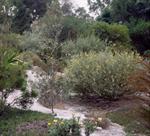 The aim of the stream studies is to develop skills and knowledge in landscape design, construction, features and landscape business management.
The student will engage in the following activities as part of the stream studies:
- Review the historical evolution of gardens.
- Obtain pre-planning information and use of that information to draw plans.
- Identify different principles and styles of landscape designs.
- Analyse garden designs.
- Develop graphic skills, and a knowledge of drawing materials and techniques.
- Prepare cost estimates for a landscape job.
- Describe surfacing materials and their effects.
- Explain the quality and cost of different landscape materials.
- Develop a knowledge of plants, both native and exotic, suitable for local conditions.
- Select plants for difficult sites and conditions.
- Describe advantages and disadvantages of various pipes, sprinklers and pumping equipment.
- Recommend irrigation systems for different landscape situations.
- Design a simple irrigation system.
- Design a bush garden and the value and relevance of using native plants.
- Analyse and report on a cottage garden design.
- Analyse and report on a playground design.
- Prepare a playground design for a school or public park.
- Draw layout plans for a range of gardens.
- Conduct a detailed survey of a site, prepare a detailed plan based on that survey, estimate costs and develop contract documentation for that project.
- Explain earthworks and soil preparation techniques used in landscaping.
- Describe alternative techniques for establishing and growing plants.
- Explain a range of landscape construction techniques including building fences, walls, rockeries, paths, water gardens, paving and drainage.
- Compare different landscape materials with respect to their quality, cost, availability and application in garden construction.
- Describe the correct procedures for the proper and safe removal of a limb from a tree, and for the felling of trees.
- Develop a detailed maintenance program for a garden.
- Demonstrate the ability to prepare for, and plant a new lawn.
- Explain how to establish turf on a steep slope.
- Write and advertisement for a landscaping business.
- Explain basic management procedures.
- Show a reasonable level of communication skill.
- Explain health and safety requirements on a landscape site.
Fee Payment Options
You can pay either
- Full Fees
- As a two part payment plan
- As a four part payment plan
If you pay in full on enrolment, the fees are discounted.
If you pay in 2 parts, the first half of the course is supplied initially; and the second part payment is not made until you have completed the first half (at which time the second half of the course is supplied).
If you pay in 4 parts, the first half is still supplied; you are then billed a second payment (due 2 months later). The third payment becomes due when you commence the second half of the certificate.The fourth part is due 2 months after that.
IDEAS FOR COURTYARD GARDENS - FROM OUR TUTORS
If your courtyard is looking a bit lacklustre, why not give it a revamp using some of the following ideas:
Add Container Plants
Container plants are a simple solution for livening up a courtyard. You won’t need to dig out planting holes or build raised beds to achieve an instant effect.
There are many different containers available, ranging from man-made reconstituted stone and plastic through to wood and terracotta.
You can place pots along the ground, planters along the tops of walls, planter boxes or troughs on the face of walls, or even hang baskets from awnings and pergolas.
Make sure that the weight can be supported adequately though.
For a formal effect, use matched containers and plantings in a symmetrical arrangement. Or, for a more relaxed approach, group together different styles of containers and plants.
Add a Small Water Feature
A water feature does not have to be big to be effective. Wall-mounted water fountains and free-standing ponds can look equally spectacular. Once again, you will not have to worry about huge installation or running costs as the water is recycled via a pump which can be hooked up to the electricity supply.
Increase Enclosure
Another option is to heighten walls to block outside views. If your courtyard is too open, why not heighten the walls? If there are particular aspects of the view you wish to save, you can incorporate an arch or open window, so that you can retain your favourite sights. This will also add an element of mystery to the garden.
Cover a Bad Outlook
You can overcome an ugly view by installing trellis on the tops of walls or fences. Trellis is also an excellent way of masking ugly walls and fences. Once in place, you can grow climbers up the trellis to further hide the poor outlook, whilst simultaneously beautifying the view. Alternatively, you can use more elaborate trellis panels that look amazing in their own right. Try using trellis to frame wall hangings, wall-planters, murals, mirrors or statues.
Create an Entry
A sure way to add intrigue is to install an arch. Placed at the courtyard entrance, it acts as a focal point, drawing visitors into the courtyard. Inside the courtyard, it can be used to frame a view or a feature such as a statue or bench.
An entrance tunnel is an even more exciting feature for drawing visitors into the courtyard. The longer it is, the greater its impact, but keep in mind that it needs to be in scale with the courtyard and the surrounding garden.
For greater enclosure and shelter, the tunnel can be covered with shade-cloth and used to support climbing plants. Scented climbers are especially appealing because their fragrance is trapped within the enclosed space. If there is sufficient room inside the tunnel, a garden bench will make it a great place to retreat to on a hot day.
Pave It
If your courtyard is gravelled, turfed, or just plain earth, it may be time to pave it. Paving is low-maintenance, durable and can look exceptionally smart. Paving materials range from the more expensive York stone, sandstone and slate stone to the less expensive man-made stones and concrete. Consider tiles for a Mediterranean effect, or granite setts for a more traditional look.
Paint a scene, a gate, doorway or even a plant in a pot on the face of a wall. If this is done well it can trick the eye and make a garden area seem larger than it really is - particularly if the painting is surrounded by real features such as plants or ornaments.
Mirrors attached to a wall will give an impression that a garden is larger. A mirror can break, of course, but so can a glass window - and we usually have windows bordering our gardens.
Create a Theme Garden
Courtyards are ideal for creating small-scale ‘theme’ gardens. Because it is visually and physically separated from the rest of the garden, the courtyard can be landscaped in any way you desire regardless of the style of the rest of the garden.
These are some of the theme garden styles suitable for courtyards:
- Japanese gardens - these commonly contain a pond, single feature rocks, a traditional sculptured stone lantern, dwarf maples, bonsai, and gravel raked into patterns. Some, or all, of these things can be incorporated into a small courtyard.
- Mediterranean style - these commonly feature terra cotta or bright ceramic materials, large container plants, olive trees, grape vines, citrus trees, topiary, narrow pencil shaped conifers, (dwarf types are available), and classical sculpture (Roman or Greek style).
- Balinese – these include clumping bamboos, Balinese sculpture, glazed pots, bamboo screens and furniture.
- If none of these styles appeal, use your imagination and create your own fantasy courtyard.
More Useful Tips
- Depth can be created by using foliage to make a frame against a rendered wall. The use of a statue as a focal point and pots spilling over with flowers in the foreground will enhance this effect.
- The sense of enclosure can be increased by planting tall hedging. This will not only increase privacy, but also allow the courtyard to be divided into separate areas
- Seating is an integral part of making the courtyard more exciting and user friendly. Select furniture that complements the style of the courtyard
- Accent plants can be used to dramatic effect. Cordylines, agaves, yuccas, and phormiums all work well. Contrasting coloured pots will heighten the impact.
- Create a formal courtyard by setting out a well-ordered garden bed. Edging plants, standard trees, angular ponds and hedges will be in keeping with this theme.
- A small free-standing pond is ideal for a small courtyard and can add year-round interest.
- Lattice can be used to beautify walls or as a feature in its own right. Climbers will add further interest and help to soften the impact of hard surfaces.
- Paths and patios can be livened up by laying unusual surfaces e.g. contrasting black and white pebbles in a distinct pattern.
- Installing a retractable shade cloth will make your courtyard more useable during hot sunny periods, and can increase your options in terms of the plants you use.
Why Study this Course?
We believe a good course should not only develop intelligence and knowledge; but also:
- Improve your ability to communicate with others within the discipline.
- Develop problem solving skills relevant to this discipline.
- Expand awareness and develop creativity.
- Facilitate networking (develop contacts within an industry).
- Develop attributes that set you apart from others in your industry.
- Motivate you, build confidence, and more.
According to some authorities, success is actually only affected about 20% by your knowledge and intelligence.
Our school works at helping you in a holistic way, to develop all of the things mentioned above, in a way that relates to the discipline you are studying; and in this way, giving you the capacity to apply yourself to unanticipated problems, to understand new information as it emerges, to see and seize on new opportunities as they reveal themselves, and to continue to grow your abilities within your discipline as you progress through life after study.
In a world that is changing faster all the time; it is difficult to even be certain how this industry might change between the start of your course, and the time you finish studying.
With this in mind; any course that is to have long term value in today's world, must develop broad generic skills (as above). This approach to education is not unique to ACS, but it is an approach tested, proven and adopted in our courses; and an approach that is also used by some of the most successful, cutting edge universities and colleges around the world.
Learning Facilities
ACS follows the old fashioned idea that “the student comes first”. Our staff are told to treat every student as an individual and respond promptly to their enquiries, and the facilities we have developed and continue to develop, are all focused on that goal.
Facilities include:
- Offices in two time zones (UK and Australia) –which means an international team of academics are responding to students 5 days a week and 16 hours a day.
- Bookshop offering quality downloadable eBooks
- A data base of 20 million words of unique information written by our staff over 3 decades that can be drawn upon if needed by academics for use in supporting our students.
- Systems that ensure assignments are tracked, marked and returned to students, fast - commonly within a week .
- The school is active in social networking and encourages students to connect with us and each other.
- No automated handling of student phone enquiries. When you call you get a real person, or you can leave a message and a real person will call you back within a day, but more commonly within an hour or two.
- No additional charges for extra tutor support over the phone or email.
- Free careers advice for graduates – it is our policy to provide support and advice to our students even after they graduate. If a graduate needs help with getting a CV together, or advice on setting up a business or looking for work, they only need ask.
- A high quality of academic staff.
How our Courses Differ
- Courses are continually improved – we invite feedback from all graduates and change courses immediately the need is detected.
- Courses are relevant to the whole world – we try hard to teach make the learning transferable to any region or country because the world is increasingly a global economy
- Courses written by our staff teach different skills to standard courses, giving a unique mix of skills and knowledge to provide a career advantage. Do you want an accredited certificate and the same skills as 100 other job applicants, or one of our courses with skills that no other applicants have?
- Certificates and diplomas are longer. They teach you more, and our qualifications have built a reputation amongst academics and industry as being of a very high standard for this reason.
- We are focused on helping you learn in a way that improves your capacity to understand your discipline, apply knowledge, and continue learning and developing your capabilities beyond your course.
Our Students Say
" I compliment you on the quality of the course. It has helped me immensely, already, in my job with the local council's parks & gardens department"
Lester, Certificate in Horticulture (Landscaping)
Career Opportunities
Study alone can never guarantee career success, but a good education is an important starting point.
Success in a career depends upon many things. A course like this is an excellent starting point because it provides a foundation for continued learning, and the means of understanding and dealing with issues you encounter in the workplace.
When you have completed an ACS course, you will have not only learnt about the subject, but you will have been prompted to start networking with experts in the discipline and shown how to approach problems that confront you in this field.
This and every other industry in today’s world is developing in unforeseen ways, and while that is unsettling for anyone who wants to be guaranteed a particular job at the end of a particular course, for others, this rapidly changing career environment is offering new and exciting opportunities.
Your Next Step ...
You can enrol on the Certificate in Horticulture (Landscaping and Garden Design) at any time. The course is studied by distance learning, with the guidance and support of our highly experienced tutors. Although you study by distance learning, the course includes practical exercises for research and to practice what you are learning.
If you would like to know more about the course, or studying with ACS, please get in touch with our specialist Horticulture tutors today. They will be pleased to answer your questions and explore study options to suit your aims.