HORSE CARE DISTANCE LEARNING COURSE

An introduction to the care of horses
Comment from Student " My time with ACS has been extremely beneficial... and I would recommend the school to anyone seeking to study by Distance Education" - Victor, studying Adv. Certificate in Applied Management (Horses)
COURSE STRUCTURE
There are seven lessons covering
1. Horse Psychology and Handling
- The Horse's memory
- Using Psychology to handle the horse
- Handling the horse in various situations
- Catching a horse
- Putting on a head stall or halter
- Leading a horse
- Putting on a bridle
- Taking off a bridle
- Saddling and unsaddling
- Tying up a horse
- Safety
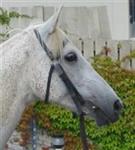
2. Buying A Horse
- Temperament
- Size and weight carrying ability
- Age and sex
- Colour and marking
- Breed
3. Conformation
- Factors affecting conformation
- Ideal conformation
- How to describe conformation
4. The Digestive System and the Principles Of Feeding and Watering
- The alimentary canal
- Absorption of Food
- Groups of Nutrients
- Composition of some common feeds
- Principles of Watering
- Principles of Feeding
- Ideal proportions of food types
- Calculating Rations
5. The Grass Kept Horse and Pasture Management
- Develop appropriate procedures to manage a horse at grass
- Advantages of Working off Grass
- Disadvantages of Working off Grass
- Paddock size
- Types of Fencing
- The supply of water
- Shelter
- General Management
- Exercise and grooming
- Land Conservation
- Other factors
- Roughing off and turning out
6. Grooming
- The skin
- How the Skin Regulates Body Temperature
- Grooming Tools and methods
- Washing the mane and tail
- Caring for grooming tools
7. Industry Applications
- Explain commercial opportunities available in the horse industry
- Resources
- Writing resumes
- Competition horses
- Educating horses
- Breeding
- Farm planning
- Quality management systems
- Whole Farm planning
- Preparing farm business plan
- Managing risk
- Sensitivity Analysis
- Financial Planning
- Financial records
SUMMARY OF COMPETENCIES DEVELOPED
Differentiate between the different procedures used for the handling of horses.
- Describe the procedures for the buying and selling of horses.
- Develop a program for the evaluation of the conformation of horses on a property/facility.
- Analyse the digestive system, including structure and function, of horses.
- Develop appropriate procedures to manage a horse at grass.
- Explain the methods used to prepare horses for specific uses, including their grooming for different tasks.
- Explain commercial opportunities available in the horse industry.
 WHAT THE COURSE COVERS
Here are just some of the things you will be doing:
- Describe different psychological traits of a horse including: *herd instinct *memory *fright.
- Explain how an understanding of horse psychology can assist with handling a horse.
- Compare three different methods of breaking in a horse.
- Demonstrate how to put on different pieces of tack including: *a head stall *a bridle *a saddle.
- Demonstrate how to lead a horse.
- Demonstrate how to ride a horse.
- Develop a list of safety rules for handling horses in a specified situation.
- Compare the differences in the way two different horse owners handle their horses, at the same horse show or competition.
- Describe the different ways of trading (ie. buying or selling) horses in your locality.
- Develop a checklist of factors to consider when buying a horse for a specified type of use.
- Compare five different advertisements for the sale of horses of a similar type, to determine which of the five appears to be the best value, and listing the reasons why it appears good value.
- Evaluate the features of a horse being offered for sale in your locality, to determine the value of that horse.
- Label an unlabelled diagram of the parts of a horses body.
- Define the different conformation terminology, including: *girth *body proportions *leg settings *conformation *bone.
- Describe the preferred features of the parts of a horses body referred to in earlier points.
- Compare the conformation of two different breeds of horses, based upon a physical inspection of a horse from each breed.
- Compare procedures used to evaluate the conformation of horses at two different properties/facilities.
- Label the parts on an unlabelled diagram of the digestive system of horses.
- Explain the function of different components in a horses diet.
- Explain how the watering of a horse, as observed by you, on a specific property is likely to affect that horses digestive processes.
- Evaluate the digestive processes involved in the digestion of three different horse feeds analysed by you.
- Differentiate between the digestive processes in three different types of horses, including:
*very active horses *horses being rested.
- Compare the advantages with the disadvantages of keeping a horse at grass.
- Recommend paddock facilities, in your locality, which are appropriate for horses kept at grass.
- Prepare a description, and use illustrations where appropriate, of the facilities you recommended.
- Differentiate between the requirements of a specified horse kept at grass, at different times of the year, in your locality.
- Develop guidelines for managing a specific horse at grass, on a property visited and investigated by you.
- Explain three different husbandry tasks which are essential to the management of the horse investigated by you.
- List the different reasons for grooming horses.
- Describe how to use different items of grooming equipment.
- Write a procedure for washing a horse, in a specified situation.
- Compare how to groom horses for different situations, including: *dressage *pony club competition *exhibitions *stock work.
- List the different applications for horses in modern society.
- List the resources available for different sectors of the horse industry in your locality, including:
*racing *breeding *competitions *recreational riding.
- Determine the minimum facilities required to establish three different specified businesses in the horse industry, including; *a riding school *a stock agent *another horse business.
- Evaluate the financial viability of four different sectors of the horse industry.
- Evaluate the potential of two different specified horse enterprises in your locality.

WHAT NEXT?
Register to Study - Go to “It’s Easy to Enrol” box at the top of the page and you can enrol now.
or
Get Advice – Email us at info@acsedu.co.uk OR
Use our FREE COUNSELLING SERVICE to contact a tutor
CLICK TO CONTACT US