Grow Carnivorous Plants
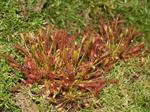 Learn about the uses of carnivorous plants, culture, propagation and more with this distance learning course.
This course provides a great overview of carnivorous plants and how they can be used.
Carnivorous plants are unique.
They don’t appeal to everyone; but they often capture the imagination of people who are not necessarily interested in other types of plants.
Anyone who chooses to undertake this course is obviously interested in carnivorous plants; probably either as an amateur collector, a commercial grower or a naturalist.
Carnivorous plants are plants that derive some or all of their nutrients by capturing and digesting small animals, such as insects.
Other terms used for carnivorous plants are a “carnivory” or a “carnivore”.
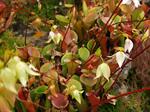 The mechanisms used to capture and digest animals are generally subtle; but not always.
Characteristics that are unique to carnivorous plants include:
- Attraction Mechanisms eg. Lures, odours, directional guides
- Trapping Mechanisms eg. Sticky secretions that hold animals like fly paper, trap door like openings to digestive chambers.
- Digestive Mechanisms eg. Secreted enzymes and absorption of digested material.
Course Contents
- Introduction -characteristics and classification, resources, etc.
- Culture -soils, watering, pests, diseases.
- Propagation And Container Growing
- Pitchers (Nepenthes) and Sundews (Drosera)
- Other Important Groups - (e.g. Bladderworts).
- Lesser Grown Varieties of Carnivorous Plants
- Australian Droseras
- Growing and Using Carnivorous Plants-in containers, in the ground, as indoor plants.
- Special Assignment
Duration: 100 hours
Course Aims
- Learn to identify the different carnivorous plant families and genera
- Describe how to grow different carnivorous plants in different ways
- Know how to propagate different carnivorous plants both by seed or vegetatively
- Identify distinguishing characteristics and cultural needs for different species of both Sundews and Pitcher plants.
- Identify distinguishing characteristics and cultural needs for different species of both Bladderworts and at least one other genus of Carnivorous plant.
- Identify distinguishing characteristics and cultural needs for different species of of less commonly cultivated carnivorous plants.
- Determine and describe appropriate ways to grow and display cultured carnivorous plants.
- Describe one group of carnivorous plants in detail.
Where can You Grow them?
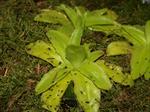 Many carnivorous plants occur naturally in wet situations; but there are exceptions. The way you grow and treat them must reflect where they come from. Collectors often grow many types in pots, troughs, beds or even hanging baskets in a greenhouse or conservatory. Some may be grown outside in a bog garden; and others might be raised in a terrarium inside a house.
The range of conditions carnivorous plants grow in varies considerably. Most have adapted to grow in environments where there is a poor supply of nutrients in the soil and so being able to trap and digest animals is a distinct advantage. Although, there is great interest in growing carnivorous plants, they will not last long if the conditions they are grown in are too far removed from their natural habitat.
Temperature Needs
Many species grow well at normal room temperatures. They can also withstand variations in temperature so long as the variations are not extreme. If the temperature is comfortable for you; it is probably adequate for most carnivorous plants. Most species of Nepenthes, for instance, grow best in an average temperature range from 15 to 30°C.
Humidity
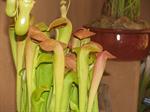 Most carnivorous plants grow in swamps or bogs where humidity can be higher than elsewhere, even in temperate climates. You should know where the plants occur naturally, and attempt to reproduce a similar level of humidity.
Growing plants in a tray or saucer of water may increase humidity a little; and having a surface of moist sphagnum moss or peat will create greater humidity, than having a surface covered by sand. Some growers use a humidifier, particularly when plants are growing strongly, which enables greater control over humidity levels. Others grow carnivores in a terrarium. Humidity will be higher than elsewhere in an open terrarium, such as a fish tank, with nothing covering the top. When the top is covered or partly covered (e.g. a large glass bottle or fish tank with a glass cover) humidity levels will increase even further.
Light Requirements
Many species of carnivorous plants are exposed to full sunlight in the wild. This natural light may have a light intensity of around 100,000 lux in the middle of the day. In comparison, lightly shaded conditions found inside a house, for instance near a window but out of any direct sunlight, may be perhaps 15,000 lux and typical lighting inside an office may be only around 1,000 lux. You can see from this that an indoor collection of carnivorous plants is most likely to need light levels to be supplemented with artificial lighting to perform at their best, or even to just survive.
WHAT NEXT?
Register to Study - Go to “It’s Easy to Enrol” box at the top of the page and you can enrol now.
or
Get Advice – Email us at info@acsedu.co.uk OR
Use our FREE COUNSELLING SERVICE to contact a tutor
CLICK TO CONTACT US