Learn all about orchids and how to grown them
Enrol today and receive our Short Course - Plant Taxonomy, for free!
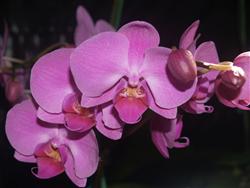
 If you choose the appropriate orchids for your locality, they are very easy plants to grow, often requiring very little attention once established in a suitable position. This doesn't mean they will grow better if neglected, but they will often survive neglect better than many other types of plants. The best way to know how to grow a particular orchid is to look at its natural habitat, and try to recreate similar conditions.
In cool areas most species will need protection from extreme cold, and in hot climates protection from direct sunlight is essential. For this reason, shade houses and well ventilated greenhouses are frequently used for orchid growing. In cooler climates Cymbidium, Dendrobium, Pleonie and some of the Australian native orchids will grow easily. In warmer climates Dendrobium and Cattleya are good orchids for the beginner.
There are between 20,000 and 30,000 orchid species known to man, coming from almost every corner of the world (except for very arid desert areas and the Arctic and Antarctic). Many, particularly tropical species, are epiphytic (i.e. growing on other plants but not deriving nutrition from those plants), others are lithophytes (i.e. grow on rocks which are usually well matted in organic matter), while others, mostly cool climate species, grow in the soil (i.e. terrestrial). Some have very small, short lived flowers which easily go unnoticed; while others have large flowers or flower stems which continue to give colour for up to two months.
It was once thought that all orchids came from the tropics and needed heat, humidity and shade. This is not true. Orchids come from all parts of the world and even in the tropics orchids are most often found growing in tree tops where there is constant movement of air and quite a bit or sunshine. Orchid flowers are produced in all colours of the rainbow. White, green and brown are among the most common colours. There are some deep purple colours that look almost black.
Course Structure and Lesson Content
There are 8 lessons in this course:
-
Introduction
-
Introduction to Orchid Species
-
Plant Names and the System for Naming Orchids
-
Orchid sub families and tribes
-
Plant Name Pronunciation
-
Orchid Plant structure.
-
Resources
-
Terminology
-
Culture
-
Overview of Growing Orchids
-
Guidelines; temperature, light, humidity, ventilation, watering, feeding, potting mixes
-
Growing Cattleyas
-
Substrates for Geophytes and Epiphytes
-
Understanding Soils; texture, pH, nutrient availability, fertility,
-
Mycorrhiza and Orchids
-
Propagating and Potting Media
-
Nutrients and Nutrition
-
Plant Health; orchid pests, orchid diseases, other problems
-
Pruning Orchids
-
Watering Orchids
-
Propagation
-
Sexual vs. asexual propagation
-
Asexual Propagating sympodial Orchids
-
Asexual Propagation of Monopodial Epiphytes
-
Aerial Offset Propagation (Keikis)
-
Propagating Orchids by Seed
-
Hybrid Seed Production
-
Harvesting Orchid Seed
-
Flasking Method of Seed Sowing
-
Tissue (Meristem) Culture of Orchids
-
Propagation Equipment; greenhouses, hotbeds, cold frames, mist systems, fluro light boxes, etc
-
Cymbidiums And Dendrobiums.
-
Cattleyas, Vandas And Other Commonly Grown Orchids.
-
Cattleya varieties and culture
Vandas; main species and culture
-
Odontoglossum
-
Oncidium - types (climbing and spreading), culture
-
Paphiopedilum (Slipper Orchids)
-
Phalaenopsis (Moth Orchids)
-
Pleione (Indian Crocus)
-
Crucifix Orchids (Epidendrum)
-
Australian Native Orchids.
-
Endemic, naturalised and indigenous plants
-
Problem Based Learning Project, with the following Learning Outcomes:
-
Determine which species of orchids are most commonly sold in your locality.
-
Determine orchid varieties which are being grown in your locality
-
Determine any orchid genera suited to growing in a warm climate.
-
Growing Orchids: Commercial and general uses
-
Cut Flower Production
-
Basket Plants
-
Epiphytes
-
Review of Orchid Genera for Cut Flower Production
-
Environmental Requirements or many significant orchid genera
-
Vanilla Bean Culture and Production
-
Greenhouse Management for Orchids
-
Harvest and Special Project On One Group Of Orchids.
-
Crop Scheduling; Writing a schedule for production of an Orchid Crop
-
Harvest and Post Harvest of Selected Orchid Cut Flowers; bud opening, transport, storing flowers, etc
-
Cattleya, Cymbidium, Dendrobium
Each lesson culminates in an assignment which is submitted to the school, marked by the school's tutors and returned to you with any relevant suggestions, comments, and if necessary, extra reading.
Course Aims
-
Describe the system of plant classification and naming
-
Discuss appropriate ways to grow a range of different orchid species.
-
Explain common methods of Orchid Propagation
-
Describe the basics of the structure, taxonomy and culture of Cymbidiums and Dendrobiums
-
Describe some of the more commonly grown orchids apart from Dendrobiums and Cattleyas
-
Investigate any orchids native to your locality or country
-
Describe a range of alternative ways in which to grow orchids
-
Research two commercial orchid growing establishments
What You Will Do In This Course
-
Compile a resource file or organisations and information sources relevant to orchids.
-
Obtain and orchid flower; draw and label this flower.
-
Review 56 different orchid species in detail.
-
Obtain soil from two different areas (two different types of soils). Using the tests in the Lesson notes, do the following, name each of these soils and test the drainage of each soil.
-
Obtain (or make up) a potting mix which you consider appropriate for growing orchids.
-
Visit a nursery or garden growing orchids. Notice how and where these plants are growing.
-
Determine which plants are healthiest and assess the conditions in which they are growing.
-
Obtain enough plant material to propagate four different orchids. Propagate these orchids vegetatively.
-
Visit a nursery, or some other place which sells a wide range of different types of pots. Consider the properties of the pots you see for sale and their suitability for growing orchids in. Note down the prices of each.
-
Investigate further into tissue culture processes specific to Orchids beyond the notes offered in the course.
-
Determine which species of orchids are most commonly sold in your locality.
-
Carry out research and look through any references you have and determine any orchid genera (not yet covered in this course), which are suited to growing in a tropical or sub-tropical climate.
-
Visit a native plant nursery which sells a range of native orchids. List at least 5 native orchid varieties which are being grown in your locality.
-
Visit a florist shop. Notice what orchids are being sold; how they are presented for sale, how they are stored etc
-
Evaluate the cultural practices observed (or investigated) in the 2 different enterprises which you considered in your set task.
What is the Scope of Orchids?
Orchids belong to the Orchidaceae family, one of the largest flowering plant families, with 735 genera and 17,000 species. They are perennial, herbaceous plants, which are normally terrestrial in temperate climates, or epiphytes in tropical climates. Occasionally they are saprophytic (i.e. living on dead organic material).
The flowers are normally hermaphroditic (i.e. carry both male and female parts), with a perianth of 6 segments in 2 whorls - 3 in an outer whorl, 3 in an inner whorl. Flower colour, size and shape vary greatly. Normally there is 1 stamen to a flower (rarely 2 or 3). The ovary is inferior, and the pistil is made up of 3 united carpels. The ovary is 1-3 celled; fruit is a dehiscent capsule. The seed is produced in large numbers, and is small and dust like.
The subdivision of families into sub families has been difficult with this family. The following classification by Willis divides orchids into 3 subfamilies and 6 tribes:
Subfamily Apostasioidae
Flowers more or less actinomorphic (regular - divides into equal halves in two planes), labellum shallow, stamens 2 or 3.
Tribe Apostasieae
e.g. Genus - Apostasia
Subfamily Cypripedioideae
Flower zygomorphic (divides into equal halves in one plane only), labellum deeply saccate, 2 stamens, staminode (i.e. sterile stamen) usually shield like.
Tribe Cypreipedieae
e.g. Genera - Daphiopedilum and Cypripedium.
Subfamily Orchidoideae
Flowers zygomorphic, only 1 stamen, no staminode.
Tribe Orchideae
Viscidium (disc at base of caudicle) present, base of anther firmly attatched to column. eg. Genera - Orchis, Platanthera, Ophrys and Dactylorhiza.
Tribe Neottieae
Viscidium present, anther deciduous, apex lightly attached to column. eg. Genera - Listera, Spiranthes, Neottia and Epipactis
Tribe Epidendreae
Viscidium absent or poorly developed, anther deciduous attached by apex. eg. Genera - Dendrobium, Vanilla, Cattleya and Epidendrum.
Tribe Vandeae
Viscidium present, anther deciduous, attached by apex; eg. Genera - Vanda, Oncidium, Angraecum and Odontoglossum.
(Reference: 100 Plant Families by Hickey and King Cambridge University Press)
Start at any time
You can enrol on our Orchid Culture course at any time. You study by distance learning - either online or by eLearning - with the support and guidance of our expert tutors. They are highly knowledgeable with decades of experience in horticulture. When you submit your assignments to the School for marking, they will provide comments and feedback specifically on your work, and are available to offer you any guidance during your studies.
If you are ready to enrol, just go to the "It's easy to enrol" box at the top of this page. If you have any questions or want to know more, then please phone us on (UK) 01384 442752 (or, International +44 (0) 1384 442752) or use our FREE COURSE COUNSELLING SERVICE to connect with our specialist horticulture tutors.