Studying animal behaviour with this course is an intensive introduction to the study of animals and why they behave the way they do.
Do you ever see badly behaved
animals and wonder why they behave the way they do? Or admire animals
that do exactly what their owners or keepers say?
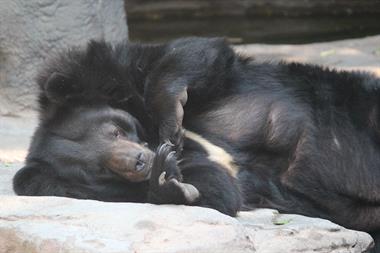
Many animals display what we consider to be negative behaviours, but studying animal psychology can help us to find out why.
- Learn more about how animals think and why they behave the way they do.
- Learn techniques to train animals more effective.
- Find out more about how to deal with difficult behaviour.
- A useful course for anyone who owns or works with animals.
- Course Duration: 100 hours of self paced study. Start at a time to suit you and study at your own pace.
- Benefit from the support of highly experienced tutors.
COURSE AIM
Develop your understanding of animal behaviour, and your ability to apply that to the handling of a variety of different types of animals.
COURSE STRUCTURE AND CONTENT
There are 8 lessons in this course, as follows:
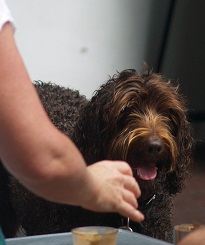 Introduction: Influences and motivation. What is behaviour; causes of behaviour (e.g. genetics; learning; external and internal influences); reactive, active and cognitive behaviour; conditioning.
- Genetics and Behaviour. Understanding biology; natural selection; genetic variation; development of behaviour; behavioural genetics.
- Animal Perception and Behaviour. How animals perceive things; what stimulates them and how do those stimuli function; instinct; neural control; sensory processes: sight, sound, hearing etc.
- Behaviour and the Environment. Coordination; orientation; homeostasis; acclimatisation; circadian rhythms; biological clocks; reproductive cycles; etc.
- Social Behaviour. Animal societies; aggression; social constraints; social order; play; sexual behaviour; communication.
- Instinct and Learning. Conditioning and learning; extinction and habituation; instrumental learning; reinforcement; operant behaviour; biological and cognitive aspects of learning.
- Handling Animals. Psychological affects of different handling techniques. Training animals (horses, cats, dogs, etc). The student can choose which animals to focus on, though a variety are covered.
- Behavioural Problems. Abnormal behaviour (e.g. Psychotic; neurotic); domestication of animals; reducing human contact/dependence.
LESSON AIMS
- Identify factors affecting animal behaviour.
- Describe the influence of genes on animal behaviour.
- Explain how animals perceive and how they respond to various stimuli.
- Explain the influence of environment factors, such as circadian rhythms, on biological clocks, reproductive cycles, orientation and other animal behaviours.
- Explain the social influences on animal aggression, play, sexual behaviour, communication and other behaviours.
- Describe different ways that animals learn (such as conditioning and habituation) and some effects of learning on behaviour.
- Discuss psychological implications of different handling techniques.
- Identify abnormal animal behaviour (eg. psychotic, neurotic behaviour) and ways to reduce dependence on humans.
Examples of what you may do:
- Observe an animal in the zoo, in the wild, or a domestic animal. Try to observe what you consider to be an example of operant conditioning. Make notes.
- Talk with an animal breeder (amateur or professional). This may be a pet owner whose cat or dog has given birth; or it may be a farmer, dog breeder, horse breeder, bird breeder or some other animal breeder.
- Write a paragraph describing the behaviour of an animal (real or contrived) which utilizes the different words you learnt under “terminology” in this lesson
- Classify the following animals according to whether they are endo-therms or ecto-therms; a dog, a penguin, a single celled protozoa, a lizard. How is heat lost from endo-therms to the environment, and how can this heat loss be reduced?
- Observe an animal while it is on its own. Make notes of how it behaves. Observe the same animal or species of animal in a group situation or in the presence of one other animal of the same species. Make notes on its behaviour and pay attention to any noticeable differences compared to its solitary behaviour.
- Visit a zoo, wildlife park or farm where animals are being confined in some way, and observe the behaviour of one particular type of animal over the course of an hour. This can be any animal you choose to study. Make notes on its behaviour, and any problems that you would anticipate with handling.
Do Animals Really Think like You do?
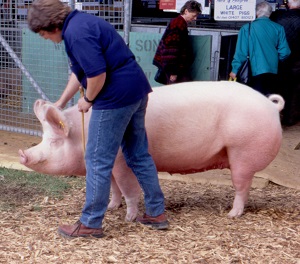 Like humans, all mammals have a brain and central nervous system. These are made up of neurons or nerve cells which transmit information. Insects, amphibians, birds and reptiles also have brains though they are structurally different to mammalian brains. Generally, the amount of neurons an animal possesses provides an indication of the types of behaviour it is likely to engage in. Mammal brains are around twice the size of birds of equivalent body mass and ten times that of a reptile.
The brains of animals act as central information processing units. They control perception, arousal and emotions, motivation, homeostatic regulation, motor coordination and functioning, as well as cognitive processes some of which have already been reviewed elsewhere in this book such as memory and learning, along with intelligence. Other aspects of animal mentality include what happens when things go wrong - mental health problems and disorders.
Animal Intelligence
All animal life forms have intelligence, it is just a question of the degree of intelligence. Animal intelligence normally refers to the process of learning, associating and processing information with the purpose of understanding what has just been abducted.
There are different forms of animal intelligence, and these different types vary among different species of animals and, particularly, every individual. It is not easy to assess animal intelligence because the behaviour of animals of different species varies greatly. One of the ways that animal intelligence has been assessed is through evaluating their performance on tasks, but again this can be different for each particular animal and what they are capable of. For instance, a mix and match sample will be different for each animal - whilst a monkey can quickly learn the strategy, a pigeon may take much longer in learning, but it doesn’t necessarily mean the pigeon is ‘less intelligent’.
Pigeons have been found to sense and distinguish situations on the basis of ‘oddity’. It has been seen that the more frequently the odd tasks are presented to them, the better they are able to perform.
The use of ‘tools’ is another means of determining animal intelligence. For example, if an Egyptian vulture locates an ostrich nest with an egg in it, it will search for a stone. It then grasps the stone in its beak and jerks its neck forwards releasing the stone onto the egg. It may take a number of attempts but they persist until they crack open the egg.
It is important to use the same criteria in judging animal intelligence, since each species is different and learns differently. Certain species of woodpeckers may hold a cactus spine with their bill to search for insects in the gaps of wood (e.g. branches or tree bark), while a chimpanzee may also use a tool such as a stick or twig to help in its search for food (e.g. to grasp honey from beehives, or to dig holes into soil in search of edible roots).
Intelligence, therefore, is not only measured by the ability of each animal to respond to certain circumstances, but it is also indicated by the different ways an animal finds solutions to particular problems.
Throughout this course, as your understanding of animal psychology grows, your ability to comprehend and appreciate their behaviour will increase.
Study Animal Behaviour as a starting point -
- to improve your current job prospects
- to a greater understanding of animals and how they think
- to improve your care of your own pets and animals
Student Comment
".. well written and explained, any
queries i had were answered quickly, and the staff to be very friendly
and helpful..... invaluable. I am a little sad it is near the end as I
have enjoyed the whole course"
S. Crosbie Ross
Studying animal behaviour can give you a useful insight into animals and why they behave the way they do. This qualification is useful if you want to train animals professionally or personally or want to work with animals.
QUESTIONS?
Let us help you choose the right course - please get in touch, contact an Animal Behaviour Tutor with any questions you may have.
Stay in Touch. Follow us on:
Twitter
Facebook
Google