Understand the structure and function of animals (wildlife, pets or farm animals)
 Learn about animal behaviour and what causes animals to behave in certain ways.
- Understand the effect of external influences on animal behaviour.
- Learn the characteristics of different types of biochemical molecules and become familiar with basic laboratory techniques used in biochemistry.
- The choice of Elective Modules enables you to focus part of your qualification on Environmental Assessment - learning more about environmental law, and producing environmental reports - or Professional Practice For Consultants - how to run a consultancy practice.
- Start at any time, study in your own time and at your own pace.
- Study with support from our highly experienced tutors.
COURSE STRUCTURE AND CONTENT
Students are to complete seven Core Modules, one Elective Module, plus a Research Project.
The Core Modules
The Core Modules and lessons are shown below; please follow the link in the title of each module for further information.
Animal Husbandry I (Animal Anatomy And Physiology) BAG101
Biochemistry I - Animals BSC103
Biochemistry II BSC203
Animal Behaviour BAG203
Vertebrate Zoology BEN104
Ornithology BEN102
Marine Studies I BEN103
The Elective Modules
Students are to select one of the following modules:
Environmental Assessment BEN301
Professional Practice for Consultants BBS301
Keep Animals Cool!
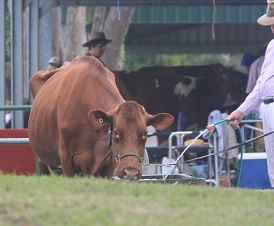
Most animals have an optimum body temperature around which they function most efficiently. This is known as thermoregulation. Most animals are also able to influence their own body temperature to some extent, by means of adaptive behaviour or by utilising specialised physiological responses. Animals are able to detect changes in their body temperature, the environment or both through thermo-reception.
Ecto-therms are animals which derive heat primarily from outside their bodies, i.e. they are cold-blooded. That is, their body temperature conforms to that of the environment. Endo-therms derive their heat primarily from metabolic activity within their bodies, i.e. they are warm-blooded. Endo-therms can raise their heat production through muscular activity, i.e. shivering, increased metabolic rate, and by increasing food consumption since heat is a by-product of digestion.
Response to Overheating
Animals can overheat when they are active due to increased metabolic activity. They can also overheat in hot environments when they are unable to lose heat. Body temperatures of 47 degrees and over tend to be lethal for most species so they need to have different means of losing heat.
The four main ways are:
- Conduction - the transfer of heat across regions that vary in temperature and can occur between solids and liquids. It can occur between body tissues and also between the body and the ground. Conduction can be reduced through layers of fat under the skin and by feathers and hairs that trap air.
- Convection - the transfer of heat through fluids. Since heat loss can result from the transfer of warm blood from the centre of the organism to the cooler periphery of the body the animal can control temperature by reducing blood flow to the extremities.
- Radiation – This type of heat loss can occur within a vacuum. The resultant heat loss is proportional to the temperature difference between the animal and the environment. Animals can both gain and lose heat by radiation. An animal’s colouring does not affect heat loss through radiation, though it does affect heat absorbance. That is, darker animals will gain more heat through radiation and white ones will have a greater reflection.
- Evaporation - The loss of water from the animal’s body is also an important means of losing heat.
HOW THE COURSE WORKS
You can start the Advanced Certificate in Animal Science at any time.
It is studied by distance learning, so you can study in the comfort of your own home. But this doesn't mean you are all alone in your studies. Our highly qualified and friendly tutors are there to help you every step of the way. If you have any questions at all, they are always happy to help.
HOW THE ADVANCED CERTIFICATE IN ANIMAL SCIENCE IS ASSESSED
The Advanced Certificate In Animal Science requires approximately 900 hours of study. It is made up of eight 100 hour modules and a workplace project lasting 100 hours.
To pass the course –
- Pass all assignments on the eight 100 hour modules. There will be an assignment at the end of each lesson to submit to your tutor for marking and feedback.
- Pass eight examinations – one on each module. These are usually taken at the end of the module and can be arranged at a time and location to suit you.
- Complete a Workplace Project. The project should last around 100 hours. There are four options available to you to satisfy this requirement. Don’t worry if you are not sure at this stage, your tutor will be there to guide you.
If you are not ready to study the full Advanced Certificate In Animal Science, then each of the Modules can be studied as individual standalone courses. Course fees are shown on the respective pages.
THE ADVANTAGES OF STUDYING WITH ACS
- We are an independent School, and the course has been developed by specialists in Science, Environment and Agriculture.
- You can start the course at any time and study at your own pace.
- Fit your studies around your own busy lifestyle - we provide full tutor support for all the time you are studying.
- Study where you want to - a choice of online or eLearning methods of study offer the flexibility for you to determine where and when you study.
WHY SHOULD YOU STUDY THIS COURSE?
This is a great course to choose, if you want to develop your knowledge and career in working with animals. Our courses are designed improve your skills and knowledge,and to also encourage you to keep learning after you finish studying. We believe a good course should not only develop your skills and knowledge; but also the Advanced Certificate In Animal Science is intended to:
- Improve your ability to communicate with others who work with animals.
- Develop problem solving skills relevant to animals.
- Expand your awareness and develop creativity.
- Facilitate networking in the worlds of farming, wildlife management and pet care.
- Develop attributes that set you apart from others who work with animals.
- Become more motivated, confident and aware of career possibilities involving work with animals.
Some people study so they can better care for their own animals; others are seeking to forge a career. Whatever your purpose; this course is a major step forward for anyone who loves animals.
Your Next Step
You can enrol today - go to “It’s Easy to Enrol” box at the top of the page and enrol now.
If you have any questions or need advice on choosing a course to suit your career goals, please get in touch with us by -
Phone on (UK) 01384 442752, or (outside UK) +44 (0) 1384 442752,
or connect with our specialist Science, Environmental or Agriculture tutors using our FREE COURSE COUNSELLING SERVICE.