Study plant physiology and taxonomy.
- Learn about plants in a 'hands-on' way by conducting your own experiments.
- Learn how to prepare a collection of pressed, dried, plants.
- Work in nature - collecting samples and studying ecology.
- Work in a lab - conduct research on plant tissues and processes.
COURSE STRUCTURE AND CONTENT
Course Duration: 100 hours.
Start Date: Start at any time - study at a pace that suits you, and with full tutor support for the duration of your studies.
Lessons: The course comprises 10 lessons as detailed, below.
Lesson 1. Taxonomic Classification of Plants
- History of taxonomy.
- Binomial system.
- Levels of classification.
- Families.
- Principle of priority.
- Name changes.
- Hybrids.
- Varieties.
- Cultivars.
- Abbreviations.
- Botanical keys.
- Key to Phyla.
Lesson 2. Cells and Tissues
- Types of Plant Cells.
- Plant Tissue.
- Primary and Secondary Growth.
Lesson 3. Specific Vegetative Parts of a Plant
- Stem Formation.
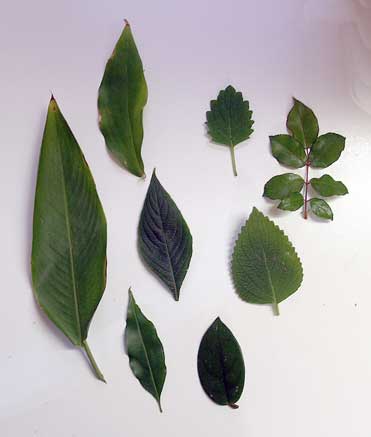
- Leaf Structure and Leaf Arrangement.
- Root Structure.
Lesson 4. Flowers and Fruit
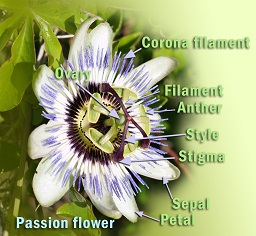
- The Flower.
- Inflorescence (panicle, umbel, composite head).
- Fruits (simple, aggregate, multiple).
- Reproductive Growth and Development.
Lesson 5. Seed and the Developing Embryo
- Seed Structure.
- Food Storage Organs
- Seed Coats.
- Embryo.
- Seed Germination.
- Requirements.
- Stimulants.
- Inhibitors.
Lesson 6. Photosynthesis and Growing Plants
- Photosynthetic Apparatus.
- Process.
- Gas Exchange.
- Light transformation to Energy.
Lesson 7. Respiration
- Stages of Respiration.
- The Krebs Cycle.
- Electron Transport Chain.
- Rate of Respiration.
- Control of ATP Production in Respiration.
Lesson 8. The Role of Water
- Osmosis.
- Water Movement from Soil to Root.
- The Transpiration Stream.
Lesson 9. Movement of Water and Assimilates through a Plant
- Mechanisms of Nutrient Uptake.
- Absorption and Transport of Mineral Nutrients.
- Translocation of Sugars.
- Adaptations for Water Storage.
- Food and Water Storage Organs.
Lesson 10. The Effects of Tropisms and Other Growth Movements
- Plant Hormones.
- Tropisms.
- Chemical Growth Modifications.
COURSE AIMS
On completion of this course, students will be able to:
- Demonstrate a knowledge of the Plant Kingdom and understanding of the taxonomic hierarchy.
- Identify and describe the different types of plant cells and tissues, their structure and function.
- Determine the role and function of specific vegetative parts of the plant.
- Determine the role and function of the reproductive parts of the plant.
- Demonstrate an understanding of the role and function of the seed in the life cycle of the plant.
- Explain the mechanism and the role of photosynthesis in the metabolism of plants and relate to plant growth in controlled environments.
- Explain the mechanism and the role of respiration in the metabolism of plants.
- Demonstrate an understanding of the role of water in the plant.
- Review the movement of water, solutes and assimilates through the plant.
- Understand the effects of tropisms and other plant movements on growth and development.
- Undertake risk assessments relevant to the learning outcomes in this unit.
WHAT YOU WILL DO IN THIS COURSE
During this course, students will:
- Prepare a collection of forty pressed, dried, labelled plants.
- Learn how to key out plants using a Botanical Key.
- Identify the phyla, family, genus and species of ten unknown plants.
- Identify modified plant parts on live plants.
- Describe in botanical terms leaf shapes from a range of different plants.
- Dissect and draw labelled diagrams of several flowers.
- Collect fruits and categorise them by type (pome, drupe, etc.).
- Germinate seeds and describe changes that occur to the seeds over time.
- Observe changes in potted plants under varying levels of sunlight and relate this to photosynthesis.
- Observe transpiration in live plants and relate this to theoretical knowledge.
- Observe and record osmosis in an experimental situation .
- Observe and record phototropism in plants.
A Foundation for a Lifelong Affair with Plants
Botany has many parts to it; but it isn't difficult to understand if you progress your studies in a systematic way, learning one bit at a time, and in a logical sequence.
 There are certain things that are common across most, if not all plants. Other things will differentiate one plant species from all others. Plant characteristics are often discussed with words which a novice student may be unfamiliar with. Botanical language does need to be learnt and understood, but our courses take that aspect of learning in small digestible chunks, across the entire course, backed up by a Plant Language text book which has been written by our staff to cover the words you will encounter, without being too many so as to overwhelm you.
As you learn the language, you will also learn about the physical structure of plants and the processes that happen as a plant grows and changes.
The physical structure or anatomy is all about understanding the stems, roots, flowers, fruits and any other bits; and the variations that can occur with all such things from one plant to another.
Some plants can have parts which other plants don't even have at all; and words that you may be quite unfamiliar with may be used to describe such parts; for example:
- Auricle - Small ear like appendage on grasses.
- Axillary - Located in junction of leaf-stalk and branch to which the leaf is attached.
- Axil - The angle between the phyllode and the stem.
- Bipinnate - A compound leaf twice divided (like a fern leaf in general appearance).
- Bipinnatifid - Having many parts. Of leaves, meaning they have several lobes. Of flowers, meaning they have many flowers in a composite head.
- Bract - A small leaf like structure at the base of the flower stalk.
- Buttress - Unsymmetrical secondary thickening. Gives extra strength to a tree.
- Calyx - The outer ring of flower parts (eg. sepals that are outside of petals).
- Campanulate - Of flowers, bell-shaped.
- Carotenoid - Orange, yellow and red plant pigments. Include carotenes and xanthophylls.
- Cataphylls - Reduced leaves at base of plant, e.g. bud and rhizome scales.
- Cauline flowers - Flowers which are borne on older aerial stems.
- Cladode - A branch of a single internode which is flattened to simulate a leaf.
- Climbing roots - Clasping roots typical of tropical climbers.
- Collenchyma - Tissue consisting of living cells capable of extension. The cell walls are strengthened by cellulose, mostly in the corners. Collenchyma provides structural support to young, growing regions of the plant.
- Composite head - An inflorescence composed of many small, tightly packed flowers, such as a sunflower.
- Contractile roots - Roots that grow directly downwards without branching but as the reserves disappear the root collapses thereby "contracting" the plant downwards.
- Cortical roots - Grow directly through the cortex from the point of origin in the pericycle of stem to eventually emerge at base of stem.
As You Learn the Language, Your Knowledge Builds.
As you know more about botany, your ability to understand and work with plants grows, making you a better gardener, nurseryman, landscaper, horticulturist or plant scientist.
WHY ACS?
ACS Student comments:
"Yes, the course was valuable. As a biologist I am looking to expand my knowledge base into ecological restoration. To date the information in this course relates well as supporting information to the restoration textbooks I am working through.
Although I have not presently capitalized on the course materials from a professional standpoint I foresee the knowledge gained from the course being very helpful in the future even if it is in a more subtle way than originally expected. Although much of the material was covered during my undergraduate studies, I was required to do a sufficient amount of research on my end to complete the assignments.
Through this process I feel I learned the material better than I did the first time around. I feel the assignments built upon each other quite well. The necessity of the plant reviews continued to bring in not only the scientific aspects of botany but also the more practical knowledge that can be acquired, making the course that much more enjoyable.
My tutor not only provided me with information regarding where I had made errors but she also provided me with insights into how I could improve either my approach to answering the assignments or where I had missed some pertinent information."
Robert T. Magill, MS, Certified Wildlife Biologist, Utah USA, Botany 1 course.
"Clients... that have completed courses with ACS that we have spoken to, have all been extremely happy. Leanne and myself are more than happy with the assistance we received and the prompt attention."
Dynamic Workforce Solutions
WHY DELAY? ENROL TODAY!
If you have any
questions, please get in touch with our Horticulture tutors using our FREE COURSE COUNSELLING SERVICE. They will be more than happy to help you.
Stay in Touch. Follow us on:
Twitter
Facebook
Google