Study the biology of cells
- Learn about cell structure and processes including cell division and gene expression.
- Feel confident using biological terminology.
- Extend your knowledge to plant and animal cells.
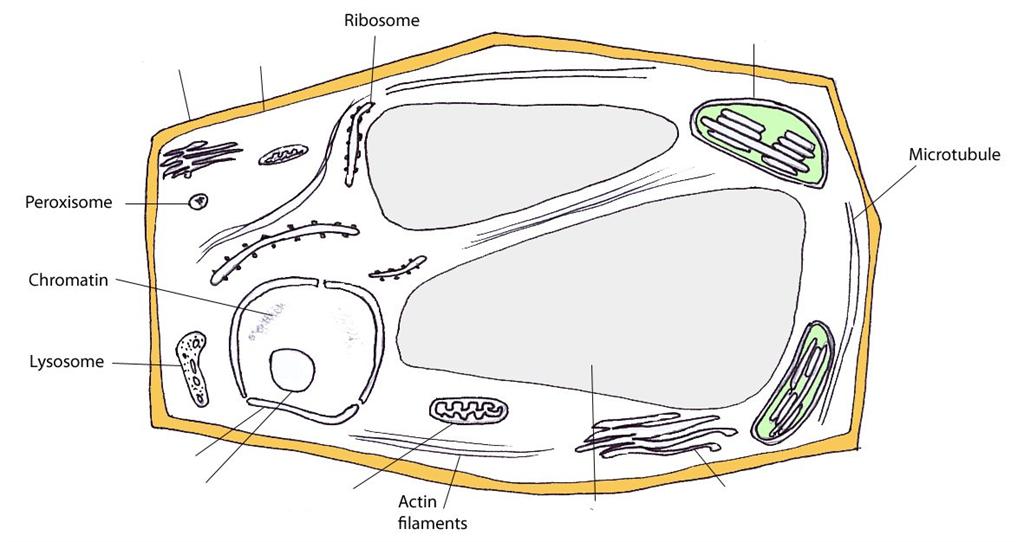 All known living organisms are composed of one or more cells. Cells are the units from which all living organisms are built. Some organisms (e.g. bacteria) have only one cell in the entire organism. Others are multi-cellular.
In this course, you will learn about the basic units of life, of how each cell is a self-contained and partially self-sufficient compartment designed to carry out a limited series of functions.
This course is suitable for
Open the door to a career in -
- Health sciences
- Plant sciences
- General biology
- Biochemistry.
An introductory yet challenging course designed for everyone wanting to learn more about biology.
Course Structure and Lesson Content
This course contains 10 lessons as follows:
Lesson 1. Introduction to Cells and Their Structure
- History of cell biology
- Prokaryotic and eukaryotic cells
- Cell shape and size
- Cell structure
- The nucleus including the nucleolus, euchromatin and heterochromatin
- Differences in animal and plant cells
Lesson 2. Cell Chemistry
- Cell chemical composition
- Carbohydrates
- Lipids
- Nucleic acids
- Proteins
- Enzymes
- Cell membranes
- Golgi apparatus
Lesson 3. DNA, Chromosomes and Genes
- DNA, Chromosomes, Genes
- DNA replication
- Telomeres and telomerase
- Genetics
- Case study in genetic inheritance
- Phenotype and genotype
- Gene mutations.
Lesson 4. Cell Division: Meiosis and Mitosis
Lesson 5. Cell Membranes
- Structure of cell membranes
- Movement of molecules through cell membranes
- Endocytosis
- Osmosis and filtration
- Hydrostatic pressure
- Active transport
- Electro-chemical gradient
- Nutrient and waste exchange in animal cells
- Mediated and non-mediated transport
Lesson 6. Protein Structure and Function
- Protein structure
- Fibrous proteins
- Globular proteins
- Protein organisation
- Primary to quaternary structure
- Protein function
Lesson 7. Protein Synthesis
- The function of ribonucleic acid in protein synthesis
- Transcription and translation
- Initiation
- Elongation
- Termination
Lesson 8. Food, Energy, Catalysis and Biosynthesis
- Sources of energy
- Metabolism within the cell
- Catabolic metabolism
- Anabolic metabolism
- ATP movement
- Kreb's cycle
- Production and storage of energy
- Energy production pathways from different foods
- Biosynthesis of cell molecules
- Mitochrondria
- Chloroplasts
Lesson 9. Intracellular Compartments, Transport and Cell Communication
- Cell communication
- Endocrine signalling
- Paracrine signalling
- Autocrine signalling
- Cytoskeleton
- Actin filaments
- Intermediate filaments
- Microtubules
Lesson 10. The Cell Cycle and Tissue Formation
- The cell cycle
- Phases of the cell cycle
- Cell cycle regulation
- Cell death
- Cells to bodies
- Stem cells
- Animal tissues including muscle, connective, epithelial, nerve, blood
Course Aims
- Review basic cell structure and discuss the scope and nature of cell biology.
- Describe the chemical components and processes of cells.
- Describe the storage of genetic information within cells and how this information is passed on to the next generation.
- Describe key concepts in molecular biology.
- Discuss membrane structure and transport across cell membranes.
- Discuss protein structure and function.
- Describe and discuss protein synthesis.
- Describe the significant processes involved in transfer and storage of energy in a cell.
- Describe the significant processes that occur in cell communication and intracellular transport.
- Describe the life cycle of cells and how they combine to create different types of tissues.
Genes Drive the Function of Cells
A gene may be defined as a section of DNA that controls a hereditary characteristic.
- The strands of DNA that can be found in chromosomes contain many genes.
- Genes are responsible for passing the characteristics of a plant or animal from the parents to the offspring (from one generation to the next).
- Each sequence of DNA sequence that codes for a specific protein or RNA is called a gene.
- Genes may vary in size from 1,000 to 1,000 000 base pairs.
- The human genome contains between 20,000 - 25,000 protein coding genes.
- The haploid (half the normal chromosomes) human genome occupies 3 billion DNA base pairs.
The cell nuclei of all plants and animals carry hundreds or thousands of genes that control all the aspects of the plant or animals, but each gene controls only one particular factor. For example, Aberdeen Angus cattle all carry a gene that gives their black coat colour. They have no gene for white coats because a pure bred Angus has no white on its coat. In the same way, Hereford cattle all carry a gene for red coat and a white face but no gene for a black coat.
Generally speaking the more complex the animal the larger the number of genes to code for it. However this is not always the case, humans have approximately 20,000 – 25,000 genes while the black cottonwood tree contains over 45,000 and fruit flies have 14,000.
Aside from all the useful genes carried in DNA, there is also a great deal of what appears to be useless DNA that does not carry information. This is referred to as Junk DNA and there is disagreement about whether it is useful or not. Other sections of DNA that do not code for proteins are called Introns. Introns are sections of DNA that are transcribed to various types of RNA. During the process to mature RNA, the introns are ‘spliced’ out.
DNA Replication
The nature of the base pairing which creates two antiparallel strands (opposite polarity) which are complementary, ensures that the DNA can be replicated with astounding accuracy. Each strand can produce an exact copy of its partner, thus a cell can replicate it’s DNA before replicating. As each strand replicates its partner strand, each daughter DNA is complete with one parent strand and a new one. Hence this is known as semiconservative replication.
The unique double helix allows DNA to accurately replicate itself. In order to do this, the helix can unzip down the middle creating two strands of DNA. Where the split starts is known as the ‘origin of replication’ or ‘replication origins’ or simply ‘origins’ in both eukaryotic and prokaryotic cells. The origins are marked by certain sequence of nucleotides which attract the initiator proteins. The sequence is usually rich in A-T base pairs as they contain less hydrogen bonds and therefore require less energy to split. As the initiator proteins attract other proteins to assist, the resulting separated DNA forms a bubble in the chain. As replicated continues the DNA chain continues to unwind creating a replication fork.
This DNA fork comprises of two strands: the parent 3’ – 5’ and the parent 5’ -3’. The daughter strand that forms on the parent templates are referred to as the leading strand (forms on the 5’ -3’) and the lagging strand (forms on the 3’ – 5’). These strands are read in different directions. The leading strand is replicated with the help of DNA polymerase which is an enzyme that finds the correct base pairs and then binds them to the DNA. DNA polymerase does this continuously.
DNA polymerase is extremely accurate in replication, in fact far more so that can be accounted for by the simplicity and stability of base pairs. DNA polymerase is able to proofread and correct mistakes by checking if the previously added nucleotide is correctly paired to the template strand, if it is not correct DNA polymerase will remove the offending nucleotide by severing the phosphate bond and start adding a new nucleotide again. This proof reading mechanism is the reason the DNA polymerase can only create DNA in the 5’ – 3’ direction and not the other because in the 3’ – 5’ direction it works as a exonuclease by degrading the phosphodiester bond.
The enzyme RNA Primase is bound at the initiation point. RNA Primase attracts RNA nucleotides which can bind nucleotides to the 3’-5’ parent strand. The RNA nucleotides function as ‘primers’ for the DNA nucleotides. The enzyme helicase is responsible for splitting the two strands by breaking the hydrogen bonds.
The lagging strand however is formed in fragments as the DNA polymerase cannot work in the 3’ – 5’ direction. To get around this RNA Primase adds more RNA primers which DNA polymerase can read. These fragments between the primers are called Okazaki fragments. Other enzymes can act degrade the RNA and act as exonucleases which can remove the RNA primers. The remaining gaps are filled in by DNA polymerase and DNA Ligase which adds the necessary phosphate to form the phosphate –sugar backbone.
Replication is essential and occurs before cell division to ensure that each daughter cell has the same genetic information as the parent cell. DNA replication is conversely regulated by the cell cycle in eukaryotes.
Why Learn About Cell Biology?
Research and knowledge of cell biology plays an important part in many areas of life, including:
- Scientists study the biology of cells in order to develop new vaccines and medicines.
- Knowledge of an individuals genetic make-up can be used to adopt a preventative approach to improving their health.
- Studies in cell biology are used to develop plants and crops with improved or enhanced qualities in particular areas (such as resistance to disease).
- Forensic scientists use cell biology as part of the process to solving crimes.
Our Students Say
"The course was better than I expected. I am studying a Bachelor of Health Science next year at university. I gained far more knowledge from this course than I expected."
J.McEwan
Start Studying by Distance Learning at Anytime
Our courses are all studied by distance learning and you can enrol on them at any time. They have been developed and are delivered by highly knowledgeable experts.
All students receive personalised feedback on their work from our tutors, and are able to contact them throughout the course if they have any questions or need further guidance.
If you are interested in pursuing a science career, for example in areas such as medical science or forensics, this course offers a great opportunity to gain a foundation of knowledge in cell biology. If you have any questions about the course or would like to know more, then please get in touch using our Free Course Counselling Service - our specialist Science tutors will be pleased to help you.