Explore the world of journalism - start a new career or study to advance your career
-
 Learn to write better.
- Learn about freelance writing.
- Understand the stages of preparing articles - from writing, through editing and preparing graphic content, through to publishing.
- Explore the world of journalism, develop your contacts within the industry and discover opportunities for work.
- A wide range of Electives means students choose to study a special area of interest to them.
- Suitable for beginners and those wishing to advance their career - the inclusion of an elective module enables students to tailor the course to a desired area of specialty.
Journalism is an ever-changing industry
Despite a decline in the number of magazines and newspapers being published around the world, there is more work for writers and publishers today than ever before!
- People have more access than ever before to electronic content and are increasingly reading electronic publications - ebooks, blogs, ezines, even electronic newspapers.
- The global population is larger than ever, and the rate of literacy is higher than ever.
- All of this represents more opportunities than ever before for careers and businesses in writing and journalism.
A fantastic foundation in journalism
This course has evolved since it's inception in the 1980's, adapting to changes in the world of publishing. It has been developed and is taught professional writers and publishers.
 A fantastic foundation for anyone to explore their strengths and weaknesses; then find and pursue their best opportunities in the field of journalism.
COURSE STRUCTURE AND CONTENT
Course Duration: 600 hours.
Start Date: Start at any time - study at a pace that suits you, and with full tutor support for the duration of your studies.
Content: Study five Core Modules plus choose one Elective Module.
The Core Modules are: Freelance Writing, Advanced Freelance Writing, Editing I, Publishing I, and Photoshop.
The Elective Modules are: Writing, Publishing, Editing, IT, or Photography.
All modules for the Certificate In are summarised below. Follow the title link for further information on each.
THE CORE MODULES
Freelance Writing BWR102
Many professional writers start out by freelancing. This module will show you how to write, what writing is marketable, and how to go about selling your work. Emphasis is placed on things which are important to publishers who might buy your work. Tutors concentrate on your ability to properly structure an article, and to be both concise and clear in your use of words. Learning outcomes for graduates of the module include:
- Have improved communication skills, particularly with respect to clarity, conciseness and correct grammar.
- Be familiar with the "writing industry"; having a clear idea of where opportunities exist for obtaining work as a freelance writer.
- Know how to go about approaching potential clients to obtain work.
Have an understanding of the processes involved in publishing books, magazines and newspapers - from generating concepts to seeing the finished publication on sale.
There are 10 lessons in this module:
- Introduction.
- Basic Writing Skills.
- The Publishing World.
- Manuscripts.
- Planning.
- Newspaper Writing.
- Magazine Writing.
- Writing Books.
- Writing Advertising.
- Special Assignment.
Advanced Freelance Writing BWR201
This is an ideal module to follow Freelance Writing. Building on existing skills it will help writers to improve their overall technique, and develop a more "commercial" approach to their work.
There are 8 lessons in the module:
- Writing Themes.
- Writing a Regular Column.
- Educational Writing.
- Scientific Writing.
- Writing a Biographical Story.
- Writing a News Article .
- Fiction Writing.
- Other Writing.
Editing l BWR106
This module develops your understanding of the purposes and aims of editing, and also of what editors do. Students will learn about the importance of clear, effective writing throughout all stages of the publishing process and how editors assess manuscripts and prepare them for publication.
There are 8 lessons in the module:
- Introduction to Editing.
- The Mechanics of Clear Writing.
- Assessing Manuscripts.
- Copy Editing I.
- Copy Editing II.
- Preparing Copy for Printing.
- Proof Reading.
- The Final Stages.
Publishing l BWR107
This module provides an excellent start for anyone considering self publishing, or seeking employment in publishing. It is equally relevant to electronic or print publishing. There are 10 lessons as follows:
- Nature and scope of the publishing world.
- Publishing procedures and techniques.
- Desktop publishing A.
- Desktop publishing B.
- Illustration: Graphics.
- Illustration: Photography.
- Research Skills: Market research, researching an article.
- Marketing of publications.
- Ethics and the law in publishing.
- Developing a publishing Project.
Graphic Design
There are 10 lessons in this module as follows:
- Scope and Nature of Graphic Design
- Design Fundamentals - line, tone, colour, etc.
- Colour Theory and Applications
- Typography
- Illustration - methods & techniques
- Logotype Design
- Layout Design
- Design Systems and the Design Industry - design briefs, how to bid for jobs, etc.
- Comparative Design - lessons from other designers
- Design Project - a practical project applying what you have learnt
THE ELECTIVE MODULES
Students are to select one 100 hour module from the following areas:
Writing and Journalism
Publishing
Editing
Information Technology
Photography
Students should discuss their elective option with the School to ensure it is appropriate for the qualification.
Do you want to be a Journalist?
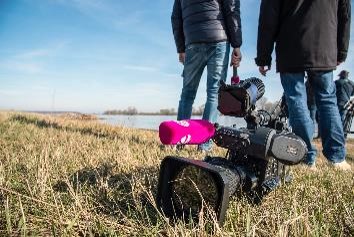 Journalists are primarily writers who are writing for periodicals (i.e. items such as newsletters or magazines which are published at regular intervals). Some journalists work on staff for a publisher from the publishers office, while others may work on a freelance or contract basis, from home, submitting articles which have been commissioned, or on spec (i.e. in the hope they will be accepted).
Freelance journalists often start slow, only getting occasional articles published early in their career; but with persistence and good luck, they can develop a reputation and network of publishers who accept their work (so much so that they can earn a comfortable living from their writing).
Some in house journalists will find themselves being used to perform a range of other jobs in the office where they work. Particularly in smaller publishing houses where they may need to help with editing, layout (preparing publications for printing), web site development, marketing copy writing, conducting interviews, answering the phone, research for articles, photography, etc.
Some freelance journalists supplement their income by undertaking other work as well, such as contract editing for publishers, writing advertising copy or web site development, taking and selling photos, etc.
Be taught by Journalists
 This course has been developed by, and is taught by, successful Journalists, Editors and Authors with work published around the world. The course is continually reviewed to ensure relevance to an ever changing industry. Through interaction with these experts you will develop a very hands on understanding of the global industry, and develop an improved capacity to not only write, but write marketable work.
Different Types of Journalism
There are many different types of journalists. This is a profession that keeps changing and adapting to a world that is changing faster than ever. If you want to be a successful journalist, and have a sustainable career; you need to be both capable and prepared to change the type of journalist you are, and the type of work you do; as the world of journalism changes.
What is a Literary Journalist?
This is a type of creative non-fiction in which the writer still focuses on relaying factual information. Indeed, it has to use real people, events, and accurate information or else it would not be regarded as journalism. Invented people, dialogue and imaginary events are not permitted. However, it is told from the writer's perspective and invariably contains their own views. Another important feature is the focus of the writing which is about the lives of ordinary people. Literary journalism attempts to convey an accurate image of society.
To write literary journalism, the writer must garner a great deal of factual information. The writer might choose to write about any topic e.g. terrorism, rape, hooliganism but any facts they use have to be truthful and provable. The writing must be based on a another person's life or the events in their life, and not on the author's own life. It is also commonly written in the third person. Whilst it is based on fact, the creative aspect is in the use of imagery, metaphors, characterisations, and other fiction writing techniques. The writing is like a dramatisation of a real story.
HOW THE COURSE WORKS
You can start the course at any time.
Study anywhere in the world! Our courses are studied by distance learning, so you can study in the comfort of your own home. But this doesn't mean you are all alone in your studies. Our highly qualified and friendly tutors are there to help you every step of the way. If you have any questions at all, they are always happy to help.
HOW THE CERTIFICATE IS ASSESSED
The Certificate In Journalism requires around 600 hours of study. This is made up of six 100 hour modules.
To pass the course –
1. Pass all assignments on the six 100 hour modules. There will be an assignment at the end of each lesson to submit to your tutor for marking and feedback.
2. Pass six examinations – one on each module. These are usually taken at the end of the module and can be arranged at a time and location to suit you.
If you are not ready to study the Certificate In Journalism, each of the modules can be studied as standalone courses.
COMMENTS FROM OUR STUDENTS
" Thanks for the tips you
gave me on the journalist job... I was given the job of writing an
article... the experience was great and at least I will be published for
the first time"
Gavin, studying journalism
"Many of the skills that I have learnt from this course help me on a day to day basis."
A. Peterson, ACS Journalism student.
THE ADVANTAGES OF STUDYING WITH ACS
- You can start the course at any time and study at your own pace (we do not impose a time limit for you to complete your studies).
- Fit your studies around your own busy lifestyle - we provide full tutor support for all the time you are studying.
- Study where you want to - online studies offer the flexibility for you to determine where and when you study.
WHY SHOULD YOU STUDY THIS COURSE?
- Improve your communication skills and your writing - have the confidence to approach potential clients.
- Discover how the industry works - be able to identify writing opportunities.
- Understand how the editing and publishing processes work, so you are prepared for the ways in which potential clients will need and expect you to work.
Seize the opportunity and act now - study Journalism with ACS!
If you have any questions, please do get in touch with us - connect with our expert Writing and Journalism tutors, use our FREE COURSE COUNSELLING SERVICE.
Learn more.
Stay in Touch. Follow us on:
Twitter
Facebook
Google