Write for children!
-
 For Entertainment or Learning (or both).
- Fantasy, Fiction, Educational Texts, different ages, comics, magazines, books, web sites .... and more.
- Course Duration: 100 hours of self paced studies. Start at any time and study when and where you want to.
Writing for children is a specialist craft. It requires excellent communication skills, imagination, creativity, and a deep love of storytelling.
As you work through this course, you’ll study children’s texts and explore how children think. Using our set tasks, assignments, and academic feedback, you’ll start creating your own children’s work.
What makes children tick?
 Learn how to write for children across a range of genres and age groups. Study the basics of editing and revision, including how to tighten your pacing and keep your story interesting.
- Free your imagination and engage a child's.
Keeping a child amused and happy is no simple task. Children’s writing is a specialised craft. It is a rewarding, inspirational, and often demanding, branch of writing.
- Do you remember the books you read as a child?
- Did they make you feel like the world held a thousand possibilities?
- Do you want to re-create that feeling?
Welcome the magic of childhood back in to your world!
COURSE STRUCTURE
There are 10 lessons in this course, as follows:
- Introduction Understanding Children - their thoughts, needs, development.
- Overview of Children’s Writing Categories (fiction & non-fiction), understanding the market place; analyse and understand what is needed for the different categories, etc.
- Conceptualisation Conceiving a concept - where and how to find inspiration/influence. Developing a concept - how to plan.
- Children’s Writing for Periodicals Children’s pages in magazines, newspapers, etc.
- Short Stories
- Non-Fiction Texts - writing to satisfy curriculum. Other - nature, history, biography, hobbies.
- Fiction Settings, Characterisation, Fantasy, Science Fiction, Adventure.
- Picture Books and Story Books
- Editing Your Work Grammar, spelling & punctuation. Improving clarity. Cleaning out clutter; expansions.
- Project Write a short story, picture book or kids page for a (hypothetical) periodical.
AIMS
- Describe children’s cognitive development and target writing so it is appropriate to various developmental stages.
- Explain the nature and scope of writing for children.
- Describe the process of planning a written manuscript.
- Describe the planning and processes involved in writing articles for children’s magazines.
- Develop a short story for children to read.
- Discuss the specific requirements associated with writing children’s non-fiction.
- Describe the various categories of children’s fiction and the writing processes involved.
- Explain the scope and nature of literature aimed at young children.
- Explain the scope and significance of editing skills and processes for children’s writing.
- Plan, evaluate, edit and present a piece of writing for children.
WHAT YOU WILL DO IN THIS COURSE
Here are just some of the things you will do:
- Develop lists of imaginary titles and brief descriptions (synopsis) of stories that would be appropriate in your society (or country) for children of different age groups.
- Analyse the page(s) in a text aimed at children in terms of language, complexity and style, conciseness of the writing, content, graphic layout, etc.
- Determine concepts for children’s writing.
- Develop outlines that would help you to write about each concept.
- Develop a set of guidelines (or a plan) that a writer should follow in regular preparation of a children’s page in a newspaper, and consider what, in your opinion, is the purpose of a children’s page in a daily newspaper.
- Discuss how you would approach writing a comic, and why you think this would be the best approach for you?
- Write short articles or stories, suitable for situations such as: an educational magazine, a preschooler or infant school age magazine or a teenage boy or girl magazine
- Write a short story.
- Identify a non-fiction book for children which you would consider yourself to be suited to author.
- Write an outline for a proposed non-fiction book. In your outline, you would include a list of major subject areas (or chapters) that the book would cover and a brief description of the content of each chapter. Include a brief description of how the book would be illustrated (i.e. are photos appropriate, or line drawings, paintings, etc?). You would then write one or two pages for your non-fiction book.
- Write a fantasy, adventure or science fiction short story for a 7-8 year old, which fits specified criteria.
- Write a story for a 5-6 year old child.
- Edit some sample short articles.
- Plan, then write, a children’s short story, a picture book or children’s pages for a newspaper.
This course is relevant to anything that a child might read; and at any age; including:
-
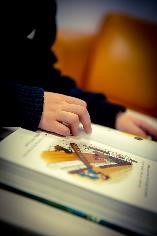 Picture books – 6 months to 5 years. Picture books for babies and toddlers are hardcover board books with a few basic words and lots of colourful illustrations. Usually designed to teach the child basic concepts, e.g. farm animals, opposites, numbers. Picture books for older children are longer, more complex and written to entertain, as well as educate.
- Story books – Short fiction stories for younger children. Colourful pictures are still important but plot and characters are also important features.
- Novels – Longer fiction stories for older primary and high school children.
- Short Stories – Published in children’s magazines, or in books (either as short story collections by one author or several authors).
- Activity books – Magazine-style publications with interactive activities, such as puzzles, colouring in, stickers, short stories. Highly visual, sometimes based on an educational theme (eg. wildlife) or on popular TV characters.
- School/text books – Either written specifically to fulfill a pre-determined school curriculum or as a supplementary text. Generally requires that the author has expert knowledge on the subject (and possibly, but it is not an essential prerequisite, a teaching background).
- Comics – Sometimes written for educational purposes (e.g. to explain traffic safety to a young reader), but usually written solely for entertainment. Highly visual, may require that the author is a skilled cartoonist and can write in a very concise, often humorous, manner.
- Poetry – Poetry written for children is published in children’s magazines, or in anthologies (collections of poems by different authors).
- Children’s Pages (in newspapers or magazines) – These are a mix of things, including activities (such as a crosswords), poetry, colouring-in competitions, letters from children, etc.
SHORT FEATURE ARTICLES FOR CHILDREN
Short feature articles can be on any topic relevant and interesting to young readers. They may vary in length from 300 to 1500 words and may or may not be accompanied by photographs or illustrations. Acceptance of your feature will depend on not only how well-written it is, but also, on what else the publisher has at the time, and how relevant the subject is to that particular publication.
A publisher may favour one article over another because:
- It will help sell advertising. The ability to sell advertising is a publisher’s major concern. The revenue from advertising that finances the publication. If an article relates in some way to the advertising or suggests possible advertisers, the chances of acceptance may be increased. For example, if you write an article on children's play, you submit it with a list of play equipment companies who might advertise.
- It is appropriate and relevant to the nature of that publication. Local papers are more likely accept articles from local people about local issues and concerns, such as gangs or pet control and care. National magazines are more likely to accept articles of general interest, such as career choices or dealing with divorcing parents.
- It offers something new and fresh. An article that re-hashes a topic that has recently appeared in the magazine, or in other magazines, will probably be declined. However, if the subject is still considered topical (of current interest) a publisher might welcome a new and different perspective. For instance, if conflict in an area is often on the news, an article on children’s experiences in the conflict may offer new insights.
- It is perceived to be of interest to the readers of the publication. You can often obtain an advertising rate card from a publisher providing demographic information about the audience: socio-economic groups, age groups etc. This information should be considered before deciding what to write. Remember that even if the publication is not targeted specifically at children, adults leave magazines lying around, or may pass an article onto their children or students, so consider what might interest the publication’s readers as well as young readers.
- It requires little or no additional work. Time is costly to a publisher, so if an article requires minimal editing, it may be more attractive than one that tells a great story but needs a lot of additional work. For instance, if your article requires illustrations or images that you do not supply or that are not suitable, it may be put aside until the editor can get to it. If no spelling or grammar corrections to be made, the editor will not need to spend additional time or money on it.
How a Children's Writer Might Get Published
When publishing was dominated by print media, it was a longer and more expensive process to publish something. Distribution and marketing of printed books was (and still is) a relatively complex and expensive process, and the process was driven by publishers. A writer would send their work to a publisher or agent who decided if they wanted to print the book. If it was approved, they would publish the work, market it and distribute it. For the most part, writers and publishers were different people. Some people did publish their own works, but this would have been costly and unlike today where self-publishing is accepted as a valid means this was not the case and people that self-published were often referred to as ‘vanity publishers’ (not considered ‘real’ writers).
Today, there are still publishers and writers can still send them work, which the publisher may then choose to print on paper as before. The publisher still takes control of the publishing, distribution and marketing process. However, there have also been some notable changes largely attributable to new technologies. For instance, the publisher may also choose to print in eBook formats rather than hard copy, or they may choose a combination of formats.
If you understand why and how publications get sold, and what the potential level of sales are, you can make more informed decisions about what you write.
- Commissioned work – some organisations and businesses commission writers to produce work for children to read. This may be a textbook, course notes for an educational course, an instruction manual for a computer game, articles for an educational website, fiction stories, or others. To secure this type of writing it is a good idea to let publishers know your areas of expertise, so they can keep your name on file should any commissions be required.
- Educational books – these may be written for specific courses, or about specific subjects, e.g. physics, geography or mathematics. They may be revision guides to help children prepare for particular exams. Some may be written in relation to particular topics children might find interesting. Educational publications may be commissioned work as well. Often these types of books can become quite popular with teachers and may become required reading for a particular course, so sales may almost be guaranteed.
- Published work – whilst some work may be commissioned by publishers, often authors will approach publishers or agencies with their work to see if the publisher is interested in publishing it.
- Self-published – as you would imagine, this is simply work that the author writes themselves and publishes themselves. It may be in the form of a paper based book or an eBook.
As a note of caution, it is not always a good decision to write books for genres which are popular. Popularity can be a fickle thing. By the time you have finished a book or found a willing publisher, the popularity of that genre may already have dwindled. Besides, if it's not a genre which appeals to your creative senses, then your lack of enthusiasm will most likely be apparent in your writing. Instead, stick with books you know you will enjoy writing.
Comment from a Student:"I found the course to be extremely helpful. It has given me the confidence and skills to present my work to publishers."
- Dilys
If you have any questions -
Connect with our expert Writing and Journalism tutors, please get in touch - use our FREE COURSE COUNSELLING SERVICE.
Stay in touch, follow us on
Twitter – Facebook - Google