Planting
What, Where, How and When to Plant a Garden
The first step in planting a garden is to choose the right plants. This can be a difficult task, even with expert advice. There are so many choices, and these it often comes down to personal preference.
To avoid creating problems, consider the following:
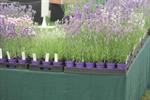 Avoid placing plants that have invasive roots near buildings, paved areas, water features, drains, and septic tanks (e.g. eucalypts, ficus).
- Don't use plants that have the potential to become weeds. This includes plants that seed prolifically, are prone to sucker, or are rampant creepers (e.g. wandering jew, lantana, even jasmine).
- Consider how big each plant is likely to grow. You should allow sufficient space for future growth. Avoid planting large trees in places where they will eventually create problems (e.g. shade out lawns or other plants, damage buildings).
- Don't use trees that are likely to drop branches (e.g. many eucalypts).
- Choose plants which are likely to be trouble free (i.e. withstand local storms, pests and diseases, or poor soils).
- Select plants suited to the tropics or subtropics. Many people become disheartened when a beloved plant dies - when all too often it was a plant that had little chance surviving in the climate.
Simple is often Best
The best way to approach planting is often the simplest.
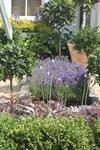 Keep plants together in compatible groups. Keep foliage plants together, herbs together, orchids together, or alternatively plants that require similar amounts of watering, or similar amounts of shade.
- Let the fittest survive.
- Mass plant areas (i.e. several of the one variety together) to form hedges or eye catching displays.
- Be prepared to get rid of plants which don't work (either don't look good or don't grow well). There's no harm in being ruthless.
- Use reliable plants that neighbours are growing successfully, unless you wish to experiment. If so research the requirements of your plants well, or be prepared to lose a few along the way.
Methods for Establishing Plants
The hardest part of growing plants is getting them through the first year. After that, they are usually quite well established and can tolerate harsher conditions with little ill-effect. Watch for the following when plants are young:
- Drying out (because roots aren't deep into the natural soil where reserves of water can be drawn on hot days).
- Attack by insects or animals eating the foliage.
- Attack by insects (e.g. grubs) and animals eating the roots.
- Transplant shock, where the plant may be damaged, particularly it's roots, during planting stage, or immediately after due to poor environmental conditions (heavy winds, rain).
- Never plant during the hottest time of the day.
When establishing plants in a garden, it is best to nurture them through the establishment phase. This might involve providing protection and support and then gradually reducing this degree of support until that plant is mature enough to survive itself.
How to Better Establish Plants
Trickle and Drip Irrigation
Trickle and drip irrigation systems are a simple, cost effective means of irrigation for many gardens. Such systems provide a reliable source of moisture to your plants. This helps both plant establishment and subsequent growth.
Advantages:
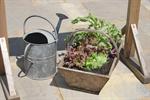 Constant or timed supply of water as desired.
- Reasonably priced and easy to install.
- Parts are often easy to replace or repair.
- Water use is greatly reduced.
- Water can be supplied to the ground and not to foliage so there are fewer disease problems (e.g. mildews).
Disadvantages:
- Blocked nozzles can be a problem due to residues, or debris (e.g. soil) that might build up.
- Nozzles and drippers need to be checked to make ensure they are still pointing in the desired direction.
- Sometimes moisture on the foliage is desirable.
- Depositing water in one or two spots may not encourage root development in all directions, making the plant less stable.
Mulching
Mulches assist in plant establishment and subsequent plant growth. These include:
- Reduced competition to your plants by reducing weed growth.
- Conserving moisture in the plants root zone.
- Organic mulches provide nutrients and humus to the soil as they decompose thereby aiding plant nutrition and contributing to improved soil structure.
- Acts as a buffer to sudden changes in soil temperature that may damage plant roots. Mulching can be used to provide a layer of insulation between the soil and the hot air above, helping conserve water and helping keep the plants roots cooler. (This method of keeping roots cool can sometimes allow you to grow some plants in the tropics which would otherwise be difficult in such climates).
- Reduced erosion and compaction of top soil.
Mulches can be composed of inorganic materials (e.g. rocks, gravel, synthetics, etc.) or organic materials (e.g. newspaper, manures, compost, leaf litter, straw, sawdust etc.).
Mulches mainly come in two forms:
- Mat mulches: flat sheets or layers of materials such as plastic, newspaper, carpet underlay, weed mats, etc.
- Bulk mulches: quantities of loose material such as sawdusts, barks, leaf litter, grass cuttings, etc.
Bulk mulches are easy to place. They can also be easy to dislodge. Weed growth penetrates bulk mulches more readily than mat types. Bulk mulches tend to be cheaper or more readily available than mat mulches. Some mat types prevent good water penetration (e.g. plastic, paper and cardboard). Mat types need to be secured down (i.e. pegged to prevent them lifting). The type of mulch you use will depend on factors such as cost, availability, ease of transport and the situation in which it is to be used.
Mulches should be applied while or just after planting. Before mulching, kill or remove any non-desired, existing vegetation. This can be carried out by cultivation, hand weeding or by using weedicides. Mulches should be thick enough to provide a good cover of the underlying surface, but not too thick that it will smother your plants. Bulk mulches should be at least 5 7cm thick. If weeds are a problem, between 10 and 15 cm thick would be better. Aim to keep the mulch clear of the plant stems or trunks, particularly organic types of mulch.
Problems With Mulches
- Mulches that consist of wood or bark products (e.g. sawdust, pine bark) will draw nitrogen from the soil unless they are well composted before use. Addition of nitrogen fertilisers will overcome this problem.
- Some mulch materials, particularly those with fine particles, can pack together creating a barrier that repels water, and reducing the amount of water to the plant roots. A mixture of mulch materials or, composting the material before use will reduce the likelihood of such problems occurring.
- The barks and sawdusts of some trees such as Pinus sp. and Eucalyptus sp. can contain materials that are toxic to other plants. Be careful if using fresh material derived from these trees or any unknown source.
- Some mulch materials are very light and will easily blow away or be dislodged. Mix such materials with heavier materials to reduce the likelihood of this occurring.
- Slits in mat type mulches for plantings should be as small as possible and slit edges overlapped to reduce the likelihood of weeds becoming established around the base of the plants.
- Some mulch products may encourage termites, cockroaches or other vermin.
Tree Guards
Tree guards in the tropics are used for three main reasons:
- As protection against differing climatic conditions such as strong winds
- As protection against grazing animals such as rabbits, sheep, cattle, etc.
- As a barrier to prevent damage by machinery, for example mowers.
Types of Tree Guards
Plastic Tubes
The most durable types are UV stabilised these should last for several years. In many cases, plant growth is significantly enhanced as the tubes create a warm, moist micro climate. Protection from frost, wind, and rabbits is excellent. It requires 3 4 stakes to keep the tube upright. Plastic bags, shopping bags or old fertilizer bags can also be used as an alternative, although these are not as long lasting or effective.
Plastic Mesh
Durable guards which are available in both flexible and rigid forms. Require pegs or stakes for support. Don't create a protected, humid environment like plastic tubes.
Plastic pipe
Flexible plastic pipe, 50 100 mm diameter x 500 mm length, can be placed around stems of young frost sensitive plants (e.g. fruit trees). These should be removed after the danger of frost has passed, otherwise fungal problems may occur, as the pipe tends to keep the stem damp.
Wire Mesh
Chicken wire tied to stakes or stapled to 3 4 pegs provides a barrier against grazing animals.
Hessian
Hessian bags or cloth need to be tied around 3 stakes. Provides good wind and sun protection although not in the long term.
Tyres
Old car tyres placed around seedlings can be an effective and cheap barrier against rabbits and hares.
Milk cartons
Useful for marking location of seedlings and providing limited protection against vermin, frost, etc.
Common Problems with Establishing New Plants
The following are some of the most common problems encountered by the home gardener in the tropics and subtropics.
- Plant growth and height. Check carefully before purchasing plants. Some subtropical species become invasive when grown in tropical conditions. Some temperate species, if capable of growing in the tropics, may also become weed-like and invasive.
- Weed Control. Mulch to control weeds, apply in thick measure for good control. Overuse or misuse of chemicals in a garden can be worse than no chemical control at all, so research your options.
- If plants are doing poorly in a certain area of the garden but quite well everywhere else, look at the past history of that area. Possible chemical or nutrient imbalances that may have occurred by design or mistake. The site may have a slightly different soil type or be prone to flooding, etc.
- Beware of importing pests and diseases into your garden from outside. Buying in soil or sickly plants should be avoided if possible.
- PLAN a garden this will involve considerations of where to put various species, what species to use and what will be required to care for them.
- Frequent light watering in summer will cause roots of large trees to come to, or develop at, the soil surface. This can lead to damaged paths, buildings and may result in poor drought tolerance. Over watering can damage plant health, soil structure, nutrient availability, and cause still other problems such as fruit splitting, etc.
- Safety with plants. Don't plant large trees too close to power lines or buildings. The maintenance of these trees in the future could become very high, and they may eventually pose serious safety problems. Don't choose plants that are known to cause allergies or may be poisonous, particularly if children will visit your garden, or in the latter case if you have pets outside.
- The high growth rate in the tropics seems to wear the plants out - many plants have a short life-span in the tropics.
- High growth rates require additional watering and fertilisers to keep the plants healthy under those forced growth conditions, compared to similar plants grown in temperate situations.
Potting Up Plants
All plants growing in containers, small or large, need potting up periodically, regardless of the size or type of container. Potting mix will compact over time, making watering more difficult and both drainage and aeration poorer.
Pot up plants as follows:
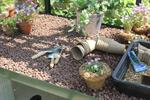 Before removing a plant from an old container for potting up, water it thoroughly. If the plant is dry it is best to immerse the old pot completely in a tub of water. (A wet root ball will come out of an old pot far easier than a dry one).
- If there is a tight mass of roots on the outside of the root ball, you should loosen those roots and break away 10 20% of the old potting mix before repotting.
- Place some quality potting mix in the bottom of the new container.
- Place the plant into the new container and fill around it with new potting mix.
- Water thoroughly then allow to drain.
Options for learning more
We hope you enjoyed reading this article. There are a great many things to learn, whether you are working in gardening or horticulture, or working to get the best out of your own garden.
If you would like to learn more, we have a great selection of courses and eBooks available. From general gardening and home gardening, to more specialist horticultural studies, specific plant types, propagation, care and maintenance. A selection of our eBooks and courses are shown, with links, at the bottom of this page.
All of our courses and eBooks have been extensively researched and written by academic and highly experienced horticulturists. They are available to start/buy at any time. Studies are undertaken by distance learning (either online or by eLearning), with practical exercises to test and reinforce your learning. Our specialist tutors are onhand to guide and support our students in their studies.
If you have any questions about any of our courses, or need help in choosing a course to suit your career goals, then please get in touch with our horticulture tutors today - they will be pleased to help you.
[25/04/2024 08:38:34]
More from ACS
Over 150 short courses, certificates and diplomas covering landscaping, crops, plants of all types and general gardening.