Learn about crop production and business management
Study by distance learning, with the support and guidance of our specialist tutors. Learn more about -
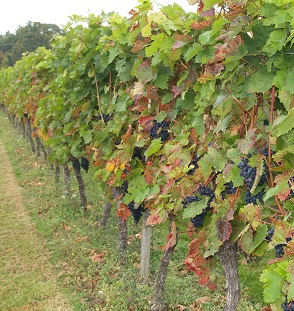 Outdoor plant production
- Plant protection
- Marketing
- Administration
- Management
![]()
Focus part of your studies in areas of interest to you - select from a range of crops to study, such as berries, nuts, mushrooms and vegetables.
Do you want to manage or own your own farm producing crops? Then this course will help you to learn more!

WHAT DO YOU NEED TO MANAGE A CROP SUCCESSFULLY?
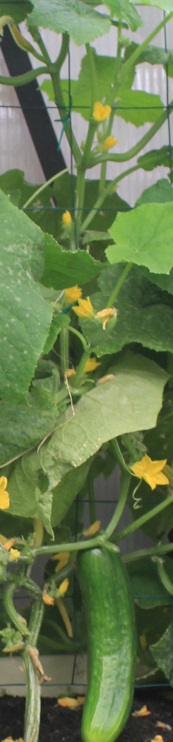
Some crop managers are good at the horticulture, but poor at business management. Others are good at business management, but lack an understanding of horticulture.
One must be able to do both! This course can help! To succeed in a crop management business you will need to be able to:
- Identify the resources available to you; and the limits of those resources (i.e. land, water, manpower, money, climate, marketing opportunities).
- Make your crop selection choices based upon those which best fit the resources you have available.
- Have the ability to grow what you choose. Some managers learn, others hire the right experts.
- Have the ability to harvest, handle and sell what you produce.
Different types of crops have different needs in terms of light, water, sensitivity to strong winds, soil, nutrition, soil pH (acidity/alkalinity) etc. Some plants need cool soil and weather to grow well (such as the cucurbit vegetables) others must have warmth and mild temperatures or heat for the crop to ripen. Some fruits ripe on the plant only, others can be picked early and allowed to ripen on or off the parent plant.
The size of the production garden or farm will depend both on how much space you have available, how much you want to produce, and the techniques you choose to use for production.
If land space is limited, and you want to optimise production, you will need to select plants that are highly productive in smaller spaces and use the appropriate techniques to grow them.
For Example:
- You can grow more roses as cut flowers, using hydroponic methods, in a greenhouse per square metre than what can be grown in the open air in soil.
- If you choose to grow walnuts, you are restricted to a minimum area per tree, and will need to wait many years before harvesting anything.
- If you only want a small quantity of cabbages for home use, you might only need a tiny amount of land, but growing a commercially viable crop will require acreage.
People can grow viable commercial crops on as little as 500 sq. metres, but crop choice and growing methods can be limited due to space restrictions.
Light is Important
 All plants need light to grow, but some do better with lower intensities or duration of light than others. Light can be important both in terms of how long the day is, and how bright the light is.
Some plants are burnt by too much direct sunlight over summer (particularly in warmer climates) or in hot spots (e.g. pots sitting on hot paving or plants in an unprotected greenhouse).
With many crops, the length of daylight affects the time at which the plant forms flowers or fruit. This is sometimes why vegetables go to seed before they are ready to harvest.
There are other reasons too:
- Water shortage - that can cause plants to run to seed early.
- By planting varieties out of season - it is very important to choose the right variety of vegetable to plant for the light conditions at any particular time of year; fruit might not form or ripen properly if it doesn't get adequate light.
- Spacing - it is important to leave enough space between plants to allow adequate light to get in between them when the plants are fully grown.
- Shade - in shaded areas, near buildings or large trees, you are restricted to shade loving crops, so either remove the trees or choose your crops carefully.
Temperature Can Be Critical Too
Most temperate climate herbs, vegetables and fruits grow best at temperatures between 15° and 25° Celsius, but need lower temperatures to trigger key aspects of their annual growth cycle. For example, most deciduous fruit trees require a period of cold weather to cause flower buds to form.
Excessively hot or cold weather can cause many vegetables to stop or start flowering or fruiting.
Tropical crops generally prefer temperatures between 22° and 30° Celsius, depending upon the crop, and often these will not tolerate low temperatures at all.

Learn Management and Horticultural Techniques from Our Experts
Our experts are here to share their knowledge and help you develop your own skills and understanding. Our courses have been extensively developed to be relevant to real world applications, and your learning is enhanced with the projects and practical elements included with this course.
You study by distance learning, and have the support of our specialist tutors at all times whilst you are studying. You can enrol on the Advanced Certificate in Applied Management (Crops) at any time, and with online and eLearning study options as well as the flexibility of studying at your own pace you can fit your studies around existing work commitments.
Enrolling is easy - just go to the top of this page and select your study method and payment option.
If you have any questions about studying with ACS, or want to know more about any of our courses, get in touch with our specialist tutors today. They will be happy to answer your questions and look at different study options to fit in with your goals.
Why Study with ACS?
Design your own learning pathway.
Study at your own pace, from anywhere, at any time.
Receive prompt, expert support from our team of committed and friendly tutors.
Your learning is our priority. We are flexible and adaptable to meet your educational needs!