Understand more about the management and cultivation of fruits in a temperate climate.
- Learn more about fruit production over the course of 8 lessons.
- You can contact your tutor with any queries throughout the course and there is an assignment at the end of each lesson to check how you are progressing.
Course Structure
The course comprises 8 lessons as follows:-
1. Introduction to Temperate Fruit Growing
- Identify different types of fruit crops, which can be successfully grown in your region.
2. Establishing an Orchard
- Develop a plan for the establishment of an orchard.
3. General Cultural Practices
- Determine the cultural requirements for different fruit crops in your locality (Part A).
- Determine the cultural requirements for different fruit crops in your locality (Part B).
4. Tree Fruits
- Determine the cultural requirements for different fruit crops in your locality (Part B).
5. Vines, Nuts & Berries
- Determine the cultural requirements for different fruit crops in your locality (Part C).
6. Citrus
- Determine the cultural requirements for different fruit crops in your locality (Part D).
7. Cultural Management of a Fruit Plantation or Orchard
- Develop a calendar for cultural management of a fruit plantation, or orchard.
8. Marketing Your Produce
- Formulate appropriate methods for marketing specific fruit crops grown in your locality.
Aims
On successful completion of the course you should be able to do the following:
- Identify different types of fruit crops, which can be successfully grown in your region.
- Explain the nature of the fruit industry in your region (locality).
- Determine the cultural requirements for different fruit crops.
- Develop a plan for the establishment of an orchard.
- Formulate appropriate methods for marketing specific fruit crops grown in your locality.
- Develop a calendar for cultural management of a fruit plantation, or orchard.
What the Course Covers
You will learn a wide variety of things, through a combination of reading, interacting with tutors, undertaking research and practical tasks, and watching videos. Here are just some of the things you will be doing:
- Compile a resource file different sources of information regarding commercial fruit varieties.
- Compare the facilities used to produce different fruit crops, in a specified locality.
- Determine criteria for selecting a fruit variety to grow as a commercial crop in your locality.
- Select different fruit varieties with commercial potential for a specified location.
- Analyse the physical layout of a specified orchard.
- Determine the scope of commercial fruit growing in a specified locality.
- Demonstrate standard soil tests to three different soils to determine:
- Soil type
- pH
- Drainage
- Water holding capacity
- Evaluate the three different soils tested to determine their suitability for growing different fruit varieties.
- Analyse the culture
- Watering
- Weed control
- Soil management
- Pruning
- Fertilising
- Pest control
- Disease control
- Determine soil management practices, including:
- Nutrition
- Soil structure
- Cultivation
- Weed control
- Determine the susceptibility of four specified fruit species to pest and disease problems.
- Explain how to control twenty different, specified pests and diseases, on different fruit varieties grown.
- Develop sets of guidelines for pruning three different types of fruits.
- Determine the factors which are critical to growing fruit trees in your locality.
- Determine criteria to select a site for fruit growing in your locality.
- Compare the physical layout of two different orchards you visit.
- Prepare a plan for establishing a fruit growing area, in your locality, including:
- Concept layout plan drawn to scale
- Materials list (including plants)
- Cost estimates for establishment.
- Analyse three different marketing systems in the fruit industry, including at local, national and international levels.
- Explain four common reasons for price fluctuations in the fruit industry.
- Compare different fruit crops in relation to different factors, including:
- Storage requirements
- Storage life
- Harvesting time
- Shelf life
- Transport to market
- Evaluate the presentation and packaging of three different fruits, for marketing through different marketing systems.
- Analyse different marketing strategies used by a specific fruit grower.
- Develop a marketing strategy, including:
- Marketing stages
- Marketing schedule (ie. timetable)
- Estimated marketing costs
- Handling procedures
- Promotions, for a specific fruit crop.
- Differentiate between the cultural practices undertaken by different growers, on the same crop, grown in different localities.
- Determine the cultural practices necessary to grow different fruit crops for a twelve month period, on a specified site.
- Prepare a monthly calendar, covering a twelve month period, for cultural practices in a fruit plantation or orchard.
Thousands of Fruits to Learn About
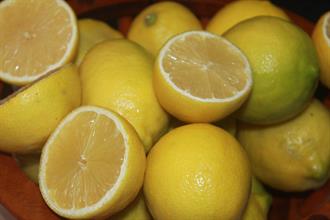
We all know what "apples", "peaches" and other common fruits are; but there are a lot more different types of fruits than what most people are aware of: literally hundreds, if not thousands.
Even amongst apples, there are hundreds of different types, and it is the same with all of the other common types of fruits, not to mention the uncommon types.
Consider Citrus
Citrus trees are versatile and useful trees for your garden and can be grown (with care) in many climatic zones. Autumn is a great time for many types of citrus fruit; many varieties ripen in autumn. In fact, if you if choose your varieties carefully, you can extend your harvest of these delicious fruit throughout much of the year as some mature in spring, others in autumn and some in winter.
What better than juicy fruit eaten straight from the tree, home-made marmalade, or your own refreshing and healthy lemonade?
Here are a few less common autumn ripening citrus:
- Bergamot oranges (Citrus aurantium ssp. bergamia): it is not an edible orange, but very scented and aromatic containing rich essential oils. The appearance of the fruit is more like a lime or lemon than an orange. It is used to scent oils, as the flavouring in Earl Grey tea and in alternative health to in the control of ‘bad’ cholesterol. It grows best in needs a Mediterranean climate.
- Etrog (Citrus medica): a thick peeled fruit with little juice used in Jewish religious ritual. The tree grows from 3 – 6m tall and is sensitive to frost and best grown in sub-tropical to tropical areas.
- Budda’s hand (Citrus medica var. sarcodactylis) - the common name refers to the multiple finger like protuberances that make up this fruit. The fruit is only used for its peel which makes great candied peel. It grows best in sub-tropical to tropical areas.
- Kaffir Lime: grown for the leaves which are used in some recipes, especially Indonesian and Malaysian cooking. It must have a frost free protected and sunny position to be at its best. It will grow to 4m tall in the garden but half that size if grown in pots.
- Pomelo/pummelo (Citrus maxima, syn. Citrus grandis): The fruit of this uite large citrus tree (to 8m) is very similar to a grapefruit but with a thicker rind and can be quite tart (newer varieties are sweeter). ‘Flicks Yellow’ is suited to cool regions and ‘Nam Roi’ to sub-tropical conditions.
 New Fruits
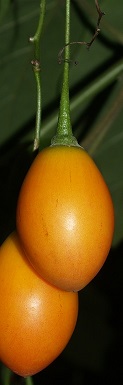
New types of fruits are constantly being discovered all around the world; and fruits that may have been rarely grown commercially in the past, are gaining commercial markets as cooks strive to find new flavours.
Sometimes these are fruits that have been grown and eaten by natives for hundreds of years, or indigenous plants that were harvested from the wild, in a particular country by the locals.
The food industry is always looking for something a little different; and fruit growers are often finding success in discovering and introducing a variety or species of fruit that no one else can supply.
Why Choose this Course?