Understand soil maintenance, improve crop management.
Soil health and maintenance is, arguably, the key to productive and sustainable cropping outputs.
Course Duration: 100 hours of self paced study. Start at any time and work at your own pace.
Course structure
This course has seven lessons:
1. Physical & Chemical Properties Of Soils
2. Soil Testing Methods
3. Sustainable Soil Management
4. Soils & Managing Earthworks
5. Land Degradation & Other Soil Problems
6. Soil Science & Health
7. Soil Management
Aims
- Develop a broad understanding of the physical and chemical properties of soils.
- Develop skills in sampling and field testing soils for basic physical and chemical properties.
- Understand the principles, methods and techniques of sustainable soils management.
- Understand the principles and practices of earthworks.
- Understand causes and remediation methods of land degradation and soil problems.
- Develop a broad knowledge in the use of growing containers for agriculture.
- Develop strong understanding of soil science and its impact on plant growth.
- Develop practical knowledge about managing soil for particular cropping uses.
Soil quality can change without you even realising
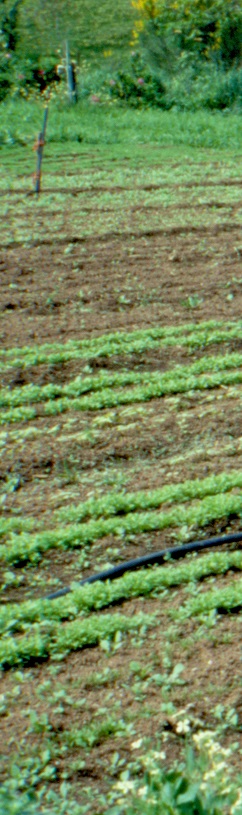 To the untrained eye, soils can undergo big changes, without looking much different at all. If you don't understand the soil fully; you can find that crop production quantity or quality, can change over the course of a year or two, before it is even noticed.
Consider Chemical Changes
Chemicals can end up in crop areas, often without us realising it. These can get there in several ways including:
- Spillages, e.g., petrol spilled when using machinery or pesticides spilt during mixing.
- Leaching, e.g., pesticides sprayed elsewhere may be washed off roads, driveways, footpaths, through water, etc., into other areas.
- Leaks, e.g., machinery such as cars and ride on mowers, etc., may leak oil.
- Discards, e.g., used water thrown out onto a crop growing are
- Overspray, e.g., weed killer sprays carrying further than you want.
Overcoming Chemical Damage
The first step to overcoming chemical damage is to prevent it occurring in the first place. Leaky machines can be fixed. Spills can be prevented by taking more care, or by filling machines and preparing chemicals, such as weed killer, in an area where a spill won't be a problem. For example, on a driveway where any spilt petrol would evaporate before being washed into a growing area. Overspray damage can be avoided or minimised by being careful about not spraying on windy days and by making sure you use well maintained and suitable spray equipment. Damage from discarded chemicals can simply be avoided by being careful about what you throw out, and where you throw it.
Once damage occurs, however, there are a number of ways to overcome or control the amount of damage that might occur. These include:
- Carefully following any instructions relating to spills, etc. that may be supplied with the container in which the chemical was supplied.
- Seek further advice from the product manufacturer or from a local Environment Protection Authority (or its equivalent in your country).
- Leaching or flushing the contaminated area thoroughly with water. If the chemical is present in small quantities then this may reduce the concentration of the chemical to a level which will cause little or no damage. In some cases, however, particularly when heavy concentrations of the chemical are present, flushing the area with water will simply spread the problem.
- Replacing damaged soil - areas can be carefully dug up and removed. Fresh topsoil is then used to fill in the excavated area and the area replanted, seeded or re-turfed.
The soil removed from the damaged area should be disposed of carefully so that any chemicals won't create further damage.
- Contact your local council health officer or your state Environmental Protection Agency or your country's equivalent to find out where contaminated soil may be safely disposed.
- Soaking up spilt chemicals with absorbent materials e.g. sawdust, sand.
- Growing tolerant plants. Growing a plant can help extract and break down some types of chemicals.
When you understand soils and nutrition better, you will have improved your capacity to grow crops better. You ability to be a profitable and sustainable farmer of horticultural crops will be improved.
Why Study with ACS?
Design your own learning pathway.
Study at your own pace, from anywhere, at any time.
Receive prompt, expert support from our team of committed and friendly tutors.
Your learning is our priority. We are flexible and adaptable to meet your educational needs!
Enrolling is easy - just go to the top of this page and select your study method and payment option.
If you have any questions about studying with ACS, or want to know more about any of our courses, get in touch with our specialist tutors today.
They will be happy to answer your questions and look at different study options to fit in with your goals.