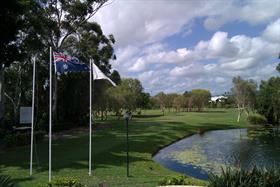
PARKS AND RECREATION DIPLOMA DISTANCE LEARNING
"Work in parks and recreation"
DEVELOP A CAREER IN PARKS AND RECREATION RESORTS! Would you like to care and manage parks, natural parks, holiday and recreation resort facilities? Then this is the course to do. This course provides training for people to work in the management and development of recreation and park facilities and services. It is relevant to all types of situations including municipal parks, national parks, tourist parks, commercial landscapes, resorts, etc. The Advanced Diploma in Horticulture includes core studies and electives. Core modules are compulsory, electives are chosen to suit your particular specialization or work needs. a) CORE MODULES (12)
Biochemistry (Plants),
Project Management,
Instructional Skills,
Workplace Health & Safety,
Horticulture I,
Arboriculture I,
Turf Care,
Irrigation,
Playground Design I,
Recreation Marketing,
Recreation Management-Human Resources,
Recreation Management -Financial/Clerical b) ELECTIVES (8)
Landscaping I,
Landscaping II,
Recreation Facility Management I,
Recreation Facility Management II,
Amenity Horticulture I
Amenity Horticulture II
Sports Turf Management
Recreation Management -Policies & Procedures,
Plant Protection,
Engineering I,
Soil Management,
Irrigation Management,
Australian Native Plants I,
Horticulture II; and more! Outlines of these modules and other modules may be found throughout the handbook or at www.acs.edu.au/outlines 2. WORKSHOPS 2 workshops of 100 hrs (or equivalent). Documentation that specifies what is required can be provided so that these requirements may be satisfied by working with a professional anywhere in the world. Ask for further information. 3. INDUSTRY CONFERENCES/SEMINARS Attendance at conferences, seminars etc totalling 100 hrs 4. RESEARCH PROJECTS Three projects (2 X 100 hrs), dealing with different aspects of the workplace.STUDY SEQUENCE The core modules should normally be completed before anything else. Beyond that it is possible for you to determine your order of studies.
Note: Fees cover all tuition and "essential" texts. They do not include fees for any Industry conferences or seminars which are attended. Note: Course fee does not include exam fees
Brief Outlines for Core Modules
Biochemistry Plants Biochemistry is the chemistry of living things. This introductory course concentrates on the chemistry of either animals or plants. Some secondary school chemistry will be helpful though it is not essential. Lessons cover biochemical substances and terms, carbohydrates, lipids, amino acids, proteins, metabolism, the nitrogen cycle, photosynthesis, respiration, transpiration, acidity and alkalinity, nutrition, hormones, chemical analysis and biochemical applications in the industry.
Workplace Health and Safety An important subject area applicable to all industries. This course covers the following topics: * Introduction to workplace health and safety, procedures, duty of care * Legislation * Handling chemicals, including pesticides, cleaning chemicals, explosives, petrol * Handling equipment: tools and machinery * Handling objects: lifting, manual handling * Standards and rules: safety audits, codes of practice * Signs and signals: communicating in the presence of noise, eye problems, hazardous chemicals
Project Management
There are nine lessons as follows:
Introduction Understanding what project management is, and what its applications might be.
Project Identification Identification and defining projects which need management.
Project Planning Developing a strategy and framework for the plan.
Project Implementation Managers duties during implementation, developing a Preparation Control Chart, Regulating implementation.
Project Completion & Evaluation Dangers in this stage, Steps in Project completion, Declaring a project sustainable, Developing an evaluation method.
Technical Project Management Skills Preparing a proposal, budget control/management, steps in drawing up a post project appraisal.
Leadership Skills Styles of leadership, leadership principles and methods.
Improving Key Personnel Skills Listening skills, Negotiation skills, Conflict management.
Major Assignment Developing full documentation for a project.
Instructional Skills There are 11 lessons with a written assignment to be submitted at the end of each lesson as follows:
1. Introduction to Training – Communication 2. Understanding Learning 3. Determining Training Requirements in The Workplace 4. Commencing Training 5. Developing a Lesson Plan 6. Assessment and Evaluation of Training Programs 7. Training Aids 8. One-To-One Training 9. Motivation Skills and Techniques 10. Promoting Training 11. Assessor Training
Horticulture I
There are twelve lessons in this course, as follows:
1. Plant Identification: Naming plants; distinguishing the taxonomic divisions of plants including family, genus, species and variety or hybrid; identifying the different parts of a flower; distinguishing the morphological characteristics of leaves.
2. Planting: Planting methods used for different types of plants including annuals, perennials, evergreen and deciduous plants; influence of environmental factors on planting techniques.
3. Soils: Classifying soils; sampling and testing soils; chemical and physical properties of soils; soil improvement techniques; composting; potting mixes.
4. Nutrition: Major and micro elements necessary for plant growth; nutrient deficiencies and toxicities; fertilisers.
5. Water Management: Irrigation systems – characteristics, advantages and disadvantages; drainage systems; waterwise gardening.
6. Pruning: Pruning techniques; importance of pruning to growth, flowering and fruiting; pruning tools.
7. Weeds: Identifying common weeds; characteristics of weeds; control techniques; herbicides.
8. Pests and Diseases: Identifying common insect and disease problems; control methods; Integrated Pest Management; pesticides; hygiene procedures; chemical safety.
9. Landscaping: Stages of landscaping; design procedures; collating pre-planning information; preparing plans; selecting plants for specified sites.
10. Propagation: Asexual and sexual propagation; taking cuttings; sowing seeds; aftercare of propagated plants.
11. Lawns: Turf grass varieties; laying a new lawn; cultural techniques including watering, fertilizing, topdressing, aerating, pest and disease control.
12. Arboriculture: Tree management techniques including pruning, removal and tree surgery; identifying tree problems.
Arboriculture I
There are eight lessons in this module, as follows:
Introduction To Arboriculture
Tree Biology
Soils In Relation To Trees
Diagnosing Tree Problems
Tree Surgery
Pruning Of Trees
Arboricultural Equipment
Workplace Health & Safety.
Turf Care
There are eleven lessons as follows:
Introduction - Turf Varieties
Turf Grass Physiology
Turf Establishment
Soils
Turf Weed Problems
Turf Pests & Diseases
Turf Maintenance Techniques
Irrigation - An Overview
Playing Fields & Bowling Greens
Managing Established Turf
Establishing Ornamental Turf
Irrigation
There are 10 lessons as follows:
Introduction to Irrigation
Soil Characteristics & Problems
Estimating Plant Needs & Irrigation Scheduling
Drainage
Types of Irrigation Systems
Trickle Systems
Design Specifications
Pumps & Filters
Selecting the Right System for a Plant
Design & Operation of Systems.
Playground Design I
There are eight lessons in this unit as follows:
Overview of Parks & Playgrounds
Playground Philosophy
Preparing a Concept Plan
Materials
Park & Playground Structures and Materials
Local and Neighbourhood Parks
Community Participation In Park Development
Special Assignment.
Recreation Marketing The course is divided into ten lessons as follows:
Introduction to Marketing
Marketing Strategy
Media Promotions
Promotional Materials
Complaints
Managing Membership Levels
Sponsorship & Fundraising
Managing Events
Managing Promotional Activities
Market sensitive recreation services.
Recreation Management-Human Resources
Lessons are structured as follows:
Work Schedules
Work Teams
Workplace Efficiency
Recruitment
Staff Performance
Workplace Communications
Staff Grievances
Developing a Staff Manual
Recreation Management -Financial/Clerical
There are eight lessons as follows:
Financial Analysis
Budget Control
Legal Requirements
Funding Opportunities
Workplace Communications
Managing Documents
Managing a Resource Library
Managing Information Technology
WORKSHOPS
Workshop I
There are 3 lessons in this module as follows: 1. Workplace Tools, Equipment and Materials: Identifying and describing the operation of tools and equipment used in the workplace; routine maintenance of tools and equipment; identifying and comparing materials used in the workplace; using different materials to perform workplace tasks. 2. Workplace Skills: Determining key practical skills in the workplace; identifying and comparing commonly-performed workplace tasks; determining acceptable standards for workplace tasks; implementing techniques for improving workplace efficiency. 3. Workplace Safety: Identifying health and safety risks in the workplace; complying with industry OH&S standards; developing safety guidelines for handling dangerous items.
Workshop II
Using problem-based learning (PBL) strategies you will complete three projects that address the following topics, relevant to your workplaces in your industry:
Identifying and analysing scientific or technical problems
Using and maintaining scientific or technical equipment
Collecting and storing samples, data or other evidence
Undertaking and evaluating scientific or technical procedures
Describing workplace operations and equipment in scientific laboratories or technical facilities
RESEARCH PROJECTS
Research Project I
There are 7 lessons as follows:
Determining Research Needs
Searching For Information
Research Methods
Using Statistics
Conducting Statistical Research
Research Reports
Reporting On A Research Project.
Research Project 2.
There are 6 lessons in this module as follows:
Identifying research issues
Acquisition of technical information
Specialised research techniques
Research planning and designing
Statistics
Conducting research
Research Project 3.
There are five lessons in this module as follows: 1. Determining research priorities. 2. Planning research improvement 3. Testing the viability of alternative approaches 4. Conducting detailed research into commercial work procedures 5. Developing an improved approach to a workplace procedure
INDUSTRY MEETINGS
Requirements for Industry Meetings
Background
In some courses you are required to attend industry meetings for a specified period of time as part of your course. The purpose of this requirement will be to ensure you are interacting with people who are actively working within your industry, in an “real world” industry context.
Through this interaction, you will have opportunities to relate things you have studied to real life situations, broadening your outlook and relevance with respect to your studies. Industry meetings develop networking and learning opportunities beyond other areas of study and should bring a practical perspective to your education which enhances everything else you do in your course.
What is Acceptable
The school will accept attendance ant any event or meeting where you have opportunity to interact with people from your industry, which is attended by one or more people who are actively involved in your industry, and are knowledgeable about your industry, whether they be amateurs or professionals.
Examples may be:
Joining and attending meetings of a professional association, institute, club, society or some other professional body.
Attending meetings as an intern or assistant to a consultant or other professional person (whether a paid or voluntary position)
Attending an exhibition, show, field days, festival or any other event.
Attending committee meetings, or serving on a committee of any organization which provides opportunities to interact with others from your industry.
Attendance at seminars, conferences or workshops which are attended by others from your industry.
You will normally make up your required hours by attending a variety of different events; for example: attending a week long conference might count for 50 to 60 hrs; and attending a trade show may count for 8 hours. Serving on a committee for 6 months may count for 3 to 4 hours per meeting.
Who Decides What to Attend?
You do!
As long as you can verify your attendance and the events can be seen as broadly satisfying the above criteria, it will be accepted,
When Do I Seek Approval?
After attending the events.
There is no need to seek approval or comment from an academic officer before attending meetings.
More Information on ACS Distance Education and our courses
Who are our tutors?
Our tutors are all highly experienced and professional, knowledgeable in their field of study. We have staff from around the world, enabling us to gain a wide variety of perspectives. We have a school in the UK and in Australia. If you would like to have a look at our tutors, then click on the “The School” in the boxes above and choose “The Staff” option.
Sample Course Notes
Our courses are all written by highly qualified tutors and writers, who also teach on the courses, so know them well. We strive to update our courses and improve them with new information, methods and knowledge on an ongoing basis. If you would like to see examples of some of our courses, then choose the “Enrolment” option above, and then click on “Sample Course Notes”.
What learning method should I choose?
We offer three learning methods – e-learning, correspondence and online. If you are not sure which is the right choose for you, then click on the “Enrolment” box above, then “Learning Methods.”
How Long will it take to complete the course?
This obviously varies from student to student. Some students will have more time for study than others. Some students may work quicker than others, so it is an individual thing. We estimate that most students will take, for example, 4 – 6 months to complete a 100 hour individual module, but we allow up to 12 months for you to complete it.
Longer courses will obviously take longer. You can find more information on the length of time required and so on the “Enrolment” box, then selecting “Terms and Conditions of Enrolment.”
What Do Our Students think of us?
If you would like to read comments from our previous students, then choose the “Enrolment” option above, then “Student Testimonials”.
I don’t think this is the right course for me.
If you’re not sure about this course, then why not look at our wide range of other courses. Click on the “Courses” box above.
You may also wish to design your own course to fit in with exactly what YOU want. To do so, click on the “Enrolment” box, then “Design your Own Course”.
If you would like more advice on a course, then you can contact us and ask a tutor about the courses. You can contact us by calling 0800 328 4723 or +44(0) 384 442752 or emailing info@acsedu.co.uk
Recognition and Accreditation
For more information on our recognition and accreditation, click on “The School”, then “Recognition”.
Who is ACS Distance Education?
If you want to know more about ACS and our history, then please click on “The School”, then “About us.”
Career Tips
Qualifications are essential for furthering your career in Parks and Recreation, however there are many other things you can do to get ahead. These include:
* experience tips - unpaid or paid, experience is highly valued by future employers.
* networking tips - become a member of relevant parks networking groups and join website groups related to your field.
* membership - become a member of relevant groups in your field eg. the National Parks Association. This is another way to demonstrate your commitment to your career.