Learn about managing natural parks and settings!
The focus of this course is understanding how humans impact on natural environments, and how park management seeks to provide quality recreational and educational experiences without compromising the parks’ natural environment.
This course builds on knowledge gained through our Nature Park I course, but can be taken as a stand-alone course. It concentrates more on plants and using them to create natural,
balanced ecosystems. Learn to create nature trails, build rockeries and
pathways, construct ponds and watercourses, design picnic grounds and
animal enclosures, market a nature park.
What Does a Nature Park Manager Do?
- Preservation of natural habitat
- Land rehabilitation
- Wildlife management
- Control of feral pests
- Management of natural hazards
- Visitor management
COURSE STRUCTURE
There are 10 lessons as follows:
- Natural Environments – preserving natural environments; plant associations and environment rehabilitation
- Recreation and the Environment – impact of recreation on natural environments
- Wildlife Management in Nature Parks– impact of park visitors on wildlife; managing wildlife
- Visitor Amenities in Nature Parks – design; provision of visitor amenities including picnic areas and campgrounds; management of facilities
- Park Interpretation – interpretative facilities including signs and education programs
- Trail Design and Construction – designing access routes in parks; designing and constructing walking tracks
- Water Areas – conserving and managing natural water bodies in nature park; impact of humans on water areas
- Marketing Nature Parks – strategies used to promote nature parks
- Risk Management I – identifying, minimising and managing natural hazards; safety issues
- Risk Management II – preparing a risk management plan
Each lesson culminates in an assignment which is submitted to the school, marked by the school's tutors and returned to you with any relevant suggestions, comments, and if necessary, extra reading.
LESSON AIMS
- Explain the role of nature parks in preserving natural environments.
-
Explain the role of nature parks as a recreation resource.
- Explain the issues of managing wildlife in nature parks.
- Explain the design of visitor amenities in nature parks and their impact on the environment.
-
Explain the role interpretative facilities in nature parks.
-
Explain the design and construction of trails within nature parks.
-
Explain the importance and management of natural water areas in nature parks
-
Explain the importance of effective marketing in promoting nature parks.
- Explain safety issues and hazard management in nature parks.
- Explain the use of risk management plans in nature parks.
TOPICS COVERED
- Creation & Maintenance of Australian Ecosystems - Plant associations, earthworks.
- Rockeries -Types of rock groupings, plants and rockeries.
- Propagation -Techniques, seed, cuttings, etc.
- Marketing -Advertising, brochures, etc.
- Eucalyptus -Introduction to/use of Eucalypts.
- Proteaceae Natives -Introduction to and use of the main Proteaceae genera.
- Australian Legumes -Introduction to Mimosaceae(e.g. Acacia), Caesalpinaceae (e.g. Cassia)and Fabaceae (e.g. Kennedya).
- More Native Plants -Introduction to other Australian plant genera; e.g. ferns, conifers, Melaleuca, Callistemon.
- Wildlife Park Management -Keeping animals: legislation, enclosures, permits, etc.
- Picnic Areas -facilities, litter, etc.
- Playground Design -Equipment, materials, safety, costing, etc.
- Paths & Paving -Types of pavers, laying paths and pavers.
- Water Landscapes -Water features, pools, maintenance, etc.
- Park Interpretation -Techniques, program design, etc.
- Trail Design & Construction -Fun & fitness trails, surfacing materials, design.
Duration: 100 hours
Scope of Study
Broadly the functions of nature park management include:
- Preservation of natural habitats
- Land rehabilitation
- Wildlife management
- Control of feral pests
- Management of natural hazards
- Visitor management
These issues and others are discussed in Nature Park Management I and Nature Park Management II. The focus of this course is understanding how humans impact on natural environments, and how park management seeks to provide quality recreational and educational experiences without compromising the parks’ natural environment.
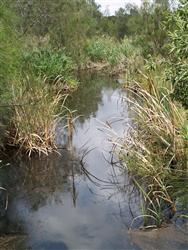 Landscapes and their associated plant and animal life are a result of responses to millions of years of naturally occurring disturbances, such as fire, flood, earthquakes, volcanic eruptions, climate changes and changes in sea levels. Living communities have survived and developed because they have the ability to adapt and perpetuate themselves in a constantly changing environment.
The first thing to understand about natural environments is that they are constantly changing. The manager of a nature park is the manager of change.
A nature park manager should not expect, or attempt to stop natural changes, but he/she should exercise control over "unnatural influences" which could cause change faster than the natural environment can adapt to.
Human interference can accelerate change in an environment, causing such things as:
- an increased rate of soil erosion
-
changes to water runoff patterns
-
salinity
-
soil compaction
-
soil acidification
-
land slips
-
weed infestation
-
loss of indigenous or natural vegetation
-
pollution of soil, air and waterways
Nature parks, in general, attempt to redress environmental problems caused by human interference. In most cases the aim of park management is to preserve natural ecosystems and to stabilise or improve degraded environments. The natural ecosystems that nature parks provide have a diversity of plants and animals; a continual succession of plant and animal populations; recycle energy within the parameters of the ecosystem; efficiently utilise resources; have multiple functions and elements; and demonstrate the principles of relative location.
Why You Should Study This Course
This course is suited to people who already have some knowledge of nature park management, or some relevant experience. It goes into nature park management to a greater depth examining the different components of parks in detail. The impact of visitors to parks and poor design features and materials are reviewed.
The course will appeal to people who would like to work in the following fields or enhance their knowledge within their role:
- Nature Park Management
- Ecotourism
- Conservation
- Land Management
- Parks & Gardens
WHAT NEXT?
Register to Study - Go to panel toward top of this page (right column)
or
Get Advice - Use our FREE COUNSELLING SERVICE to contact a tutor
CLICK TO CONTACT US