Build a career in hospitality or tourism
... managing your own small business or working in middle management for a larger organisation.
- Start any time, study from anywhere, study at your own pace
- Learn from professionally qualified and experienced tutors
- Great support from real people, accessible 5 days a week, 50 weeks of the year for prompt replies by phone or email.
Course Structure
Fifteen modules need to be completed as follows: (Click on modules for more details):
Course Aims
Module I
Tourism I
- Describe the nature and scope of the tourism industry.
- Recommend tourism destinations relevant to client needs.
- Advise a client on planning for unforeseen circumstances on a trip, such as financial, legal and insurance issues.
- Explain the operation of airlines, including booking procedures.
- Explain the operation of car rental services, including booking procedures.
- Explain the operation of other transport services, including shipping, bus and rail.
- Explain the operation of accommodation options to a client
- Advise a client on package tour options, to satisfied their specified requirements.
- Determine appropriate operational systems for management of a tourism service.
- Consolidate available information and resources to plan a trip.
Module 2
Tourism II
- To analyse tourism industry, to determine the various sectors which service tourism and travel.
- To differentiate between different types of tourism on a variety of bases, including: demographics, geography, economics, and culture.
- To compare a variety of different accommodation services provided in the tourism industry.
- To describe the operation of heritage and cultural tourism, including: historical, architectural, indigenous, and artistic attractions.
- Evaluate the tourism potential of events and festivals.
- To describe the management of passive natural tourist attractions, including wilderness areas, beaches, rivers, wildlife etc.
- To describe the operation of different types of tourism facilities that have a significant focus on health and fitness, including Health Resorts, Walking Tours and Cycling.
- To describe a variety of other types of special interest tourism, including food tourism, senior tourism and sex tourism.
- To plan and manage the number of visitors to different types of tourism facilities and develop appropriate contingency plans.
- To plan a package holiday incorporating a variety of accommodation and attraction options.
Module 3
Hotel Management
- To understand management structures and the way in which the workplace is organised.
- To draw a team of professional staff together to ensure quality delivery of these services requires a tremendous amount of skill and organisation.
- To gain an understanding of the complexity of hotel management consider the following areas of management:
- To understand the importance of maintaining an overall system of control within a hotel
- To develop knowledge of the complexities and management issues relating to front desk operations.
- To develop knowledge of equipment and understanding of linen available
- To implement facilities management systems
- To implement and manage an activities service
- To understand a range of food services offered in the hotel industry
Module 4
Food & Beverage Management

- Explain the role of different food types in human health
- Understand the alternative cooking processes, in order to make appropriate decisions about the cooking of different foods
- Manage the provision of kitchen facilities, and the handling of foodstuffs (including food storage and preparation), in order to maximise efficiency, hygiene and service with the restrictions of facilities available.
- Plan menus or list of food products for sale, appropriate to different situations.
- Manage the provision of alcoholic beverages appropriately, in different situations
- Manage the provision of non-alcoholic beverages appropriately, in different situations.
- Describe differences in appropriate management for catering in a range of varying situations.
- Discuss how to manage staff in the food and restaurant industries.
- Consolidate skills developed throughout this entire course into an overall understanding of management of catering services.
Module 5 Bar Service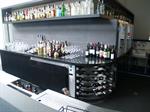
- To develop a broad understanding of the industry
- To be familiar with the range of alcoholic products found commonly in a bar.
- Develop an understanding how to provide improved service to bar customers
- To be familiar with the range of non alcoholic drinks available at bars.
- To develop an ability to mix a range of drinks.
Module 6 Event Management
- Identify the various tasks which are involved in the management of a variety of different types of events.
- Explain how a range of different types of events are initiated and planned.
- Determine the human and physical resources required to deliver different types of events.
- Determine how physical and human resources will be organised in preparation for staging an event, in order that needs are appropriately catered for.
- Develop a marketing plan for an event.
- Develop a Financial Management Plan for an Event.
- Develop a series of Risk management procedures to minimize the impact of different types of problems including financial, legal, marketing, crowd control, food services, and hygiene.
- Describe the way in which facilities and services are managed during the actual delivery of an event.
- Review an event after it’s delivery.
Module 7
Facility Management I
- Explain the scope of work involved in the management of facilities.
- Explain the nature of facilities, including their physical characteristics and their management requirements.
- Explain the legal aspects which must be satisfied by construction work projects.
- Plan the management of construction work projects for different recreation facilities.
- Explain the suitability and management of equipment for a given purposes in indoor facilities (Part A - Indoor Equipment).
- Explain the suitability and management of equipment for given purposes in outdoor (Part B - Outdoor Equipment).
- Develop safety procedures for a facility.
- Determine equipment needed for a facility.
- Purchase new equipment for a facility.
- Manage the bookings for use of a Leisure industry facility.
- Develop contingency plans to deal with likely emergencies in industry workplaces.
- Manage insurance issues for a facility.
- Develop a plan for managing the use of a specific recreation facility.
Module 8
Ecotour Management
- Describe the scope of ecotourism experiences available.
- Determine management issues related to ecotourism activities/enterprises, giving due consideration to environmental and ethical concerns.
- Develop in the learner an awareness of ecotourism destinations in existence and possibilities (in the learner's country).
- Explain the management and operation of an ecotourism office.
- Explain the management of ecotourist accommodation facilities including: ?camp sites ?cabins ?caravans ?resorts
- Identify catering options for different ecotourism activities.
- Identify legal and statutory requirements for the establishment and operation of an ecotourism enterprise.
- Identify/establish safety precautions/requirements/procedures for an ecotourism enterprise.
- Plan for an ecotourism activity.
Module 9
Ecotourism Tour Guide Course
- An ability to analyse the structure of interpretive ecotourism in your country.
- To recognise factors of the environment and their significance to ecotourism.
- To plan an ecotour.
- Create/develop interpretation aids for a selected ecotourism activity.
- Develop a display with an ecotourism theme.
- Determine the specific name of a range of natural features in a selected wilderness area including:
- Birds
- Fish
- Shells
- Other animals
- Plants
- Lead an interpretive tour with an ecotourism theme.
- Develop innovative concepts in interpretation for a selected aquatic ecotourism activity.
- Develop innovative concepts in interpretation for a selected ecotourism activity in a land environment.
- Determine the specific name of a range of natural features in a selected wilderness area including, where appropriate:
- Fossils
- Rocks
- Land formations
- Soil types
- Geothermal features
Module 10. Supervision
 Explain and create an organisational chart.
- Describe the five basic kinds of Unions.
- Report on what you expect to achieve by practicing good human relations.
- Define objectives, goals, tasks to be achieved.
- Describe what steps should be taken before re organising a section or department?
- Draw up a work area for an office, factory etc.
- Show step by step how you would work through the problem solving technique systematically, in order to determine a good way of dealing with this problem.
- Write a diplomatic letter to a union in response to a complaint.
- Draw up a suitable advertisement for a position of a "Salesperson"
- Explain the methods most frequently used to train new employees.
Module 11
Sales Management
- Identify key ways to develop good sales relationships with customers and others.
- Identify ethical and legal considerations in sales.
- Explain the importance of product knowledge and what it includes.
- Explain the role of a developed customer strategy and how to create one.
- Identify elements of good product presentation.
- Explain the stages of a sale and how to achieve results.
- Describe the importance of self-management to sales success.
- Identify and explain key methods for managing a sales team.
- Identify and explain key methods for managing a sales team.
Module 12 Bookkeeping I
- Introduction – Nature and Function of Accounting for Service Firms
- Balance Sheet
- Analysing and Designing Accounting Systems
- The Double Entry Recording Process
- Cash Receipts and Cash Payments Journal
- Credit Fees and Purchases Journal
- The General Journal
- Closing the Ledger
- Profit and Loss Statement
- Depreciation on Non-current Assets
- Profit Determination and Balance Day Adjustments
- Cash Control: Bank Reconciliation and Petty Cash
- Cash Control: Budgeting
Module 13
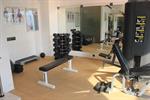
Health and Fitness I
- To explain the nature of the health and fitness industries.
- To explain the relationship between the body and health, fitness & exercise, with reference to physiological processes.
- To explain the relationship between the body and health, fitness & exercise, with respect to risk involved in exercise.
- To evaluate body movements during different exercises.
- To design fitness programs, which are both safe and effective, to fulfil specified requirements of an individual.
- To deliver a fitness program to a small group of clients.
- To manage the wellbeing of participants in a fitness program, including safety and injury.
- To design fitness programs, which are both safe and effective, catering to needs of special populations (including weight control programs and programs for handicapped/disabled persons).
Module 14 Research Project I
- Develop your ability to collect, collate and interpret data and prepare reports in ways relevant to the work environment;
- Monitor and evaluate your own work in order to develop a responsible attitude to workplace performance and quality assurance;
- Determine areas where there is a valid need for research which are relevant to area of study;
- Explain research methods, including experimental techniques, commonly used in your discipline.
- Understand of the basic statistical methods used for research;
- Locate, collect and evaluate information for a specific research purpose;
- •Prepare a research report in a format which conforms to normal industry procedures.
With Knowledge Comes Opportunities
The tourism and hospitality industry involves supplying everything conceivable that a person might need when travelling away from home. This may range from accommodation and food services, to transportation, organisation of activities and managing attractions such as theme parks, museums and zoos.
Some hospitality businesses rely on tourism for success, and for others it is not. A restaurant may for instance, obtain much of it's income from tourists; if located in a tourist area. A restaurant in among office buildings however may derive income from office workers, rather than from tourists. Both restaurants may be considered as being hospitality services still.
The success and viability of hospitality and tourism can be volatile; but with proper planning and management it does not necessarily need to be. In good times and bad, people still spend money on holidays; and still travel for business. Families and business people still eat at restaurants.
If you do this course, you will have a foundation for a very successful and exciting career; whether self employed in your own business, or employed by someone else.
WHAT NEXT?
Register to Study - Go to “It’s Easy to Enrol” box at the top of the page and you can enrol now.
or
Get Advice – Email us at info@acsedu.co.uk OR
Use our FREE COUNSELLING SERVICE to contact a tutor
CLICK TO CONTACT US