Understand How Historical Gardens Reveal Our Culture and Customs
Understand how gardens have evolved over the centuries, and broaden your perspective on what is possible and appropriate in garden design today. Garden history will enlighten you, and vastly expand the scope of possibilities you have before you as a modern garden designer.
Lessons cover:
Garden designers, great gardens and gardeners of the world, private and public gardens, globalisation of gardens, scope and nature of modern garden conservation, the roles of organisations in garden conservation, and much more.
The gardens of the past can help to improve the gardens of today and the future
This course will help you to gain an understanding of how gardens have evolved from Roman times to the present day. Learn the value of conserving heritage parks and gardens. Discover what is possible and appropriate in garden design today. Garden history will enlighten you, and vastly expand the scope of possibilities you have before you as a modern garden designer. 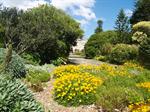
Learn about different garden styles, and broaden your ideas and concepts as a garden designer.
Work with highly experienced and well-qualified horticultural tutors who are there to help you every step of the way.
This is a self-paced, 100-hour course that is studied by distance learning.
ACS Student Comment: The course has been fabulous because it really made me think beyond my own planting ideas. I have particularly enjoyed the research into noted garden writers and considering the legal aspects of conservation for the future. Melanie Veasey, UK - Garden History Course.
Course Structure
There are 8 lessons in this course:
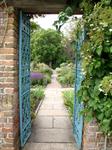 Introduction -Summary review of garden history; Reasons for studying garden history, Scope and nature of garden conservation today
- Development of Private Gardens - Discuss the historical development of parks & gardens to the present day; identifying key factors such as wealth, status, war, travel and function, and the influence they have had on styles of gardens and designed landscapes.
- Development of Public and Commercial Landscapes - Parks, Streetscapes, Commercial landscapes. Discuss the historical development of parks & gardens to the present day; identifying key factors such as wealth, status, war, travel and function, and the influence they have had on styles of gardens and designed landscapes.
- Great Gardens & Gardeners of the World
- (Identify key individuals such as designers, horticulturists, plant hunters and writers who have influenced horticulture.
- Describe a range of gardens and designed landscapes such as landscape parks, botanic gardens, public parks, private gardens etc.
- Provide examples of gardens and designed landscapes associated with individuals and illustrate the association both from historic and contemporary perspectives).
- People who Influenced Gardens -Gardeners, Plant Collectors and Writers (Identify key individuals such as designers, horticulturists, plant hunters and writers who have influenced horticulture. Describe a range of gardens and designed landscapes such as landscape parks, botanic gardens, public parks, private gardens etc.
- Provide examples of gardens and designed landscapes associated with individuals and illustrate the association both from historic and contemporary perspectives).
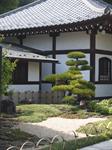
- Globalisation of Gardens -How different garden histories & cultures are being adapted & applied in modern gardens all over the world today (Describe a range of gardens and designed landscapes such as landscape parks, botanic gardens, public parks, private gardens etc.
- Provide examples of gardens and designed landscapes associated with individuals and illustrate the association both from historic and contemporary perspectives).
- Scope and Nature of Modern Garden Conservation - Identify the value of gardens and designed landscapes in terms such as education, heritage, leisure, tourism, plant conservation, economy and conservation of skills. Identify and assess threats to these landscapes Identify available mitigation measures including legal safeguards. Show an awareness of planning policy, planning law and planning bodies.
- The Role of Organisations in Garden Conservation -Explain the role of English Heritage and it’s equivalents in promoting and protecting significant landscapes; and the role of the Register of Parks & Gardens of Special Historic Interest. Describe the role of other organisations such as CABE Space, Local authorities, Historic Houses Association, Garden History Society, National Trust, Council for conservation of plants, and private owners of gardens.
Each lesson culminates in an assignment which is submitted to the school, marked by the school's tutors and returned to you with any relevant suggestions, comments, and if necessary, extra reading.
WHERE DID GARDENING BEGIN?
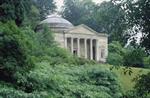 Though beginnings of horticulture are lost in the mists of time, it is a certainty that plants were being selected and cultivated at the very beginning of human civilisation.
Evidence has been found of gardens in ancient civilisations in all parts of the world: Europe, Asia, Africa and the Americas.
There are records of man created gardens as early as Egyptian, Persian and the first Asian civilisations. These gardens usually reflected strongly the culture and civilisation to which they belonged. Egyptian gardens were formal, symmetrical and strictly functional providing food (date palms, vegetables etc) and herbs.
Chinese gardening began long before the time of Christ. There is a strong underlying preoccupation with ethics and philosophy influenced by Taoism in Chinese gardening. This involves concentration on the unity of creation, harmony and order being developed to highlight nature through symbolic representation in a way that is not very common in western gardening.
We have evidence of garden design in England back to the Roman times; however between 400 and 800 AD evidence of any significant garden design is rare if not totally void.
Roman gardens often utilised walls heavily and were often courtyards in the centre of a house. Murals, mosaics and paving were common. There are records of fish ponds, small trees and stone columns also being used in Roman courtyards.
English gardening from 800AD was similar to medieval gardening throughout other parts of Europe..
Records from the time of King Alfred (died 899) show a diverse range of plants were being cultivated, including grapes for wine and fresh fruit. A record in 1020 AD lists over 200 different herbs and trees, many grown in monastic gardens.
There is insufficient evidence to show any significant pattern in the evolution of garden design from 1100 through to 1500, however the centuries after that are well documented and may be studied in detail, and it is this period that is mostly dealt with throughout this course.
The 16th and 17th Centuries
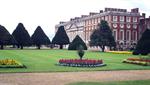 Landscaping really began to develop throughout the 16th and 17th century.
Over this period, many individuals had had a significant impact on gardening and garden design without necessarily being primarily garden designers themselves. These include philosophers, poets, writers, clergymen, plant collectors, nurserymen, artists, and so on. Their influence has ranged from immense to modest. These influential individuals included:
Sir Francis Bacon (1561-1626)
Francis Bacon was an English philosopher, statesman, scientist and lawyer who held the positions of Attorney General and Lord Chancellor in England. He was also a writer and had many works published on a variety of subjects including his essay ‘Of Gardens’ which was published in 1625. This essay underlined his enthusiasm for gardening and in it he wrote his ideas on the subject. He described what he considered to be the ideal garden; a vast 30 acre garden on a princely scale. It comprised a green entrance area, a heath garden, and a main garden. The main garden was square and encompassed with an arched hedge and bird cages. He also made reference to topiary, fountains, and knots as well as a wide mount with a banqueting house at its summit. The heath garden denotes an element of wildness but not in the same vein as those of the later eighteenth century. In fact it appears to have been quite tidy with plants grown in mounds or clumps including pinks, daisies, roses, sweet Williams, and violets with well maintained standards and bushes in the centre. Although it is not possible to draw a plan of the garden he outlined in this essay it is possible to derive an understanding of the various parts which constituted an Elizabethan garden at this time.
Bacon inherited his father’s estate at Gorhambury in Hertfordshire and here he did much gardening. He set out a four acre water garden which contained three islands, each with a separate theme. One housed an arbour of hornbeams, another an arbour of musk roses and double violets for autumn scents, and the ‘Middle Great Island’ contained a house with an open upper gallery and a terrace. The water itself contained pebbles in different colours which were mounded to create figures of fish when seen through the water.
It is understood that Bacon was partial to scents and used violets and strawberries, the decaying leaves of which he revered, extensively. He was also fond of including burnet, wild thyme, and mints to tread on and release their fragrances. Unfortunately, nothing remains today of Bacon’s own garden at Gorhambury.
Joseph Furttenbach (1591-1667)
Joseph Furttenbach was an architect who lived most of his life in Ulm in southern Germany where he was City Architect. He also studied engineering, stage design and military architecture during a ten year spell in Italy during his early life. His interests included cartography, bridge, ship, and organ construction.
Garden design was also one of his many interests and in 1628 his book ‘Archtectura Civilis’ was published in which he, like Bacon, proposed a design for a princely garden on a grand scale. He also included designs for smaller gardens within this book and another publication ‘Architectura Recreationis’ in 1640. All his designs were of enclosed gardens. Those which were larger were enclosed by fortifications. The princely garden of 1628 was so large that it included the countryside itself. There were raised mounds along the walls for observing the gardens inwardly rather than for outside views. Outside views were reserved for sentries. It was a more intricate design than that of Bacon and included complex knots filled with flowers and edged with box hedging, ornate carpentry, fountains, fishponds, statue lined walkways, aviaries, a grotto, orangery, and hunting park to the rear. There was also a building in a wilderness area for the prince to relax. Although this garden never came into fruition, perhaps due to its grandiosity and difficulty in construction, if one were to remove the fortifications it is not too unlike Bacon’s ideal garden or those of Villa Lante and Gaillon.
Sir Joseph Banks (1743 – 1820)
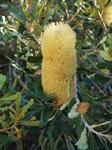 Renowned naturalist on Captain James Cooks voyage around the world on the Endeavour (1768-71). On this expedition he collected and named many new species and was responsible for introducing many new genera and species to cultivation. The genus Banksia is named after Banks.
He was widely influential being appointed scientific advisor to King George III, which made him virtual director of the royal gardens at Kew. He was also President of the Royal Society for several decades.
Banks supported an international network of plant collectors, directly affecting the discovery of a huge amount of new species. He was largely responsible for establishing Kew as a centre for plant collection and introductions. He was also one of the founders of the Royal Horticultural Society.
Opportunities Following Study
Garden history not only fulfils a need to understand how gardens have evolved and how they reflect our culture but knowledge of garden history can be of value in a number of different fields such as:
- Garden Design
- Landscaping
- Garden Renovation & Restoration
- Conservation
- History
- Working for Councils or Heritage Trusts
- Grounds Staff at Parks & Gardens
Study with us to become adept at garden history.
WHAT NEXT?
Register to Study - Go to “It’s Easy to Enrol” box at the top of the page and you can enrol now.
or
Get Advice – Email us at info@acsedu.co.uk OR
Use our FREE COUNSELLING SERVICE to contact a tutor
CLICK TO CONTACT US