Course Structure
There are 8 lessons in this course:
- Introduction
- Review of the system of plant identification
- Genus, Species
- Monocotyledons and Dicotyledons
- Characteristics of main Australian Plant Families
- General characteristics of native trees
- Information contacts (ie: nurseries, seed, clubs, etc.)
- History of nomenclature
- International Code
- Ranks of Taxa
- Principle of priority
- Selection and spelling of plant names
- Changing names
- Hybrids
- Culture
- Planting Procedure
- Planting on slopes
- Fertilizer
- Time of planting
- Staking
- Mulching
- Pruning native trees
- Steps in removing a branch from a tree
- Soils (Physical, chemical, biological structure)
- Soil profile
- Improving soil profile
- Colloids
- Water and air
- Soil temperature
- Soil life
- Soil Problems (Loss of soil fertility, Erosion, Salinity, Soil compaction, Soil acidification, Build up of dangerous chemicals)
- Improving soils (soil additives etc)
- Limestone Underlay Technique
- Fertilisers
- Fertilising established trees
- Plant Nutrition
- Water Problems
- Drainage
- Propagation
- Choosing the right propagating technique
- Seed
- Seed sources
- Hybrid seed production
- Storing seed
- Difficult seeds
- Dormancy facftors
- Maintaining genetic identity
- Propagating Media
- Propagating Eucalypts
- Propagating Acacias
- Cuttings
- Improving curtting success rates
- Grafting
- Top graft
- Whip & Tongue graft
- Irrigated graft
- Grafting selected plants ... Eucalypts, Grevilleas, Banksias, Hakeas
- After care of seed and cuttings
- Transplanting (seedlings, cuttings)
- Potting up plants and Growing on
- Most Commonly Grown Varieties
- Review dozens of relevant genera
- Allocasuarina
- Casuarina
- Melia
- Pittosporum
- Acacia
- More About Important Groups
- Eucalyptus
- Banksia
- Brachychiton
- Grevillea
- Diagnosing Tree Problems
- Tree Surgery Techniques
- Other Varieties
- Rainforest Trees
- Constructing a Rainforest
- Acmena
- Eugenia
- Mallotus
- Melicope (Euodia)
- Neolitsia
- Nothofagus
- Schefflera
- Stenocarpus
- Syzygium
- Araucaria
- Agathis
- Actinostrobus
- Callitris
- Podocarpus
- Adansonia
- Agonis
- Albizzia
- Alstonia
- Alphotinia
- Angophora
- Barklya
- Buckinghamia
- Castenospermum
- Elaeocarpus
- Ficus
- Macadamia
- Melia
- Nuytsia
- Tristania/Lophostemon
- Making The Best Use of Native Plants
- Why plant trees in the Landscape
- Problems with trees
- Biological controls
- Parasitism
- Symbiosis
- Planting Techniques (Pocket planting, slope serration, Wattling, Planting arid sites, Direct seeding, Spray seeding)
- Edible Australian Tree Crops (Davidsonia, Quandong, Backhousia, Citrus, Acacia, Syzygium, Tasmannia, Kunzea)
- Australian indigenous timber trees
- Essential oils
- Useful Australian Conifers (Actinostrobus, Athrotaxus, Agathis, Araucaria, Callitris, Podocarpus)
- Australian Indigenous Palms
- Special Assignment
- You select and conduct an in depth study of one plant genus or group (eg. Timber trees, conifers, trees from a particular region)
Each lesson culminates in an assignment which is submitted to the school, marked by the school's tutors and returned to you with any relevant suggestions, comments, and if necessary, extra reading.
Aims
- Identify Australian Native Trees
- Describe the culture of Australian Native Trees.
- Propagate Australian Native Trees
- Compare characteristics and cultural requirements of different commonly grown species of Australian Native Trees.
- Compare characteristics and cultural requirements of conifer and rainforest species of Australian Native Trees.
- Describe a range of uses for Australian native trees.
- Investigate one type of Australian Native Tree in depth.
What is the Scope of Plants Covered?
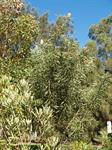 This course builds your knowledge of a wide range of different species and a systemic understanding of the way these different plants are classified into various plant families. As you get to understand these families, you will develop a foundation that provides a framework for remembering not only the plant names but also the different cultural characteristics of each plant.
Here are just a few of the more common Australian Plant families where you can find trees (and other plants as well).
Myrtaceae
The Myrtaceae family contains some of the most significant Australian native plant genera, including Eucalyptus, Corymbia, Callistemon, Melaleuca, Lophostemon, Thryptomene, Angophora, Agonis, Baeckea, Leptospermum, Eugenia, Astartea and Micromyrtus. Non-native genera in this family include Myrtus (Myrtle) and Feijoa. Members of this family are generally hardy and adaptable to a wide range of conditions. Most can be readily propagated from seed, and many of the smaller shrub types are often also propagated by cuttings.
Legumes
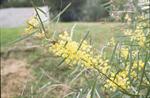 The following three families were formerly included as subfamilies in the Leguminosae (the ‘Pea’ family). They are now recognised as three separate families:
All leguminous plants are characterised by their pod-type fruit. They are also useful for improving soil fertility - colonies of bacteria on the roots convert nitrogen from the air to feed the plant. Most native legume species are propagated from seed which is first soaked in boiling water.
Proteaceae
A diverse family with around 800 species and 38 genera in Australia. They are commonly known for the large, showy flowers which are borne on many species. Examples of Australian native genera in this family include Grevillea, Banksia, Hakea, Stenocarpus, Isopogon, Telopea, and Dryandra. Flowers are variable, although the petals tend to be insignificant. Leaves are often thick and dry in texture, and often with sharp tips. Seeds are large and woody. Generally plants in this family require well-drained soils and commonly suffer from iron deficiency and phosphorus toxicity in cultivation. Some rainforest genera, including Macadamia, are an exception. They require more phosphorus than other genera in the family. Root rot is also a common problem. Propagation is commonly from seed for most species, with the exception of notable exception of grevilleas, which are grown from cuttings. Many species from other genera have, however, been successfully grown by cuttings or grafting.
Rutaceae
Twenty genera in Australia including Asterolasia, Boronia, Correa, Crowea, Diplolaena, Eriostemon, Flindersia, Geijera, Microcitrus, Murraya, Phelabalium and Zieria. Leaves of species from this family are covered with small dots (oil glands); flowers have either four or five petals. This family includes many small shrubs with attractive flowers.
Pittosporaceae
Most of the plants in this family are native to Australia. Notable genera include Pittosporum, Hymenosporum, Bursaria, Billardiera and Marianthus. Flowers have five petals, leaves are simple (undivided) and arranged alternatively on the stem, and fruits are either a berry or capsule (often attractive). Many varieties may be propagated from both seed and cuttings.
Asteraceae (Compositae)
The daisy family has a worldwide distribution of about 800 genera and 12,000 species. Australian genera include Helichrysum, Bracteantha, Olearia, Rhodanthe and Brachyscome. Most are lower growing plants, but some are trees. The flowers are actually a composite of many small flowers fused together to appear as one single flower. If the flower is pulled apart it can be seen that it is made up of many individual units, each one having its own set of floral parts (petal, stamen, stigma, ovary, etc). Some Asteraceae flowers are incomplete and have only some of the floral parts. Flowers in this family are generally fast growing, flower prolifically, and prefer well drained soils. Many are excellent cut flowers or are used for dried floral arrangements.
This is only the start. There are more families, and lots more to learn about the genera in the families above. Enrol today to become an Australian Native Tree Specialist.
Who Can This Course Help?
Essential for any arboriculturalist, regenerators, horticulturalist and those with a general interest.
Learn from experts in this fascinating field and become an expert yourself.
WHAT NEXT?
Register to Study - Go to “It’s Easy to Enrol” box at the top of the page and you can enrol now.
or
Get Advice – Email us at info@acsedu.co.uk OR
Use our FREE COUNSELLING SERVICE to contact a tutor
CLICK TO CONTACT US