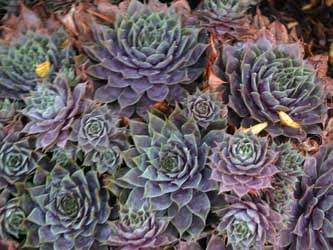
Online Studies in Cacti and Succulents - expand your plant skills.
- Learn to identify and grow a wide variety of different cacti and succulents
- Create hardy gardens with a completely different aesthetic
- Grow them as decorative container plants, inside or out
- Use them for roof gardens or green walls.
Enrol today and get 3 free eBooks recommended by our specialist Horticulture Tutors!
Cacti and Succulents are a very large group of unusual plants which everyone may not think is attractive but all must agree is most interesting. These plants are very often grouped together; both in articles or books; and in gardens where they are planted. however cacti and succulents are however, two very different groups of plants.
-
Cacti commonly come predominantly from deserts, or very dry areas.
-
Cacti come from a much more diverse range of climates. Some succulents are native to deserts; but others are native to relatively high rainfall areas.
Course Structure and Lesson Content
There are 8 lessons as follows:
1. Introduction
Review of the system of plant identification
Physiology
Information sources
2. Culture A.
Planting
Staking
Mulching
Soils
Feeding
Pruning etc.
3. Propagation
Methods of propagating cacti & succulent plants
Propagation of selected varieties
Using Cacti & Succulents
Edible succulents
Garden Design
Garden Styles
Mexican gardens
Using Colour
Rock Gardens
Growing Cacti or Succulents in containers
4. Culture B.
Pest & Disease
Irrigation
Greenhouse growing
5. Cacti - developing your plant knowledge.
General guidelines for growing cacti
Review of Cacti Genera
Zygocactus -featured plant
6. Succulents - developing your plant knowledge.
Review of Succulent Families
Bromeliads -featured plants
Kalanchoe
Sansavieria
7. Special Project
Course Duration: 100 hours
Start Date: You can start the course at any time to suit you.
Course Aims
- Understand how these plants are named and classified scientifically.
- Discuss the horticultural and landscaping potential of cacti and succulents.
- Evaluate needs then select or improvie growing media for cacti and succulents
- Propagate different types of cacti and succulents
- Explain a range of uses for cacti and succulents
- Manage growing conditions for cacti and succulents
- Explain the cultivation of a range of cacti.
- Explain the cultivation of a range of succulents.
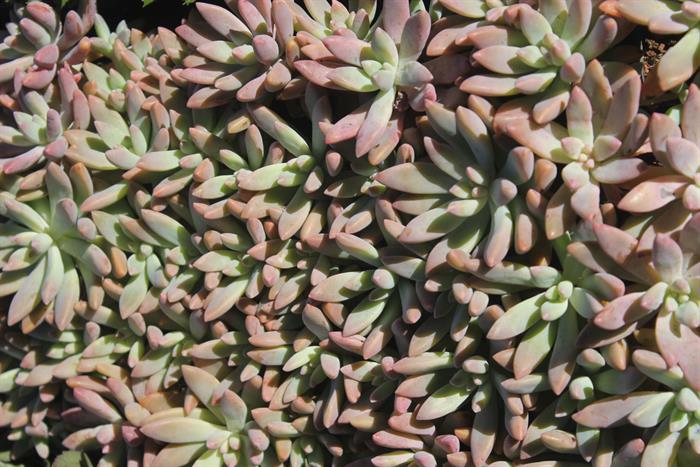
What Are Cacti and Succulents?
“Succulent” is not a particularly precise term. It can mean different things to different people and in different places; but the one thing that it always means is “containing more moisture”.
There’s a popular belief that all succulents are very hardy plants that like hot, dry conditions. As with many “popular” beliefs, this is not so simple!
Succulents are plants with “fleshy” foliage, higher in water content than other plants. Beyond this, succulents include a very diverse range of plants varying in both appearance and the conditions under which they grow. Some need a hot climate, but others need a cold climate. Some may thrive in relatively dry soils, but others need moisture and are likely to deteriorate rapidly in very dry conditions.
Cacti are generally succulent plants belonging to the "Cactaceae" family. They are generallycharacterised by having spines and lack distinct leaves.
Broadly speaking, succulents grow better under poorer conditions, and require less maintenance than most other types of plants. This doesn't mean that they can be completely ignored, but it can mean:
- They may require less watering, pruning or weeding.
- They propagate faster, and easier.
- They can grow in poorer soils, with less need for fertilizer.
- They may survive extreme weather events better (e.g. Drought, a heat wave, storm).
- Most have relatively fewer pest or disease problems than woody plants.
If they get too large, you can prune most as heavily as you like and they will survive, unlike many woody shrubs that may suffer if pruned too heavily
Consider climate, and choose appropriate succulents for the temperature, rainfall and humidity.
- It is wrong to think of succulents as “desert plants”.
- Some species have trouble in hotter, more humid climates.
- Light frosts (up to minus 3 degrees Celsius are not a problem for most species. A few tender cultivars can suffer mild frost damage though on leaves.
- In colder climates, you need to be more selective about the species grown. Some succulents tolerate frosts beyond minus 7 degrees Celsius.
- Most prefer higher light intensity and growth tends to be more compact with more light.
- Poor ventilation/ lack of oxygen can be an issue if grown in air conditioning for too long.
Growing cacti and succulents can be rewarding, but the correct conditions must be created to produce the most satisfying growth. Succulents are frequently easy to grow, but it can be harder to grow superb looking specimens. The main requirements of most cacti and succulents is strong light, adequate drainage, and to be sufficiently dry during any dormant period.
Enrol today and get 3 free eBooks recommended by our specialist Horticulture Tutors!
If you have any questions or want to know more, get in touch with our specialist tutors with our FREE COURSE COUNSELLING SERVICE or phone us on (UK) 01384 442752, or (International) +44 (0) 1384 442752.