COURSE CONTENT
There are 8 lessons as follows:
- Introduction
- Review of the system of plant identification
- Physiology
- Information sources
- Culture
- Planting
- Staking
- Mulching
- Watering
- Feeding
- Soils
- Pruning, etc.
- Propagation
- Methods of propagating this group of plants
- Propagation of selected varieties
- Using Geraniums & Pelargoniums
- Landscaping With Geraniums
- Growing in baskets
- Hydroponics
- Rock gardens
- Tubs
- Planting design
- Pest & Disease
- Diagnosing problems
- Hygiene
- Chemical & non chemical control
- Irrigation
- Manual & automatic
- Capillary
- Disease implications etc.
- Greenhouse Management
- Types of Greenhouses & Other Growing Structures
- Plant Needs
- Temperature Control
- Special Project
- A research project into one major group such as species geraniums or pelargoniums, Regals, Zonals, Ivy Leaf, etc.
Each lesson culminates in an assignment which is submitted to the school, marked by the school's tutors and returned to you with any relevant suggestions, comments, and if necessary, extra reading.
COURSE AIMS
- To develop your ability to select and cultivate appropriate varieties of geraniums and pelargoniums in different situations.
- To describe the cultural requirements of various Geranium and Pelargoniums. Cultural requirements refer to the aspects that affect the growing quality and performance of the species. This includes soil types, plant nutrition, planting techniques, watering and maintenance.
- Every variety of plant has its own specific needs and tolerances with respect to the environment in which it grows.
- Learn about the options for propagating Geranium and Pelargoniums. There are specific ways they can be propagated, often with much ease to the home gardener. This is part of the reason they have become so popular, as they are so easy to grow and love.
- Determine and explain a variety of ways Geranium and Pelargoniums may be used both in landscape and other situations.Most Zonal Pelargonium is used for bright displays in the dullest of places with their vibrant flowers offering a show. Most Ivy Geraniums are used to spill over walls, hanging baskets or climbing a brick wall on a trellis. The options are limitless and we will look at a few.
- To become aware of the various disease problems that affect Pelargonium and Geraniums. Also learn ways to manage pest problems on pelargonium and geraniums.
- Geraniums, like all plants, can be attacked by pests or diseases, or can suffer as a result of poor environmental conditions, or from a combination of both of these. Unlike humans plants cannot develop an immunity towards disease. The best defence against problems, therefore, is to keep your plants as healthy as possible so that firstly they are more likely to resist such problems, and secondly, if they do suffer problems, to have a better chance of recovery.
- Understand and manage water requirements of geraniums and pelargoniums, in a way to optimize the plant’s performance.
- Manage the growing of Pelargoniums and Geraniums in a greenhouse. This can be adapted for climates that are too cool for them to grow outside or for areas where they need protection form frosts or other environmental conditions. This is aimed at commercial production but can be adapted by the home gardener too.
- Learn how to plan the establishment of a collection of different cultivars of a group of geraniums or pelargoniums.
Historical Reflections
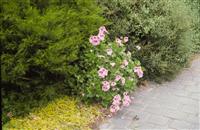 Today many beautiful hybrid pelargoniums are the result of many years of cross pollination and breeding in the 17th and 18th centuries. Nursery people were deeply impressed by these plants and public interest increased again after World War II with more hybridizing. A lot of progress has been made since the early days; with today's gardeners having an outstanding range of cultivars to choose from.
They are as common place and right
As books and tea and candle light
And all about them is scent
Of home and comfort and content
Annon.
So goes the small poem that honors geraniums. 300 hundred years ago in England the scented - leaved geraniums were used for sweetening the damp rooms of cottages, and they will refresh today's homes in the same way asking very little in return. So much so they could be classed as a flower for 'everyone' as everyone can grow them and use them in landscaping. The red geranium was the favorite flower of Charles Dickens, Henry Lawson wrote a short story called 'Water Them Geraniums', and now in the 20th century they can be grown as a courtyard pot plant, fed and pampered, or left without much attention they will still struggle to flower and give cheer.
Geraniums have for a long time been grown by gardeners who have considered them as an easy and as a 'forget them' type of plant. Even with little care they still produce a floral display. They are frequently used as a 'for-now' plant to fill in an awkward spot until something else can be chosen to be placed there, or until something slower growing can grow to fill the surrounding space.
There are geraniums suitable for borders and small corners, some are suitable for rockeries, hedges and hanging baskets. Large urns, window boxes and retainer walls are decorated (and hidden) by the cascading 'ivy' forms of geraniums. An open garden of regal geraniums provides a splash of colour with smaller growing deacons at their bases. The cut flower industry regularly uses geranium flowers for posies and the foliage for arrangements.
Why Study with ACS?
Design your own learning pathway.
Study at your own pace, from anywhere, at any time.
Receive prompt, expert support from our team of committed and friendly tutors.
Your learning is our priority. We are flexible and adaptable to meet your educational needs!
WHAT NEXT?
Register to Study - Go to “It’s Easy to Enrol” box at the top of the page and you can enrol now.
or
Get Advice – Email us at info@acsedu.co.uk OR
Use our FREE COUNSELLING SERVICE to contact a tutor
CLICK TO CONTACT US