Course Content
There are 8 lessons in this course:
1. Introduction.
Scope and Nature of the Grevillea genus
Review of the system of plant identification
Botanical Terminology used to describe Grevilleas
Flower Structure
Plant Name Pronunciation
Characteristics of the Proteaceae family
Characteristics of the Grevillea genus
Different ways of classifying Grevilleas into groups: by flower type (eg. toothbrush); McGilveray's system dividing into 11 groups
Resources, information contacts (ie: nurseries, seed, clubs etc.)
2. Culture
Environment, Nutrition, Soil Requirements
Planting, staking, mulching
Water management
Pest and disease found on Grevilleas
Feeding, pruning, protection from wind, salt air, etc.
3. Propagation
Methods of propagating Grevilleas
Cutting Propagation
Methods to Improve Cutting Success
Seed Propagation of Grevilleas
Transplanting
Hardening off and Growing on Young Plants
Grafting Grevilleas
Tissue Culture and Aerial Layering
4. The Most Commonly Grown Varieties.
Clearview Hybrids
Grevillea banksii and banksii hybrids
Grevillea alpina
G. rosmarinifolia
G. dimorpha
G. lavandulaceae
5. Other Important Groups.
G. alpina cultivars and hybrids
G. rosmarinifolia cultivars
G. Poorinda hybrids
6. Other Grevillea Varieties.
Ground Cover Grevilleas
Trees
Review of many other species
7. Making The Best Use of Grevilleas
Cut Flowers
Bird Attracting
Scented Grevilleas
Container Growing Grevilleas
Potting and Types of containers
Growing Grevilleas in Baskets
Rock Gardens
Designing a Garden with Grevilleas; design principles, garden styles, drawing a plan
8. Special Assignment: On one selected plant or group.
Problem Based Learning Project
Plan the establishment of a collection of different cultivars of Grevilleas suited to growing in a specified locality.
Each lesson culminates in an assignment which is submitted to the school, marked by the school's tutors and returned to you with any relevant suggestions, comments, and if necessary, extra reading.
<
The Genus Grevillea
There are more than 250 species of Grevillea and hundreds if not thousands of different varieties and hybrids, many probably not yet named.
- About 50% of all Grevilleas are tropical.
- The majority of species are stenobasic (ie. having more or less one dominant stem or trunk).
- Twenty of the known species are trees.
- 176 of the known species are shrubs
- 17 of the known species are prostrate shrubs
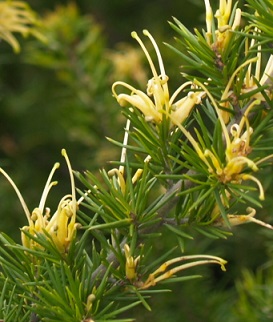 Grevilleas have huge potential as garden plants and also commercial cut flowers, throughout most of the world in both temperate and sub tropical climates. Their are species and cultivars that will grow in most places, from dry arid climates to wet, cool temperate places.
If you want to learn more, this course is a very unique opportunity to make an in depth study of the Grevilleas, and receive personalised guidance from people with extensive resources and experience in the subject.
How Are Grevilleas Propagated?
Most cross pollinate both within the species and with other species, relatively easily. This often creates a lot of variation in characteristics (e.g. flower colour, size, shape, and even hardiness), within a species. The ease of hybridization has the following implications:
- If you want reliable plants with known characteristics, they need to be propagated vegetatively. They are most commonly propagated by cuttings; but some are also grafted.
- If you want to develop new cultivars, it is relatively easy to cross pollinate in a controlled breeding program.
- New cultivars can also result from plants selected from the wild (because of the great diversity found within wild specimens).
Growing Grevilleas Anywhere
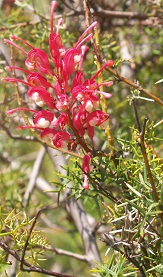 Grevilleas are natives of Australia, but have become increasingly popular in some other parts of the world. It is not uncommon to see them growing anywhere from California to England. The range of hybrids and species cultivars is very large and increasing rapidly with the activity of breeders and nurserymen around the world.
These plants have great deal of potential for many reasons; not the least their tendency to flower for extended periods, and their adaptability to a wide range of climates. However, only the hardier types can be grown successfully in cooler temperate regions.
Grevilleas include all sizes of shrubs, trees and groundcovers. Along with the variety in both flower and foliage colour; this makes them attractive plants in a wide range of landscape situations. Grevilleas are planted extensively in parks, ornamental gardens, public landscapes, and along roadsides. They are also grown as container plants and there are species which are suited to most types of soils and climates.
Around the world, grevilleas are grown everywhere from the United Kingdom to the United States, and Israel to New Zealand. In Australia, they are one of the most widely cultivated native genera and can be found in hot and humid tropical climates to the snow covered mountains in the south. They are used for land rehabilitation on degraded sites, for windbreaks on farms, and as street trees in suburban areas.
The wood of many grevilleas species has been used in construction, cabinet making and wood turning. The availability of grevillea wood is limited, and for this reason, it is more likely to be used for high quality cabinet making or wood turning. Silky Oak (G. robusta) furniture and decorative items can often be found which are made by high end craftsmen in regional areas around Australia.
The flowers of many species contain sweet nectar which indigenous people would sometimes eat – either by sucking the flowers or soaking them in water to make a sweet drink which is said to be rich in vitamin C. Grevilleas also show some potential for other medicinal uses. Some preliminary research has suggested they may have use in treating cardiovascular conditions because they contain striatol.
Pigments extracted from the leaves have also been used to dye fabrics, particularly silk. It has also been used to create charcoal.