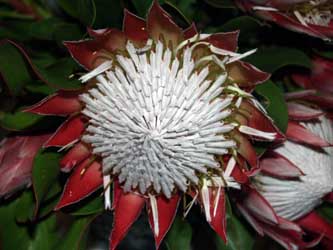
Become an Expert with Proteas
- Learn to Identify and Grow lots of different Proteas and related genera
- Grow as cut flowers or landscape plants
- Propagate and nurture plants for optimum vigour
The term “Protea” is sometimes loosely used to refer to any plants in the Protea (or Protreaceae) family; though the scientific name “Protea” is strictly confined to one genus.
Even nurserymen and cut flower growers the world over, may sometimes use the term Protea to refer to related plants in the Proteaceae family, such as Telopeas, Leucadendron and Leucospermum (though strictly speaking they are not Proteas). This course is primarily concerned with those plants classified scientifically into the genus “Protea”.
The true “Proteas” do share characteristics, with related plants from the same Proteaceae family:
- similar soil and water requirements
- susceptibility to the same problems
- other similar cultural needs
- sometimes a similar appearance, in foliage and flower.
This is a course for amateurs and professionals; flower growers, plant collectors and breeders, nurserymen, botanists, landscapers, gardeners and horticulturists.
Course Content
There are eight lesson covering the following:
1. Introduction
- Review of the system of plant identification
- General characteristics of Proteas
- Information contacts (ie: nurseries, seed, clubs, etc.)
- Protea Botany
- One way of Classifying Proteas
2. Culture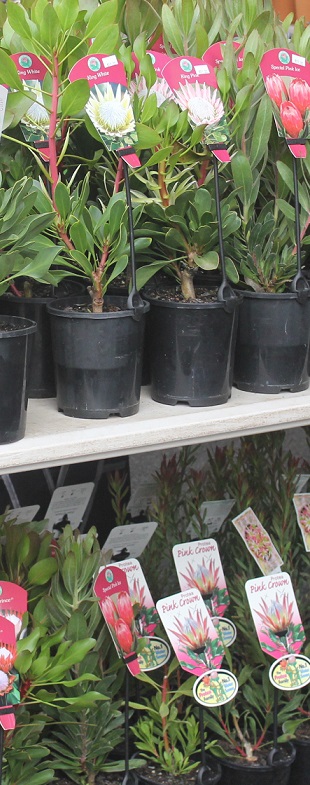
- Planting
- staking
- mulching
- watering
- feeding (nutrition requirements, deficiencies etc)
- pruning
- protection from wind, salt air etc.
- drainage requirements
- techniques for providing drainage, etc.
3. Propagation
- Methods of propagating this group of plants (cuttings & seed)
- Propagation of selected varieties, etc.
4. Most Commonly Grown Varieties of Proteas
- Protea cynaroides
- Protea mellifera
- Protea repens
5. Pests, Diseases and Problems
- Protea botany
- Pest & diseases
- Drainage problems
6. Other Proteas to Grow
- Protea aristata
- Protea caffra
- P. coronata
- P. cedromontana
- P. compacta
- P. exima
- P. grandiceps
- P. holosericea
- P. lacticolor
- P. laevis
- P. laurifolia
- P. longiflora
- P. longifolia
- P. lorifolia
- P. pulchra
- P. punctata
- P. rubropilosa
- P. recondita
- P. speciosa
- P. stokoei
7. Making the Best Use of Proteas
- Reasons for Growing Proteas
- Proteas for warm climates
- Hybrids
- More cultivars for landscaping
- Foliage affects
- Harvest and post harvest
- Dried Flowers
- Growing Proteas in Containers
8. Special Assignment - based on one of the following (your choice)
- How to grow Proteas for commercial flower production.
- The botanical characteristics and cultivation requirements for a selected Protea cultivar.
- A collection of different Protea cultivars on a budget equal to an average one weeks wage for workers in your country. selection of the varieties to grow, how to establish them in containers, how to maintain peak health throughout the year.
- Month by month what to do to proteas to achieve and maintain peak health in your garden. You should indicate when to feed, how much & what.....when to prune, and how, when & if to mulch, pest control measures etc.
Duration: 100 hours
Hardy, Versatile and Diverse
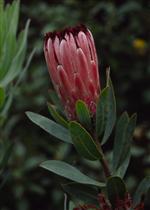 Many members of the Protea family (known as the Proteaceae) are relatively easy to keep growing, once established; often producing spectacular floral displays for decades if they are looked after. The flowers can be picked to decorate your own home, or you can sell them at roadside stalls, markets, etc. or directly to florists.
When plant nurseries or cut flower growers talk about Proteas they often refer to a group of closely related plants - particularly Leucospermum, Leucadendron and the Australian Telopea (more commonly known as the Waratah) - as well as the genus Protea itself.
Their cultural requirements are similar and they are often grown alongside one another
Comparing Leucospermum, Leucadendron and Protea
|
Protea
|
Leucospermum
|
Leucadendron
|
|
Flowers are bisexual (male & female parts on the same flower)
Many flowers occur in heads, irregular and usually sessile (ie. Without a stalk): enclosed in a variously coloured involucre (ie. A whorl of small leaves or bracts surrounding the flowers).
|
Flowers are solitary or clusterd occurring in a bracted head; the perianth is tubular
|
Dioecious –both male flowers and female flowers occur on different plants
Male flowers in a sessile (without a stalk) head
Female Flowers in a cone like head
|
|
Fruit is a densely bearded nut
|
Fruit is a whiteish nutlet
|
Fruit is a nut
|
|
Leaves sometimes don’t have a stem, arranged alternately on stem, leathery
|
Leaves are crowded on the stems, leathery and hairy
|
Distinctive terminal leaves surround flower are usually coloured, Leathery leaves
|
|
Approx 132 species, 82 from South Africa; most of the others indigenous to the African continent
|
Approx 48 species, upright or procumbent shrubs, most from South Africa, three from elsewhere
|
South African trees and shrubs, Approx 80 species
|
Proteas are often known for their spectacular cut flowers. There are other members of the Proteaceae family, such as the Banksias, Hakeas, Dryandras and Grevilleas that also make excellent cut flowers. They are also known for their ability to handle tough dry situations where other plants would not.

WHAT NEXT?
Register to Study - Go to “It’s Easy to Enrol” box at the top of the page and you can enrol now.
or
Get Advice – Email us at info@acsedu.co.uk OR
Use our FREE COUNSELLING SERVICE to contact a tutor
CLICK TO CONTACT US