Learn Equine Behaviour Online - Learn how animals think and behave
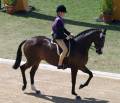
Knowledge of equine behaviour can also assist in training. By knowing how a horse is likely to behave in a certain situation, it allows the rider to prepare for it and to either avoid or resolve that particular situation.
What is the Purpose of Equine Behaviour?
It is assumed that all equine behaviour are adaptations designed to support survival, either directly or indirectly. However, this is not always the case. Animals can behave self-destructively, out of habit, or out of boredom, just as humans can. To better understand the behaviour, we should also consider what motivates it.
Duration: The course requires approximately 100 hours of study.
Course Structure
There are 7 lessons in this course:
- Introduction: Influences and motivation
- Why study equine behaviour?
- What motivates behaviour?
- Reactive behaviour
- Active behaviour
- Cognitive behaviour
- Species behavioural differences
- Learned behaviour
- Classical conditioning
- Stimulus conditioning
- Trace conditioning
- Delayed conditioning
- Operant conditioning
- Terminology
- Genetics and Behaviour
- Understanding the basics
- Heritability
- Epigenesis
- Innate behaviour
- Selective pressures
- Social Behaviour
- Rank
- Conflict
- Equine Perception and Behaviour
- Imprinting
- Negative imprinting
- Sensory reception
- Mechanoreceptors
- Thermoreceptors
- Chemoreceptors
- Photoreceptors
- Stimulus filtering
- Communication and Social Behaviour
- Social Constraints
- Herd Membership
- Auditory signals
- Chemical signals
- Communication
- Co-ordination
- Cohesion
- Sexual and Reproductive Behaviour
- Sexual encounter
- Isolating mechanisms
- Birthing behaviour
- Foal imprinting
- Maternal behaviour
- Abnormal behaviour
- Learning and Training
- Conditioning and learning
- Shaping
- Extinction
- Habituation
- Instrumental Learning
- Thorndike’s Law of Effect (1913)
- Operant and Respondent Behaviour
- Pseudo-conditioning
- Intero-ceptive Conditioning
- Temporal Conditioning
- Biological Aspects of Learning
- Associative Learning
- Obedience
- Reinforcement
- Punishment
- Systematic desensitisation
- Counter conditioning
- Behavioural Problems
- Types of Abnormal Behaviour in Horses
- Diagnosing Behavioural Problems
- Indicators of Pain
- Indicators of Mild Fear
- Indicators of Extreme Fear
- Stress
- Stereotypes
- Stable Vices
- Prevention
- Ridden Vices
- Handling Vices
- Problems during loading
Duration 100 hours
Aims
- Identify factors affecting horse behaviour.
- Describe the influence of genes on equine behaviour.
- Explain how horses perceive and how they respond to various stimuli
- Explain how horses communicate and the nature of their social organisation.
- Explain the sexual and reproductive behaviour of the horse.
- Describe the different ways that horses learn and how this can be applied to the training environment
- Explain how and why behavioural problems occur and how they can be prevented
SAMPLE COURSE NOTES
 KINDS OF BEHAVIOUR
Three general categories of behaviour are reactive behaviours, active behaviours, and cognitive behaviours.
Reactive Behaviour
Reactive behaviour includes stereotypic behaviour which is largely automatic. These are the most primitive types of behaviours which have been fully established in the animal well before it is born. Animal tropisms (automatic orientation responses) such as balancing and positioning are reactive behaviours. Other tropisms include things such as breathing, avoiding heat or opening the eyes.
Active Behaviours
Active behaviours are developed from inherited potentials. The animal is born with a tendency to act a certain way, but a degree of learning must occur for that behaviour to develop. The process is a little like a computer which delivers pre-programmed responses on demand; the way to act might be built into the animal’s genetic make-up, but it requires a certain stimulus before the action happens. These behaviours in part occur through parental training (eg. running, walking, grooming). This is a more elaborate type of behaviour than reactive behaviour. It is believed to occur only in more advanced animals (ie. arthropods and vertebrates), though there is some evidence that lower order animals can also learn behaviour.
Cognitive Behaviour
Cognitive behaviours are the most advanced forms of behaviour. Genetics provides only a very general influence, and the actual behaviour is more influenced by the environment and experience. Cognitive behaviour is more or less “deliberate” activity. The animal doesn’t just respond to stimuli; it can also “invent” its own actions. Simple cognitive behaviours are encountered in many (but not all) arthropods, and all vertebrates.
Exploration is a simple cognitive behaviour which allows an animal to familiarize itself with new conditions in the environment. Objects are approached, inspected and then moved away from. This action is generally repeated, but with reduced frequency. The most complex environmental factors tend to stimulate the greatest exploratory activity. If mammals are prevented from exploration for long periods, their behaviour can become abnormal.
Play is a more advanced type of cognitive behaviour which occurs to some degree in most vertebrates; but more so in mammals. Play may involve more complex and diverse activity than exploration. Play and exploration together help animals adapt to both their physical and social environment. Lack of play in young animals can lead to social problems later in life (ie. they make poor parents or don’t react well with other animals). Another more complex cognitive behaviour seen in mammals is manipulative behaviour.
Species Behavioural Differences
The behaviour of horses has been affected by their evolutionary development.
Examples:
- Horses have lied in open grasslands for over 25 million years. Feed in these situations is high in fibre, and low in energy, thus slow to digest. This has caused horses to develop a behaviour of slow continuous feeding while slowly moving for most of the day. Conformation and behaviour of equine animals is adapted to this life of continuous grazing; and for this reason, even modern domesticated horses require several hours of slow movement each day.
- Horses evolved as herd animals, because they were vulnerable to attack by predators if they were alone in an open grassland environment. Being in a group increased the ability to detect and escape a threat. As a result, horses have evolved an inherent need to be near and interact with other horses. The need for social contact with other horses is essential.
- Horses have developed a flight behaviour (running away) as a natural reaction to threat. Their physiology has even adapted to support this behaviour. A horses first reaction to any threat or fear will naturally be to run away, and that behaviour is fixed in its genetics.
Domesticated Horse Behaviour is Different
Domestication of horses has affected its genetics and inherent behaviours; but to a limited degree.
Domestic horses may differ from wild ancestors and relatives in the following ways not just because they are around humans from birth, but also because these characteristics have been bred into them over time:
- Less Aggressive
- Tamer (less timid)
- Some sensory parts of the brain (sensory perception) have become less heightened (eg. The horse may not sense visual and other stimuli as sharply, because the need to do so has decreased. As a result, domestic horses are likely to be less stressed)
- Greater variation in performance, behaviour and physical attributes.
Who Is This Course Suitable For?
This course is suitable for -
- riders
- stable staff
- groomers
- anyone involved in the equine industry
- owners
- vets and veterinary staff
- rescue workers
Really, anyone who is interested in horses and wants to know more about the way in which they think.
Why Study This Course?
This course will help you to understand more about the way in which horses think and why they behave the way that they do.
This is useful in many different careers related to horses, such as working in stables, grooming, marketing, and also for horse owners.
It will -
- Provide you with detailed insight into the way horses think and behave.
- Create a greater bond between yourself and the horse as you understand more about their behaviour.
- Improve your job and career prospects working in the equine industry.
Any Questions?
If you have any questions about the course, please don't hesitate to ask. We are more than happy to help. Please click here to get in touch with our equine tutors.