Foundation Studies in Equine Care: Understand the care and management of horses.
The course aims to develop the abilities in students, providing them with:
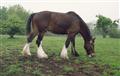 The skills to evaluate horses conformation.
- An understanding of the horses diet.
- Knowledge of grooming procedures.
- An ability to develop appropriate management procedures for a specific situation.
- Knowledge of commercial opportunities in the equine industry, including how to buy and sell horses.
COURSE STRUCTURE AND CONTENT
Course Duration: 100 hours.
Start Date: Start at any time - study at a pace that suits you, and with full tutor support for the duration of your studies.
Lessons: The Horse Care I course comprises 7 lessons as outlined, below.
Lesson 1. Horse Psychology and Handling
The early horse; Survival mechanisms of the early horse; The modern horse - behaviour and memory; Using psychology to handle horses; Catching and leading horses; Fitting the bridle and saddle; Tying up a horse; Safety rules.
Lesson 2. Buying A Horse
Temperament, Size; Weight carrying ability; Age; Equine dentition and ageing; Glossary of terms; Dentition diagrams and detailed explanation; Colour and markings; Breeds.
Lesson 3. Conformation
The shape of the skeleton; Body proportions and parts; Conformation problems; How to describe confirmation.
Lesson 4. The Digestive System And Principles Of Feeding and Watering
The digestive system; The alimentary canal; The stomach; The small intestine; The large intestine; Absorption of food; Groups of food nutrients; The composition of some common horse feeds; The principles of watering; The principles of feeding; Feeding concentrates and roughages; Feeding groups of horses at one time.
Lesson 5. The Grass Kept Horse And Pasture Management
Advantages and disadvantages of working off grass; Paddock size and minimum area needed; Types of fencing; The water supply; Shelter; Fodder trees; General management of the grass-kept horse; Management in summer; Management in winter; Exercise; Grooming the grass-kept horse; Conservation of the land; Keeping horses at grass on small areas; Roughing off and turning a horse out.
Lesson 6. Grooming
The skin - epidermis, dermis, the coat; How the skin regulates body temperature; Reasons for grooming; Grooming tools; Grooming techniques - strapping, sponging, brushing; Using a stable rubber, dealing with stable stains on grey coats; Oiling the feet; Quartering; Setting Fair/Brushing off; Washing the mane and tail; Washing the sheath; Shampooing the horse.
Lesson 7. Industry Applications
Resources; Writing resumes - employment readiness; Competition horses (overview) - event horse, dressage horse, show jumper, endurance; Educating Horses; Breeding; Farm planning; Short term operations; Farm business structures; Quality management systems; Whole farm planning; Preparing a farm business; Managing risk; Sensitivity analysis; Financial management; Record keeping; Finance sources; Setting up a small business.
LEARNING AIMS
On successful completion of the course you should be able to do the following:
- Differentiate between the different procedures used for the handling of horses.
- Describe the procedures for the buying and selling of horses.
- Develop a program for the evaluation of the conformation of horses on a property/facility.
- Analyse the digestive system, including structure and function, of horses.
- Develop appropriate procedures to manage a horse at grass.
- Explain the methods used to prepare horses for specific uses, including their grooming for different tasks.
- Explain commercial opportunities available in the horse industry.
WHAT YOU WILL DO
Here are just some of the things you will be doing:
- Describe different psychological traits of a horse including:
- herd instinct, memory, fright.
- Explain how an understanding of horse psychology can assist with handling a horse.
- Compare three different methods of breaking in a horse.
- Demonstrate how to lead a horse.
- Demonstrate how to ride a horse.
- Develop a list of safety rules for handling horses in a specified situation.
- Compare the differences in the way two different horse owners handle their horses, at the same horse show or competition.
- Evaluate the features of a horse being offered for sale in your locality, to determine the value of that horse.
- Compare the conformation of two different breeds of horses, based upon a physical inspection of a horse from each breed.
- Observe a horse and explain how the way water is provided may affect that a horse’s digestive processes.
- Differentiate between the requirements of a specified horse kept at grass, at different times of the year, in your locality.
- Develop guidelines for managing a specific horse at grass, on a property visited and investigated by you.
- Explain different husbandry tasks which are essential to the management of a horse investigated by you.
- List the different reasons for grooming horses.
- Compare how to groom horses for different situations, including:
- dressage, pony club competition, exhibitions, stock work.
- List the different applications for horses in modern society.
- Determine the minimum facilities required to establish different specified businesses in the horse industry, including:
- a riding school, a stock agent, another horse business.
- Evaluate the financial viability of four different sectors of the horse industry.
- Evaluate the potential of different specified horse enterprises in your locality.
Do You Love Horses Enough?
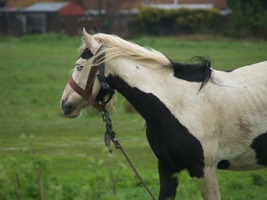 Are you passionate enough about horses to commit to some serious study, and maybe even work in the equine industry?
This course is relevant to both passionate amateurs or for anyone seeking to lay the foundation for a career in the equine industry.
In order to be successful in the equine industry, you will require both the correct aptitude as well as the commitment, and attitude, to become heavily involved with horses.
Working with horses is not just a job, it is a lifestyle choice. This is where attitude comes in. The attitude that you have towards you role is vital. You need to develop and maintain the right perspectives for working with horses. You need to learn how to maintain an emotional balance (or detachment from) with the horses you work with or your professionalism can become questioned. For example, if a horse is suffering, but you cannot bear to euthanize it, you may have become too emotionally involved with the horse to make the best decision or judgment on its welfare. So, your attitude must result from having an understanding and control of your moral and ethical judgments as well as emotions.
Buying and Selling a Horse
When it comes to buying, and selling horses there are a variety of ways in which this can be done – each way has advantages and disadvantages to be aware of. Remember horses are used to their environment and have most often become accustomed to the routines and behaviour of their current owners. Changing owners and moving horses from familiar surroundings can be moderately unsettling for them and frequently their behaviour will change. Seeing a horse in its own environment with its current owner does not always give a factual idea of what you can expect the horse to be like when it becomes your horse. There can be a great deal involved in buying a horse - some horses pass through the hands of many owners throughout their lives.
Consider how you will evaluate every aspect of the horse from personality, behaviour, health condition, soundness and conformation and performance. Additionally, you should be aware of cost factors surrounding the purchase of horse. Cost factors differ depending on breed, sex, training, size, colour, conformation and age. Be familiar with the processes involved in completing the transaction of sale, what to ask the previous owner and why it is important to involve a horse expert and/or vet in a pre-purchase inspection of the horse.
Is Working With Horses for You?
Working with animals of any kind is a continuously rewarding experience. As someone who chooses this is their field of study or employment you can make a remarkable impact or difference on the lives of those you work with. You can choose to prevent suffering and heal sick or injured horses. You can be involved in breeding and rearing. You can train and educate horses for pleasure or competition standard. You can show people how to care for their horses throughout live.
HOW THE COURSE WORKS
You can start the course at any time.
It is studied by distance learning, so you can study in the comfort of
your own home. But this doesn't mean you are all alone in your studies.
Our highly qualified and friendly tutors are there to help you every
step of the way. If you have any questions at all, they are always
happy to help.
THE ADVANTAGES OF STUDYING WITH ACS
- Our
courses are written and taught by experienced professionals, so you
know you can expect a high quality of teaching and support.
- You can start the course at any time and study at your own pace (we do not impose a time limit for you to complete your studies).
- Fit your studies around your own busy lifestyle - we provide full tutor support for all the time you are studying.
- Study where you want to - online studies offer the flexibility for you to determine where and when you study.
STUDENT TESTIMONIAL
"The course is a lot more detailed than I thought it would be - I am learning a lot more than I hoped! I am very happy with the course and the school, very professional and thorough."
Janette - Horse Care I student
Who Is This Course For?
This course is aimed at different people including:
- Veterinary assistants
- Stable hands
- Riding school staff
- Horse trainers
- Horse owners
- Horse enthusiasts
Enrol with us to become skilled in all aspects of horse care.
QUESTIONS?
Please, contact us - use our FREE COURSE COUNSELLING SERVICE
to get in touch with our specialist tutors. Choosing the right course
is important and they are there to help and advise you on the making the
right choice.
Understanding Horse Sight
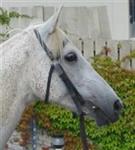 Horses rely heavily on visual information about their external environment.
They have large eyes (relative to other mammals) and a large field of vision. Because of the positioning of the eyes on the side of their head, they have very good peripheral vision.
Compared to 20/20 human vision, horses are a slightly fuzzy 20/33 vision. This is some improvement on dogs (20/50) or cats (20/100). They also have superior night vision, thanks to a reflective panel in their retina that maximises low light.
The position of the horse’s eyes high on its head allows the horse to see well when its head is down grazing. About 320° of the horizon is visible, making it easy to spot a predator.
Each eye can see up to 215 degrees on its respective side (monocular vision). Their eyes see two distinctly different pictures simultaneously.
A horse’s binocular vision (seeing one picture with both eyes) is only experienced by a horse when it looks straight ahead.
Interestingly when approaching a jump the horse actually loses sight of the obstacle from 3 or 4 strides out and from then on in is jumping “blind”.
The horse has three main blind spots. They cannot see things that are very close to the centre of their face which is why the horse will back up or shift its head when approached from directly in front. The second blind spot is directly behind the horse which is why we are always warned not to walk or approach a horse form behind. Horses also have difficulty seeing anyone who is under their neck.
Horses have round shapes in each pupil called Nigra bodies which appear to serve as visors that shield the interior eye structures from excess glare. They also possess a third eyelid (or nictitating membrane) is flap that can come across from the inner corner to seal the eye shut against a threat even before the lids can close. It's also the source of lubricating tears.
It has long been believed that horses have limited colour vision. The anatomy of the equine eye, however, suggests that some colour perception is possible, and in the last 25 years, a few behavioural studies have attempted to test colour recognition in horses. The results were often inconclusive.
In more recent times, researchers have examined equine vision in a new and more objective light by monitoring horses' physiological reactions to the range of colours. In addition, more carefully designed behavioural tests have produced convincing support for the physiological findings that suggest horses do possess colour vision.
With only two types of cones in their retinas, horses have more limited colour perception than people.
A recent study has found that ponies' eyes responded to blue and green but not to red. Findings indicated that horses probably see the world similarly to people who suffer from red-green colour blindness. Although horses see blue and yellow as separate colours, when presented with blue-yellow, the image is perceived as grey or white. When viewing red, horses apparently see an earthy colour with a faint yellow and blue hue. Magenta and its blue-green complementary colour are seen as grey.
As colour vision is not required for either successful foraging or reproduction, it appears that it may not be an essential survival tool for horses. Yet the fact that equine vision has evolved with a degree of colour capability, indicates there is some survival advantage to seeing beyond black and white.
Sensory hairs around the horse's eyes trigger a "blink reflex" if he gets too close to any possibly eye-damaging surfaces while grazing or drinking. When you are grooming, or preparing for shows, avoid trimming these hairs shorter than an inch.
LEARN MORE
To enrol, simply go to the enrolment box at the top right-hand side of this page. If you have any QUESTIONS please, contact us - use our FREE COURSE COUNSELLING SERVICE
to get in touch with our specialist tutors. Choosing the right course
is important and they are there to help and advise you on the making the
right choice.
Keep up to date with ACS. Stay in touch, follow us on:
Twitter
Facebook
Google