Learn about the classification and biology of birds and much more
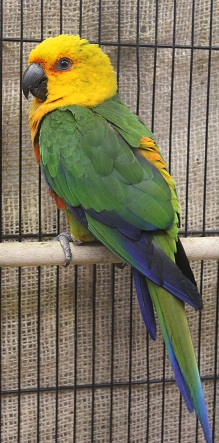 Learn what is a bird, the classes and orders of bird families.
- Learn about their evolution - how they have adapted and how developed enabling them to colonize air, land and water so successfully.
- This course is designed for people working or wishing to work with birds and animals, life scientists and environmental researchers and consultants, amateur bird watchers, or anyone working with birds.
The aim of this course is to introduce the student to the many interesting and diverse bird species, and their physiology and habitats. You will learn a wide variety of bird facts, through a combination of tools such as reading, interacting with tutors, undertaking research and practical tasks, and observing birds.
Explore a passion, discover a hobby, lay the foundation for a career or expand your employment opportunities. Whatever your reason for studying birds, this course is flexible in many ways, providing individualised guidance and feedback from highly qualified and experienced experts.
Course Structure and Lesson Content
The course comprises 9 lessons as detailed, below.
Lesson 1. Classification and Introduction to Bird watching
- Nature and scope of ornithology (over 9,000 species).
- Place of Birds in Nature.
- Bird Classification (Aves, Ratitae, Carinate).
- Use of common names and scientific names.
- Fossil or Extinct Birds.
- Classes and Sub Classes.
- Comparing characteristics of different Super orders.
- Comparing characteristics of all major bird Families.
- Resources for further information.
- Bird Watching equipment.
Lesson 2. The Biology of Birds
 Anatomical features.
- Skeleton.
- Feathers.
- Feather Colour.
- Wings.
- Wing Types (elliptical, high speed, long soaring, high lift).
- Legs and Feet.
- Beaks and Bills.
- Internal Structure.
- Respiration.
- Excretion.
- Digestion.
- Circulation.
- Senses.
- Avian Behaviours (Flight, Diving, Reproduction, Courtship, Bonding, Territoriality, Nesting).
- Formation of Eggs and Hatching.
- Feeding.
- Vocalisations.
- Migration.
- Habitats.
Lesson 3. Common and Widespread Land Birds
 Eagles and Relatives - Carthatidae (New Worldvultures, condors).
- Pandionidae (osprey).
- Accipitridae (hawks, eagles, kites).
- Sagittariidae (secretary bird) .
- Falconidae (falcons, caracaras).
- Crows and their Relatives.
- Butcher birds, Currawongs and related birds.
- Pigeons (structure, feeding, breeding, types).
- Doves.
- The Dodo.
- Cuckoos.
- Pestand Introduced Birds (for many countries) - Indian Mynah, Sparrow, Thrush, Starling, etc.
Lesson 4. Giant Birds and Long Legged Birds
 Ratitites - Ostrich, Emu, Moa, Rhea, Cassowary, Kiwi, South American Tinamous, extinct giant Elephant bird and Dodo.
- Herons, Storks and relatives.
Lesson 5. Seabirds and Water birds
- Anseriformes - ducks, geese, swans etc.
- Gruiformes - cranes, coots, mud hens, rails.
- Charadriiformes - sandpipers, snipes, curlews, plovers, dotterels, etc.
- Gaviiformes - divers.
- Gulls, Skuas, Auks, Puffins, Terns.
- Tube Nosed Birds.
- Albatrosses.
- Petrels, Storm Petrels and Diving Petrels.
- Pelicans and Relatives.
- Gannets.
- Cormorants.
- Boobies, Frigate Birds, Tropic Birds.
- Penguins.
Lesson 6. Hunters - Birds of Prey, Owls, and Kingfishers
- Eagles.
- Eagle species.
- Hawks.
- Kites.
- Osprey.
- Falcons.
- Vultures.
- Owls.
- Breeding behaviours of birds of prey.
- Kingfishers.
Lesson 7. Passeriformes
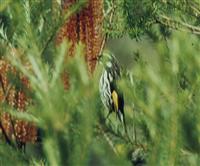 Scope of "songbirds" or "perching birds".
- Features common to Passeriformes.
- Varieties of Passeriformes (Primitive and Advanced).
- Muscicapidae - thrush.
- Robins.
- Flycatchers, Larks, Pippits, Wingtails.
- Swallows and Martins; physical characteristics, breeding and nesting.
- Fringilllidae - finches.
Lesson 8. Other Birds
- Parrots - structure, feeding, breeding, species.
- Honeyeaters, Swifts.
- Galliformes - chicken.
- Other Orders.
Lesson 9. Attracting, Feeding and Keeping Birds
- How plants benefit birds.
- Plants that attract birds.
- Feeding Birds.
- Bird Care - parasites, catching and handling, caring for a sick bird.
- Common Ailments.
Course Aims
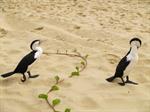 The aim of this course is to introduce the student to the many interesting and diverse bird species, and their physiology and habitats. You will learn a wide variety of things, through a combination of things such as reading, interacting with tutors, undertaking research and practical tasks, including observing birds.
The course aims include:
- Discuss the study of birds, including bird taxonomy.
- Describe anatomical and physical characteristics of birds.
- Describe anatomical and physical characteristics of birds.
- Discuss a range of different common and widespread land birds.
- Discuss a range of different flightless and long legged birds including Ratites and Ciconiiformes.
- Discuss and describe a range of water birds and sea birds.
- Discuss and describe a range of hunting birds.
- Discuss and describe a range of Passeriformes.
- Discuss and describe a range of parrots and other birds.
- Explain domestication of birds and the methodology and implications of attracting and feeding wild birds.
What You May Do In This Course
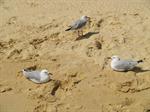 Connect with a Bird watching Club or organisation in your own country, or region of the world, and find out what services and information they offer. You may locate groups on the internet, listed under clubs and organisations in the Yellow Pages, and so on. You could contact them on the phone, or by email, by letter; or by attending a meeting.
- Write a history of the evolution of birds, include mention of species that have become extinct and reasons as to why you think this occurred.
- Discuss the breeding cycle of one particular bird species (of your own choosing). Identify any traits or behavioural patterns that are unique to this species.
- Select 6 different birds from groups studied in this lesson, and research each different bird using any resources you have available to you, such as textbooks, the internet, libraries, etc. Write a paragraph describing each of the six birds you selected, giving a detailed description of their external appearance, together with details of their distribution, structure, feeding habits and breeding. If possible, focus on any birds from each group that inhabit or regularly migrate to your region.
How Are Birds Classified?
Why You Need to Know Bird Classifications?
When you understand the groups or subdivisions which birds fall into, you will have a foundation for identifying and remembering the names of different birds which you encounter.
Using reference material (books, web sites etc.) can help you identify birds more effectively when you know and understand the broad groups (Then you are able to better decide what reference to use, and how to use that reference).
Bird names are better remembered when you can associate that name with something you are familiar with - in other words, the family to which that bird belongs.
Scientific and Common Names
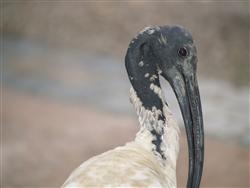 Common names are widely used by birdwatchers, and even scientists in the field of Ornithology.
Within a particular locality, scientific names are relatively accurate, though not always 100% correct. Be careful using scientific names though, particularly when you move to other parts of the world, as their accuracy can become uncertain. Bird classification is an imperfect science. Depending upon where an expert places their emphasis, the conclusions which they reach may vary. For instance, if an expert gives more importance to similarities in physical characteristics such as the beak; rather than behaviour, they may classify birds a particular way. Another expert who gives more emphasis to behaviour and less to physical appearance, may classify the same birds differently. Also, scientists in different countries sometimes classify birds differently. For example, in Europe, magpies are commonly black and white birds with the scientific name Pica pica. In Australia, a magpie is classified as a bird belonging to the genus Gymnorhina.
Class Aves
Birds are animals that belong to the Class Aves. Animals of this class characteristically have skin with feathers, forelimbs that are wings with three fused fingers, the hind limbs that are legs, each leg having four or less toes (usually developed into claws). All living types of birds have a horn like beak, and do not have teeth. The Class Aves includes 27 orders of living birds and a few fossil orders. Of the 27 living order 4 are ratites (flightless, usually large birds) and the remaining 24 are carinate (flying birds, with a ridge on the underside of their breastbone to which flight muscles are attached).
The bird heart has four chambers with a single aortic arch on the right and the lungs are extended air pouches. Birds do not have external genitals, external ear lobes or urinary bladders, and their urine is semi-solid.
- Subclass Archaeornithes.
- Subclass Neornithes.
- Superorder Paleognathae – non-flyers or weak flyers.
- Superorder Neognathae – modern flying birds
Learn more about the different orders, and individual genera and species of birds throughout this course.
ACS Student Comment
"I initially wanted to do the course because I really enjoy bird watching and I wanted to learn more about birds than just how to identify them. Also, I was set to start university in September, and as I was no longer studying biology, I wanted to take the opportunity to so do some final studying in that area.
This course has been brilliant: not only did I learn about the biology and distribution of birds, but I also learned about taxonomy (not nearly as boring as it sounds!), and I now know the behaviours and characteristics of a range of bird species worldwide.
I've enjoyed the course so much that, after much deliberation, I decided to go on to do further study. After a word with the university admissions tutor I successfully switched degree courses, so I am now set to study Ecology and Conservation.
I owe this course so much, not just for teaching me about birds, but also for making me realise how enjoyable it is to study them."
Mari Jones, Ornithology course.
How The Course Works
You can start the course at any time.
It is studied by distance learning, so you can study in the comfort of your own home. But this doesn't mean you are all alone in your studies. Our highly qualified and friendly tutors are there to help you every step of the way. If you have any questions at all, they are always happy to help.
Why Do This Course?
- Learn extensively about the classification, biology, and evolution of birds. Your understanding of these areas will provide a depth of knowledge about different bird species and their habitats.
- Suitable for those interested in birds as a hobby, or those working with birds, or those working in nature tourism as guides etc.
Why Study With ACS?
- Courses written and taught by highly qualified tutors with real industry experience.
- You can start the course at any time and study at your own pace.
- Fit your studies around your own busy lifestyle - we provide full tutor support whilst you study.
- Study where you want to - online studies offer the flexibility for you to determine where and when you study.
What Next?
- Promotion? Strengthen your prospects with knowledge and practical experience – develop your career.
- What could this course lead to? A greater understanding and knowledge of bird taxonomy and characteristics means you are better equipped to look after birds, meaning you may move into a more responsible position at work. Or if working as a nature tour guide, being able to identify and know about birds will help you in your work. Or you may use the course as an introduction to or part of wider studies of animal life of the environment.
- You want to work with birds in nature centres, zoos or wildlife parks, falconry centres or improve your career prospects in the field of ornithology. To succeed you will need passion, persistence and a willingness to do whatever it takes.
If this sounds like the course for you – why delay? Enrol today!
How To Enrol
Go to “It’s Easy to Enrol” box at the top of the page and enrol now.
How Get Advice
If you have any questions, we would love to hear from you - you can get in touch with our highly knowledgeable Environmental tutors today - use our Free Course Counselling Service. They will be happy to discuss your study aims and options available to you.