COURSE STRUCTURE AND CONTENT
There are 10 lessons in this course as follows:
Lesson 1. Scope and Nature of Medical Terminology
- What is Medical Terminology.
- Origins of Words.
- Structure of Words.
- Medical Prefixes.
- Medical Suffixes.
- Constructing Medical Terms by altering prefix or suffix.
Lesson 2. Anatomical Structure
- Anatomical Prefixes.
- Anatomical Suffixes.
- Locating parts of the body.
- Terms to indicate positioning of anatomical features in body.
- Acronyms.
- Symbols.
Lesson 3. Medical Equipment and Procedures
- Terms to describe Diagnostic and Surgical Procedures.
- Terms to describe Medical Equipment.
- Storage and Handling of Medicines.
- Sterilising Equipment.
- Terms to describe Bacteria.
- Gram Staining.
- Diagnostic Microbiology.
- Research Microbiology.
- Types of Wounds.
- Problems Resulting from Wounds.
- Treating Wounds.
- Electrolytes.
- Examples of Prefixes and Suffixes.
Lesson 4. Pharmacological Terminology
- Types of herbal and pharmaceutical medicines (e.g. Alkaloids, Calmatives, Cathartics, Decongestants, Expectorants, etc.).
- Pharmacological Terms (e.g. Allergens, Carcinogens, Photosensitisers, Toxic Alkaloids, etc.).
- Over the Counter Prescription Drugs.
- Terminology for OTC and Prescription Drugs (e.g. Steroids, Barbiturates, anti-
- Psychotic Drugs etc.).
- Prefix and suffix examples.
Lesson 5. Musculoskeletal System Terminology
- Naming main muscles.
- Musculature ... Types of Muscle tissue.
- Relationship between muscles and bone.
- Bone and Joint problems (e.g. Sprains, Broken Bones, etc.).
- Disorders of musculoskeletal System (e.g. Fibromyalgia, Sprains, strains, Cramp, etc.).
- Suffix Examples.
- Lesson 6. Cardiovascular, Lymphatic and Immune Systems Terminology.
- Parts of the Heart.
- Circulation.
- Systole and Disystole.
- Terms related to Disorders of Cardiovascular System.
- Lymphatic System and Immunity.
- Leucocytes.
- Vaccination.
- Immunity.
- Disorders of Immunity.
- Suffix and Prefix Examples.
Lesson 7. Respiratory and Reproductive Systems Terminology
- Lungs.
- Respiration.
- Pulmonary Circulation.
- Gas Exchange (Diffusion, Perfusion, Arterial Pressure).
- Carbon Monoxide Poisoning.
- Diagnostic Procedures for Lungs and Airways.
- Respiratory Disorders.
- Male Reproductive System (Penis, Testes, Scrotum etc.).
- Female Reproductive System.
- Pregnancy.
- Parturation.
- Caesarian Section, VBAC and Multiple Gestation.
- Premature Birth and Miscarriage.
- Reproductive Disorders (e.g. Amenorrhoea, Menorhagia, PCOS, Endometriosis, etc.).
- Suffix and Prefix Examples.
Lesson 8. Digestive and Excretory Systems Terminology
- Parts of the Digestive System.
- Renal System.
- Kidneys.
- Ureters and Bladder.
- Urethra.
- Disorders of Digestive and Renal Systems (e.g. Anal Fissure, Haemorrhoids, Inflammatory Bowel System, Kidney Stones, Pancreatitis, etc.).
- Suffix and Prefix Examples.
Lesson 9. Integumentary System (Skin) Terminology
- Thermoregulation.
- Electrolytes.
- Types of Sensory Nerves.
- Sun Protection.
- Intergument Structure.
- Cell Types.
- Disorders (e.g. Scab, Atrophic skin, Abrasion, Excoriation, Scar, Ulcer, etc.).
- Diagnostic Procedures.
- Suffix and Prefix Examples.
Lesson 10. Nervous and Sensory Systems Terminology
- Brain.
- Central Nervous System.
- Peripheral Nervous System.
- Disorders of Nervous System.
- Disorders of Sensory System (e.g. Aphasia, Apraxia, Vertigo, etc.).
- Diagnostic Procedures.
- Suffix and Prefix Examples.
COURSE AIMS
Lesson aims in the Medical Terminology course include:
- Explain the scope and nature of terminology used in medicine and allied professions.
- Identify the meaning of words that describe general anatomical features, including disorders.
- Identify the meaning of words which describe medical tools, equipment and procedures.
- Identify the meaning of words that describe pharmacological terms.
- Identify the meaning of words that describe physiological and anatomical features in the musculoskeletal system, including disorders.
- Identify the meaning of words that describe physiological and anatomical features in the cardiovascular, lymphatic and immune systems, including disorders.
- Identify the meaning of words that describe physiological and anatomical features in the respiratory and reproductive systems, including disorders.
- Identify the meaning of words that describe physiological and anatomical features in the digestive and excretory systems, including disorders.
- Identify the meaning of words that describe physiological and anatomical features in the skin, including disorders.
- Identify the meaning of words that describe physiological and anatomical features in the nervous and sensory systems, including disorders.
MEDICAL TERMS ARE THE SUM OF THEIR PARTS
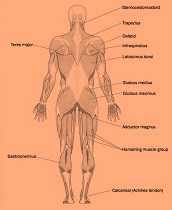 The starting point for understanding medical terminology, is to learn how the words are commonly constructed by combining different components (e.g. roots, suffixes, prefixes, etc.) to create a word. When you start to understand the components of words, you then start to understand their meanings, and eventually you will develop an ability to understand the meanings of words you may have never encountered before, just by recognising their component parts.
Here are some examples:
Ketoacidosis
Root - keto (ketones)
Root - acid (acid)
Suffix – osis (a condition/disease)
This is a condition where there is an increased acidity in the blood caused by the accumulation of ketone bodies. Ketones are an acid which enters the blood when the body starts to burn fat reserves as a store of energy. Ketoacidosis occurs in patients with Insulin dependent diabetes when there is insufficient insulin which causes the body to switch from normal carbohydrate metabolism to using fats for fuel. Symptoms of diabetic ketoacidosis include excessive thirst, frequent urination, vomiting, confusion a dry mouth and reduced blood pressure. The most common causes of ketoacidosis in diabetic patients include fever, diarrhoea/vomiting, missed insulin injections/taking too little insulin and undiagnosed diabetes. Treatment involves insulin injections and rehydration.
Kyphosis
Root – kyph/o (hump)
Suffix – osis (a condition/disease)
Kyphosis refers to a curvature of the spine which results in a ‘hunchback’ appearance. There are two main types of kyphosis which both tend to develop during the teenage years- postural kyphosis which results from poor posture, and Scheuermann’s kyphosis which develops due to a structural problem in the spine. Kyphosis may also develop in the womb (congenital kyphosis) and in older people due to the effects of conditions such as osteoporosis.
Osteoporosis
Root - oste (bone)
Combining vowel - o
Root - porosis (porous)
Meaning a condition of porous bones; Osteoporosis is a condition where bones become porous making them thin and brittle and more susceptible to bone fractures. The most common fractures caused by osteoporosis are those affecting the wrists, hips or bones in the spine. Risk factors for Osteoporosis include gender (women are at more risk than men, increasing age, an early menopause, a sedentary lifestyle, smoking, excessive alcohol intakes, hyperthyroidism and eating disorders.
HOW THE COURSE WORKS
You can start the course at any time.
It is studied by distance learning, so you can study in the comfort of your own home. But this doesn't mean you are all alone in your studies. Our highly qualified and friendly tutors are there to help you every step of the way. If you have any questions at all, they are always happy to help.
Each lesson includes set tasks, and is completed with an assignment which the student submits to their course tutor. The tutor will mark the assignment and return this to the student with comments and suggestions for further reading.
STUDYING WITH ACS
At ACS we provide you with more than just a set of course notes.
Your 'learning package' includes:
- Course notes.
- Self-assessment quizzes.
- Assignment feedback.
- You can interact one on one with a professional tutor with decades of experience - just email, phone or log on to chat to connect with them.
CAREER OPPORTUNITIES
Study alone can never guarantee career success; but a good education and understanding the language of medicine is an excellent starting point.
Success in a career depends upon many things. A course like this is an excellent starting point because it provides a foundation for continued learning, and proof of your commitment to learn.
Start studying today and put that commitment into practice.
WHAT NEXT?
Register to Study - Go to “It’s Easy to Enrol” box at the top of the page and you can enrol now.
or
Get Advice – Email us at info@acsedu.co.uk OR
Use our FREE COURSE COUNSELLING SERVICE to contact a tutor.