Learn to grow plants naturally and by working with the natural environment
Why Organics?
- Healthier Produce.
- Healthier Gardens, Farms and Environments.
- A growth sector in Horticulture and Farming.
- More Sustainable for the Land and Economic Viability of a Farm.
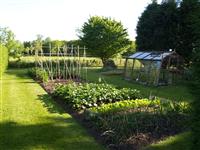 Organic growing has increased in popularity over the past ten years due to the increasing awareness of safety in the garden and on the farm and the desire to produce food that is free from chemical inputs. For decades, farmers and growers have relied upon chemicals to control pests and diseases in order to produce crops for sale. Unfortunately, it is only recently that we have become aware that many of those chemicals can sometimes cause health problems to humans, as well as long-term damage to the environment such as soil degradation, imbalances in pest-predator populations can also sometimes occur. As public concern grows, these issues are becoming increasingly important. However, the organic grower or gardener should understand that not all organic practices always guarantee a healthy environment, over-cultivation for example can also lead to soil damage. Organic growing practices should aim to ensure quality of both the environment in which we live and of the produce we grow in our gardens and on our farms.
COURSE AIM
To plan and develop the cultivation of different plants using organic principles and techniques.
COURSE STRUCTURE AND CONTENT
The course comprises 10 lessons, as follows:
- Introduction. A look at the various organisations that are involved with the organic movement.
- Plant Culture. Learn about the basis of good plant and soil health with no dig principals and crop rotation.
- Understanding Soils. If your soil is not good, the plants will not perform. Understand soil profiles, identify soil types, and the requirements to keep plants healthy.
- Fertilisers and Plant Nutrition. Organic fertilisers such as manure-based ones and how to use them.
- Soil Management. Green manure crops, cultivation techniques for minimising soil disturbance and composting techniques to enhance the soil.
- Pests and Diseases. Understanding pests and diseases and environmental problems with organic production.
- Mulching. This lesson looks at the importance of mulch and methods to use it when producing organic crops.
- Seeds. Collecting, storing & sowing your own seeds.
- Vegetable Growing in your locality. The importance of selecting a suitable site and planning your crop. The A-Z of various vegetables you could look at growing.
- Fruit Growing in your locality. Establishing an orchard and the production aspects to consider. A-Z of various fruit tree types you could look at growing.
Each lesson culminates in an assignment which is submitted to the school, marked by the school's tutors and returned to you with any relevant suggestions, comments, and if necessary, extra reading.
AIMS
- Explain the concepts and principles of organic growing, including the common techniques used in organic growing systems.
- Determine soil management procedures, which are consistent with organic growing principles.
- Explain how pests and diseases are controlled using organic growing principles.
- To determine appropriate mulches for use in different organic growing situations.
- Determine the appropriate use of seed propagation, in organic plant culture.
- Plan the production of an organically grown vegetable food crop.
- Plan the production of an organically grown fruit crop.
WHAT YOU WILL DO IN THIS COURSE
The Organic Plant Culture course involves an "experiential" style of learning, where you learn by experience. It is far more than just reading, remembering and being tested. We know from research that people who learn, then process what they learn through different experiences; will develop a far better, deeper and more practical understanding of the subject; and as a result be more successful across the years after they finish studying.
Here are some examples of what you will do to learn, process what you learn, and deepen your capacity to apply what you learn in the real world after you finish studying.
- Determine the roles of different organic farming and gardening organisations.
- Explain how organic crops can be 'certified' as being organic in your country.
- Explain the application of crop rotation in a specified garden or farm.
- Describe the construction of a 'No-Dig' garden, using materials readily available in your locality.
- Explain the intended aims of a specific 'Permaculture' designed garden.
- Explain different organic growing concepts, including: *biodynamics *sustainable agriculture *companion planting *fallowing *composting *recycling.
- Explain how organic matter may benefit plants growing in different soils.
- Compare the advantages with disadvantages of using organic versus non-organic fertilisers.
- Determine different organic fertilisers that are commonly available in your locality.
- Compare factors affecting the selection of different organic fertilisers, including: *Proportions of different nutrients *Likelihood of burn *Buffering characteristics *Where it is to be used *Method of handling *Cost *Availability.
- Determine mulch materials readily available for organic growing in your locality.
- Compare different mulches suitable for organic growing systems, in terms of: *Interaction with water (e.g. repellence, absorbency, drainage) *Nitrogen draw-down *Toxins *Rate of decomposition *Insulation properties *Weed suppression *Availability *Cost *Nutrient content *Ease of handling.
- Explain how different, specified leguminous plant species, may be used to improve soil fertility.
- Explain how different worm species may be used to improve soil fertility, on a specific site.
- Determine how soils on a specific site may be managed, using organic principles.
- Explain the different methods of natural control of pests and diseases, including: *Quarantine *Natural sprays *Physical controls *Plant selection *Use of natural predators *Environment manipulation.
- Determine commercially available, naturally derived sprays that can be used in organic growing.
- Explain the benefits of ten specified examples of companion planting, including: *Repelling pests away from crop plants *Attracting pests to bait plants *Improving soil (structure and nutrition) *Deterring growth of pests and diseases.
- Develop criteria for evaluating pesticides, including natural pesticides, for use in an organic garden or farm.
- Develop appropriate programs to control pests and diseases on different, specified cultivated plants.
- Develop guidelines for seed variety selection, appropriate to organic plant culture.
- Explain the importance of preserving seed sources of 'older' plant varieties.
- Compile a catalogue of different, reliable seed sources for organic culture.
- Explain appropriate methods for storage of different types of seed.
- Explain various ways dormancy factors can affect seed germination.
- Develop an annual timetable for planting different varieties of vegetables, appropriate to organic growing systems, in your district.
- Compare the culture of different specified vegetable species, in organic with non-organic production.
- Prepare organic production schedules for different food crops, including: *A vegetable *A fruit *A berry.
WHAT IS DIFFERENT ABOUT ORGANIC PLANT CULTURE
Mainstream gardening will employ any methods available to grow plants; to keep them growing, free of pest and disease, and (in the case of crops), productive. Sometimes this can involve harnessing the forces of nature; and at other times it can involve suppression and control of nature. Traditional growing may optimise short-term gain; but sometimes that comes at the price of long-term problems.
Organics works with nature rather than dominating it. As such it may sometimes mean more work, particularly in the early stages; and less productivity per acre. Organic growing can sometimes be more costly as well.
In the long term though, organics should be more sustainable, take less manpower, and be less costly. The long term can however be a few years, or even decades.
Organic Plant Culture can be a "smarter" way of farming, landscaping, gardening, and even turf management. It can also require a greater knowledge of scientific theory and horticultural practice, if it is to be done well.
HOW THE COURSE WORKS
You can start the course at any time.
It is studied by distance learning, so you can study in the comfort of your own home. But this doesn't mean you are all alone in your studies. Our highly qualified and friendly tutors are there to help you every step of the way. If you have any questions at all, they are always happy to help.
THE ADVANTAGES OF STUDYING WITH ACS
- You can start the course at any time and study at your own pace.
- Fit your studies around your own busy lifestyle.
- Study where you want to - online studies offer the flexibility for you to determine where and when you study.
WHY CHOOSE THIS COURSE?
- Develop your ability to grow and market a range of crops.
- Grow your own organic crops or advise others.
- Be part of the many opportunities that exist in this field.
- Organic growing is the path to the future.
ANY QUESTIONS?
If you have any questions, please do get in touch with us - connect with our expert Horticulture and Permaculture tutors, use our FREE COURSE COUNSELLING SERVICE.