COURSE STRUCTURE AND CONTENT
There are 8 lessons in this course:
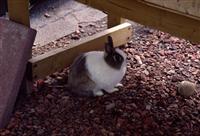 1. Introduction: Influences and motivation
- Ethology.
- What is behaviour Purpose of Animal behaviour.
- What motivates behaviours.
- Behaviour types (Reactive, Active, Cognitive).
- Learned Behaviours (Classic conditioning, Reinforcement, Extinction, Operant Conditioning, Skinners experiments).
- Other influences (external stimuli, Internal stimuli, Physiological responses, Psychological responses).
- Terminology.
- Observing animals.
2. Genetics and Behaviour
- Understanding basics of genetics.
- Terminology (e.g. alleles, allelomorphs, genes,phenotype, mitosis, homozygous, genotype, etc.).
- Environmental affect.
- Heritability.
- Epigenisis.
- Innate behaviour.
- Interaction between different species.
- Survival.
- Case study: Inherited traits in horse behaviour.
3. Animal Perception and Behaviour
- Animal communication and perception.
- How animals perceive things.
- Imprinting.
- Types of stimuli; Visual, Auditory, Tactile, Chemical.
- Monocular and binocular vision.
- Terminology.
- Neural control.
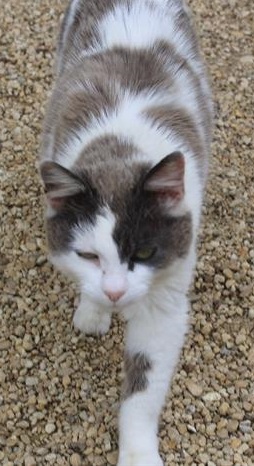
4. Behaviour and the Environment
- Orthokinesis
- Klinokinesis
- Navigation
- Homeostasis
- Thermoregulation
- Motivation
- Biological Clocks
- Sun Compass
- Migration
- Tolerance
- Acclimatisation
- Hibernation
- Sexual and Reproductive behaviours.
5. Social Behaviour
- Animal Societies
- Aggression
- Fight or flight response
- Social constraints
- Sexual behaviour
- Social order
- Bonding
- Courtship
- Territorial behaviour
- Feeding
- Vocalisations
- Case Studies – birds, dogs
- Terminology.
6. Instinct and Learning
- Shaping
- Extinction and Habituation
- Instrumental Learning
- Thorndyke's Law of Effect
- Operant and Respondent behaviour
- Biological aspects of learning
- Cognition
- Associative Learning
- Case studies: Early learning in dogs, Early learning in cats
- Comparative Intelligence.
7. Handling Animals
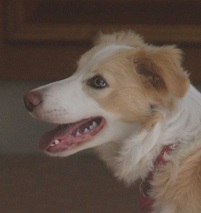
- Domestication of animals.
- Handling animals.
- Psychological effects of different handling techniques.
- Preventing problems with pets.
- Training animals (Examples: birds, rabbits, horses, cattle etc.).
- Terminology.
- The student has a choice of which types of animals to focus on, though a variety will still be covered.
8. Behavioural Problems
- Abnormal behaviour (e.g. Psychotic, neurotic).
- Domestication of animals.
- Diagnosing behaviour.
- Psychotic disorders.
- Case Study; Behavioural Problems with cats; various types of aggression and other problems.
- Training cats.
- Case Study; Aggression and other problems with dogs.
- Training dogs.
- Case Study; Behavioural problems with pigs.
- Terminology.
AIMS
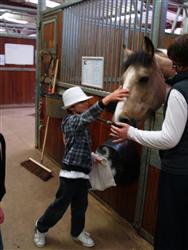 Identify factors affecting animal behaviour.
- Describe the influence of genes on animal behaviour.
- Explain how animals perceive and how they respond to various stimuli.
- Explain the influence of environment factors, such as circadian rhythms, on biological clocks, reproductive cycles, orientation and other animal behaviours.
- Explain the social influences on animal aggression, play, sexual behaviour, communication and other behaviours.
- Describe different ways that animals learn (such as conditioning and habituation) and some effects of learning on behaviour.
- Discuss psychological implications of different handling techniques.
- Identify abnormal animal behaviour (e.g. psychotic, neurotic behaviour) and ways to reduce dependence on humans.
WHAT IS ANIMAL BEHAVIOUR ABOUT?
Behaviour is any externally observable activity of an animal. In general, it includes:
- Movement of parts of the body.
- Stopping expected movement
- Secretions from the body
- Changes in body colour.
What is the Purpose of Studying Animal Behaviour?
It is assumed that all animal behaviour is an adaptation designed to support survival, either directly or indirectly. However, this is not always the case. Animals can behave self-destructively, out of habit, or out of boredom, just as humans can. To better understand the behaviour, we should also consider what motivates it.
What Motivates Behaviour?
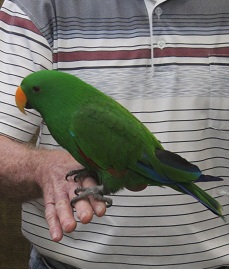 Genetics is of prime importance (i.e. inherited characteristics). Genetic characteristics are also sometimes referred to as “inborn”, “innate” or “instinctive”. Most animals are genetically programmed to act in certain ways in certain situations.
Experience (i.e. learned characteristics). Experience may encompass terms including: “acquired”, “experiential” or “environmental”. Behaviours can be learned through the experience of interacting with the environment (which includes the people or other creatures in it), or it can be learned through personal, subjective experience (perceptions, thoughts and feelings). In the case of animals, these latter factors are usually difficult to identify.
Since genetic and environmental factors both influence behaviour, it is impossible to distinguish particular causes for a behaviour. Particularly in regard to animals, no behaviour can ever be characterised as totally instinctive or totally learned. Even though learned and genetic factors both play a role in all behaviours, the relative significance of each is variable.
Some behaviours in animals can be relatively unlearned and therefore, almost impossible to modify. In such cases, we can determine that genetics is the major influence. Other behaviours are relatively easy to modify, thus mostly learned. In such cases, we can determine that genetics has a minor influence.
Understanding Problem Behaviours
There are a range of behaviours that are natural to animals, that can become a problem for pet owners. Proper management starts with having a proper understanding of such behaviours.
Dominance
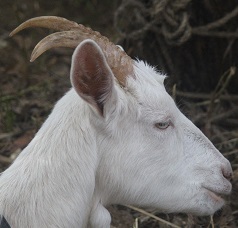 A dominant behaviour is generally reflected when an animal, or members of a social group, interacts with the intention of obtaining access to resources over another. This may occur when there is an opportunity to mate, or as a competitive way of gaining a higher rank in the hierarchy amongst animals of the same or different species. Dominant behaviour does not necessarily need to be aggressive but animals that show agonistic behaviour will often achieve success throughout this challenge.
The dominant individual will generally have access to resources such as food or mates, while the other (or the rest of the members) will be submissive and may or may not have dominance over the others that belong to a lower social status. This way, dominance behaviours repetitively interact with members of a subordinate social order and create an interactive social group defining a “social hierarchy”. This hierarchy persists until one member emerges triumphant over the previous dominant one.
Hierarchies may be:
- Linear - distribution of power determined by a scale of most dominant to less dominant.
- Despotic - only one individual is at the top of the rank and the rest are all submissive.
Dominance will vary between the relationship of individuals of a given social group.
Examples of social hierarchy can be observed among the following animal groups:
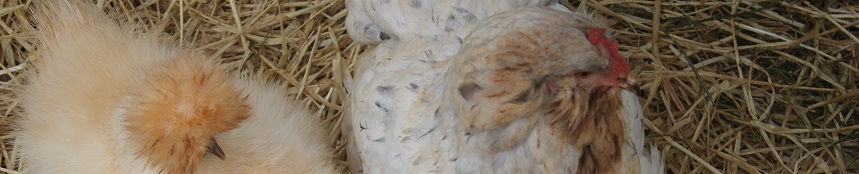
Chickens - one of the behaviours that influences their dominance and leadership is pecking where defensive and aggressive behaviour is dictated by their beak. Their social structure is often referred to as the “pecking order”.
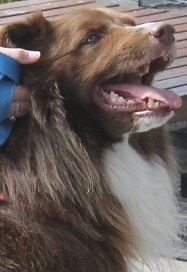 Canines (e.g. wolves, dogs) – the alpha pair (i.e. breeding pair) are dominant over all other members of the family or 'pack'. The rest of the family members are subordinate, which includes the 'beta wolves' (highest ranking among the subordinates), 'omega wolves' (generally mistreated or ambushed by other pack members), and the 'juveniles' (who do not acquire a hierarchical position until they prove dominance whilst play-fighting). The member that has stayed longer in the pack will gain the dominant status, rather than the largest, strongest or fastest. Body postures may reveal the hierarchical position of a wolf within a pack, for example, erect ears and a high tail will show a higher rank than those with tails between their legs and flattened ears. The more dominant wolves, whether it’s a male or a female, will urinate raising a leg as opposed to the subordinate ones who will do this by squatting. Greeting behaviours among wolves also demonstrate dominance over subservience.
Territoriality
This behaviour refers to the animal’s intention to show dominance and defend its territory against other animals, whether it’s the same species or another animal. There may be many reasons behind this type of behaviour, such as:
- Food
- Habitat
- Nesting sites
- Mating sites
The line of demarcation may be marked in many different ways, and by using many different signals, depending on the species. Some animals indicate their boundaries with sounds or specific calls (e.g. birds), whereas some may designate territories by using scent - which is known as “scent marking” (e.g. cats and dogs). Others may defend their territory using various types of intimidation behaviour such as attacking, chasing, or other threatening expressions referred to as “ritualised aggression”.
- Wolves ( and some dogs)- use a combination of techniques between sounds and scent marking. They use intimidating sounds in the form of harmonious howling sounds where members of the group call together to show that there is a large number of them present, ready to defend their territory. This is more effective than a single tone which can give the impression that there is only one or two of them present.
- Dogs - domestic dogs generally urinate in different areas to show ownership of a specific territory.
- Cats - domestic cats will defend their territory by specific body postures such as stalking, staring at the intruder, spitting, and/or yowling.
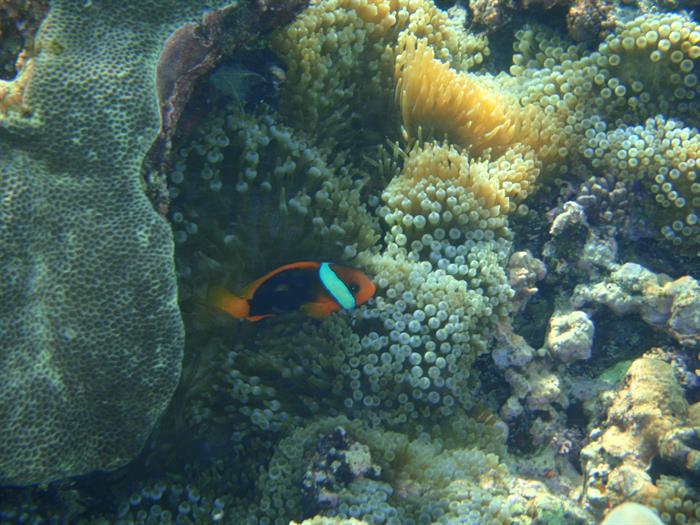
- Fish - territorial fish might show signs of aggressiveness by chasing other animals that seem to trespass their waters, by engaging in parallel swimming, or by quickly changing their colours.
Aggression
Instinctive aggression is a forceful response that usually occurs as means of proving dominance or possessions (e.g. territory, food, mate, offspring, etc.) over another. This type of behaviour may also occur as a result of threat, defence, loyalty or xenophobia (fear of the unknown), although some animals show aggressive behaviours as a mating ritual (e.g. sharks).
In animals, aggression may be held as an act of vengeance or predation, which can be displayed in a verbal or physical form. Encounters can sometimes be settled without necessarily causing physical harm. Forms of aggression can be manifested by:
- Physical display of body size, shape and/or colour.
- Facial gestures.
- Body parts.
- Sounds.
- Chemical release.
- Other actions (e.g. primates throwing objects, hermit crabs rapping shells).
WHAT NEXT?
Would you like to learn more about animal behaviour for personal or professional reasons? This course is studied by distance learning, but our experienced and friendly tutors are there to help you every step of the way. You can study at a time and location to suit you.
- Studying animal behaviour will help you to understand animals and why they behave the way they do.
- Learn more about abnormal behaviour, training animals and much more.
- Improve your job and career prospects by understanding more about animals.
If you want to understand more about animals, then why delay? Enrol today.
If you have any questions about the Animal Behaviour course or studying with ACS, then get in touch with our specialist tutors today - they will be happy to answer your questions and help you choose a course to fit in with your goals.