Improve your knowledge of equine health and welfare.
Students studying Horse Care III will -
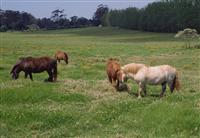 Learn to manage the health and condition of horses in different situations.
- Know how to identify signs of poor condition, and address those problems appropriately.
- Gain an insight into the things that can stress a horse and increase it's susceptibility to problems.
- Learn about the management of situations such as events, travel, and exposure to weather in order to minimise risk.
- The course complements Horse Care I & II, but will also stand alone.
COURSE STRUCTURE AND CONTENT
Course Duration: 100 hours.
Start Date: Start at any time - study at a pace that suits you, and with full tutor support for the duration of your studies.
Lessons: The course comprises 6 lessons as outlined, below.
Lesson 1. Blankets, Bandages & Boots
Different blankets and rugs, Fitting a rug, Putting on a rug, Taking off a rug, Surcingles and rollers, Caring for rugs and blankets, Types of bandages and their uses, Rules for bandaging, Boots and their uses.
Lesson 2. Maintaining The Health Of Horses
Signs of good and poor health, Sick nursing rules, Isolation procedure, Common ailments to recognize, Taking the temperature, The medicine chest, First aid treatments, Restraining a horse, Emergencies, Preventing a disease.
Lesson 3. Clipping, Trimming & Plaiting
Reasons for clipping, Types of clippers, Types of clips, Preparation for clipping, How to clip, Finishing off, Hogging the mane, Trimming, Pulling the mane and tail, Plaiting the mane or tail.
Lesson 4. Travelling And Care of The Horse Away From Home
Preparing a horse for travel, Preparing a trailer, Loading the horse, The problem loader, Safety while loading, Before a show, At the show, Returning home.
Lesson 5. Organising And Managing A Horse Event
Organising an event, Contingencies to cater for, The public, Exhibitors and organisers, Costs, Guidelines for planning a show or exhibition, The facility, Exclusive bookings, Facilities without prior bookings, Booking records, Publicity, Community participation.
Lesson 6. Managing A Horse Enterprise
Management plans, Rural finance sources, Banks, Money market, Financial planning, Contract law, Assessing profit, Risk analysis, Standards, Financial records, Cash flow, E.O.P. accounting.
COURSE AIMS
- Identify the use and purpose of protective equipment for horses, including blankets, bandages and boots.
- Determine the procedures required to maintain a horses health.
- Develop a program to prepare a horse for showing.
- Prepare a management plan for a horse while away from it's home.
- Develop a plan for the management of a horse industry event.
- Analyse the management of a horse enterprise, including its marketing and financial viability.
WHAT THE COURSE COVERS
Here are just some of the things you will be doing:
- Explain the uses of a horse blanket in a specified locality.
- Evaluate three different types of horse blankets, in terms of various factors, including - price, application, quality, longevity.
- List different situations when bandages are used on a horse.
- Describe the methods of bandaging horses.
- Demonstrate the use of bandages on horses.
- Explain the different reasons why boots are used on horses.
- Describe the use of boots on a horse in two specified situations.
- Define terms used in the health care of horses.
- Describe the symptoms of five common ailments in horses.
- Develop a checklist for evaluating the health of a horse.
- Evaluate the health, using the checklist developed above, of a chosen horse.
- Describe, in an illustrated report, how to take a horses temperature.
- List the minimum components and their uses, of an equine first aid kit for two different specified situations.
- Explain different horse restraining techniques, including the use of - stalls, twitch, sidelines, crushes, hobbles.
- Determine the criteria which must be satisfied before, and during, the isolation of a horse.
- Explain why the isolation procedure is used in a specific situation.
- Describe the use and maintenance of tools and equipment required for preparation of a horse for showing.
- Demonstrate plaiting using a fibre comparable to horses hair.
- Compare the differences in showing under saddle, with showing on the halter.
- Write a plan for the preparation of a horse for showing, in a specific competition.
- List the situations where a horse might need to be transported.
- Explain the different methods of transporting a horse with respect to - impact on the animal, equipment required, costs.
- Prepare a set of guidelines for the care of a horse during travel.
- Prepare guidelines for the care of a horse at a specified show.
- Plan appropriate procedures for the transportation of a horse, for two different situations, in terms of: a timetable of events, husbandry tasks to be carried out, a list of equipment and materials required.
- List the factors influencing the success of different types of events in the horse industry, including - shows, races, competitions.
- Determine the minimum first aid facilities which should be provided for horses, riders and spectators at a specified type of event.
- Prepare a plan for managing a specified type of horse event.
- Write a report analysing the management of a nominated event in your locality.
- Evaluate the management of a horse event, such as a show, competition or race, with reference to - organisation, promotion, success (or failure) of the event.
- Determine the factors affecting the profitability of two different specified horse enterprises visited by you.
- Calculate the different costs involved in maintaining a specified breed/type of horse over one year, including - manpower, agistment, feed, veterinary needs, transport, tack.
- Evaluate three different systems for marketing horses in your locality.
- Determine innovative marketing methods for different horse industry situations, including - stud services, yearling sales, riding instruction.
How Do Horses Communicate?
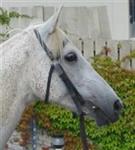 There are lots of ways that horses can communicate.
A horse’s expressions and movement of its body can tell a lot about how it feels. When starting to interpret a horse’s body language start by looking at the position of the head and look of the eye, followed by how tense the muscles are and the tail position.
Reading the body language of the horse is one of the fastest methods of identifying when a horse is sick. A horse with stomach pains may look at its side, roll, stretch, or lie down and refuse to stand. Horses that stand with a dropped head may be feeling ill or depressed.
The ears are one of the best and most obvious signs of a horse’s mood. When the ears are pressed flat back the horse is usually angry or feeling threatened. Ears that are pricked forward suggest the horse is completely alert and aware of its surroundings. When being ridden a horse may have one ear tilted back towards the rider as a sign of concentration and attentiveness to what the rider is asking. Ears that are relaxed and hanging softly to the side show relaxation. Ears that are drooping and unresponsive to sound suggest the animal is sick.
Curiosity or alarm is expressed through a wide eye. Wrinkles above the eye often indicate worry. A resting horse will have relaxed, droopy eyelids.
Horses produce a range of sounds to express different emotions:
- Whickers are usually friendly, soft and most submissive.
- Neighs are stronger and more assertive – a horse will call out loudly when panicking.
- Squeals are most often made when horses first meet each other.
- Snorts show apprehension or dislike and are often followed by evasive behaviour such as bolting.
HOW THE COURSE WORKS
You can start the Horse Care III course at any time.
It is studied by distance learning, so you can study in the comfort of your own home. But this doesn't mean you are all alone in your studies. Our highly qualified and friendly tutors are there to help you every step of the way. If you have any questions at all, they are always happy to help.
Each lesson includes set tasks, and is completed with an assignment which the student submits to their course tutor. The tutor will mark the assignment and return this to the student with comments and suggestions for further reading.
WHY CHOOSE ACS?
- Our courses are written and taught by experienced professionals, so you know you can expect a high quality of teaching and support.
- You can start the course at any time and study at your own pace.
- Fit your studies around your own busy lifestyle - we provide full tutor support for all the time you are studying.
- Study where you want to - online studies or eLearning options offer the flexibility for you to determine where and when you study.
WHY CHOOSE THIS COURSE - STUDENT TESTIMONIAL
" I think A.C.S provides a wonderful service"
B. Clarke
Who Is This Course For?
This course is aimed at different people including:
- Veterinary assistants
- Stable hands
- Riding school staff
- Horse trainers
- Horse owners
- Horse enthusiasts
Enrol with us to expand your horse care skills in a range of different situations.
DECISIONS?
You can click to enrol at the top of this page. Or, if you have any QUESTIONS or need help in choosing the right course for you, please get in touch with our specialist equine tutors using our FREE COURSE COUNSELLING SERVICE, horses are their passion and they will be more than happy to help you.
Stay in touch. Follow us on:
Twitter
Facebook
Google