Learn more about Equine Husbandry with this certificate level course.
Study by distance learning and learn more about the care, husbandry and management of horses.
Students studying the Certificate In Equine Husbandry, subject to their Elective options, will:
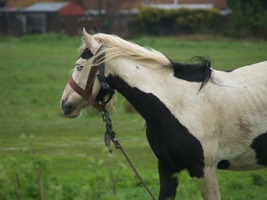 Learn about the procedures for the buying and selling of horses.
- Understand how to differentiate between the different procedures used for the handling of horses.
- Be able to evaluate conformation.
- Understand the digestive system - including structure and function.
- Be able to devise appropriate procedures to manage a horse at grass.
- Understand feeds and feed content of grazing animals.
- Learn about equine behaviour and general animal breeding concepts.
COURSE STRUCTURE AND CONTENT
Course Duration: 600 hours.
Start Date: Start at any time - study at a pace that suits you, and with full tutor support for the duration of your studies.
While the elective modules have a more general large animal focus, the knowledge is easily translated to a horse management situation through the focus of lesson assignments and set tasks. Once completed this Certificate can be used as credit toward an Advanced Certificate in Applied Management (Horses) or Associate Diploma in Equine Studies.
HOW THE COURSE WORKS
You can start the course at any time.
It is studied by distance learning, so you can study in the comfort of your own home. But this doesn't mean you are all alone in your studies. Our highly qualified and friendly tutors are there to help you every step of the way. If you have any questions at all, they are always happy to help.
Each lesson includes set tasks, and is completed with an assignment which the student submits to their course tutor. The tutor will mark the assignment and return this to the student with comments and suggestions for further reading.
HOW THE CERTIFICATE IS ASSESSED
The Certificate In Equine Husbandry requires around 600 hours of study. This is made up of six 100 hour modules.
To pass the course –
- Pass all assignments on the six 100 hour modules. There will be an assignment at the end of each lesson to submit to your tutor for marking and feedback.
- Pass six examinations – one on each module. These are usually taken at the end of the module and can be arranged at a time and location to suit you.
WHY STUDY WITH ACS?
- Expert tuition - Our courses are written and taught by experienced professionals, so you know you can expect a high quality of teaching and support.
- Start at any time - You can start the course at any time and study at your own pace.
- Flexible studies - Fit your studies around your own busy lifestyle and study where you want to with option of online studies or eLearning.
Is this the Right Course For You?
- Do you want to study in a flexible, convenient way at a time and location to suit you?
- Do you want to improve your knowledge of horse care with this detailed and thorough course?
- Do you want to improve your job and career prospects working with horses?
- Or improve your understanding and knowledge caring for your own horses?
If so, then why not enrol today?
Ask a Question!
Our Equine tutors are happy to answer any questions about this course or our other equine courses. They are all horse-lovers with real world experience and substantial knowlege of equine care.
Or