Agricultural Irrigation Management Short Course
Learn about large scale irrigation systems
The course comprises of eight lessons.
At the end of each lesson, there is an assignment to submit to your tutor for marking and feedback.
You can also contact your tutor with any questions throughout the course.
COURSE STRUCTURE
There are 8 lessons as follows:
Lesson 1: Water Management
- Human water relationship
- Water and plant growth
- Xeriscaping
- Types of water wastage
- Waste water treatments using reed beds
- Suitable plants
Lesson 2: Irrigation Scheduling
- Considering climate factors for irrigation scheduling
- Microclimate
- Equipment used for monitoring water
- Measuring water usage
- Measuring soil moisture
Lesson 3: Drainage
- Types of drains
- Layout of drains
- Improving permeability during construction
- Improving surface drainage after construction
- Contingencies to deal with flood
Lesson 4: Irrigation Controllers
- Operating Irrigation Controllers
- Types of controllers
- Water volume and duration
- Pumps and pressure systems
- Pimping mechanism
Lesson 5: Irrigation Maintenance
- Maintaining watering system
- Maintenance procedure and scheduling
- Maintaining trickle irrigation
- Problems of water quality and their remedies
- Improving water quality from any source
Lesson 6: Fertigation
- Advantages and disadvantages of fertigation
- Fertigation types
- Fertiliser injectors
- Application of fertiliser
- Plant nursey fertiliser injection techniques
Lesson 7: Design Evaluation
- Evaluating irrigation designs
- Surface/flood irrigation
- Sprinkler irrigation
- Trickle irrigation
- Microjet irrigation
Lesson 8: Irrigation Design
- Pre planning information for irrigation design
- Type of systems
- Underground pipes
- Drainage
DURATION: 100 hours
COURSE AIM
- Devise ways to optimise water efficiency (ie. minimise wastage), during irrigation of plants.
- Schedule irrigation for a large scale situation such as a large nursery, crop, turf, garden or pasture.
- Analyse the design of different drainage systems
- Formulate procedures to operate irrigation controllers, for appropriate tasks.
- Manage the maintenance of irrigation systems, both small and large scale.
- Manage the fertigation of plants through an irrigation system.
- Evaluate the design of large scale irrigation systems.
- Design an irrigation system, including its drainage.
WHAT YOU WILL DO IN THIS COURSE
- Explain different factors which cause water to be wasted including:
- Evaporation
- Run off
- Over spray
- Scheduling
- Determine where water is wasted, in both the operation and management of a specified irrigation system
- Determine changes to achieve more efficient water usage, in a specified system.
- Develop guidelines for determining when to irrigate in a particular situation.
- Determine through an analysis, when to irrigate on a studied site, by evaluating soil moisture and other characteristics of a site, periodically over two months, and referencing annual rainfall statistics over a period of years.
- Record in a log book, plant growth and soil moisture for an existing irrigation system operated using two different watering patterns, each for one month, and over two consecutive months.
- Compare differences in varying the scheduling of a watering system over two months
- Prepare an irrigation schedule for a specific garden or crop.
- Develop criteria for designing a specified drainage system.
- Explain the design criteria for a specified drainage requirement.
- Devise strategies for dealing with drainage requirements in emergencies, including:
- extreme weather (eg. hail, storm)
- burst pipe
- blocked drains
- Determine appropriate drainage requirements for a specified situation, and over a specified area, including:
- Type of drainage required
- Specifications of drainage required
- Evaluate the operation of a drainage system, installed under irrigation on a site studied by the learner.
- Compare four different irrigation controllers with reference to different criteria including:
- Labour costs
- Maintenance
- Reliability
- Determine appropriate applications for four different types of irrigation controllers
- Explain the operation of a specific brand of time clock, studied by the learner.
- Explain the operation of a specified computerised irrigation controller.
- Develop three different procedures to operate a specific irrigation controller, in order to satisfy three different specified purposes.
- Determine routine site maintenance requirements for different types of irrigation systems including:
- spray irrigation
- micro irrigation
- surface irrigation
- flood irrigation
- Explain routine site maintenance requirements for different types of irrigation systems including:
- spray irrigation
- micro irrigation
- surface irrigation
- flood irrigation
- Develop a procedure for maintaining water quality, in a specified irrigation system, at a workplace visited by the learner.
- Explain water quality maintenance activities required for efficient irrigation practices in a specific situation.
- Compare the service supplied by different irrigation suppliers, in terms of scope and quality.
- Develop an irrigation monitoring program, for a specific irrigation system, studied by the learner.
- Write a maintenance schedule for a specified irrigation system.
- Explain the use of fertigation, in a specific horticultural workplace.
- Determine appropriate applications for fertigation in one specific industry sector.
- Determine inappropriate fertigation applications in different specific industry sector.
- Explain why certain applications for fertigation are inappropriate.
- Compare the suitability of six different specified fertilisers for fertigation.
- Determine resources required to undertake fertigation in a specified situation, including:
- equipment
- materials
- manpower
- Collate available data on a specified irrigation system, including:
- system performance data
- water supply
- water consumption
- crop production or plant growth data
- climatic trends
- soil characteristics
- monitor irrigation performance
- Analyse collated data against different criteria including:
- benchmarks
- specifications
- predictions
- Compile a comprehensive report evaluating a system, which includes:
- data evaluation
- performance indicators
- conclusions
- recommendations
- Prepare design specifications for storage and distribution of water.
- Explain appropriate methods for recycling, re-use or disposal of water, for three different specified irrigation systems.
Are there any legal or health considerations?
- Design a drainage system for a specified irrigation system, including:
- Sketch plans
- Materials lists
- Cost estimates
- Determine costing for a specified drainage system.
- Prepare a report recommending design modifications to an existing irrigation system in a specified situation.
- Prepare a design for a micro irrigation system for an area of forty square metres, to a standard which is adequate for a contractor to install the system; and including:
- Plans
- Calculations
- Materials specifications
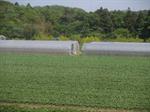
How Do You Make Better Use of Water Resources?
If you irrigate properly, you will water thoroughly and infrequently.
By making sure the water penetrates the soil properly and wets the total root zone every time, you will find each irrigation event will have maximum benefit and the soil will take longer to dry out (reducing the frequency of irrigations required).
The amount of water applied and the period between irrigations will need to be adjusted continually to take into account changing weather conditions and changing soil conditions (where soils are being cultivated).
The quantity of water that is applied can also be restricted by the available supply. This has become an increasing problem in heavily populated areas where the population growth has outstripped any increases in water storage, as well as in rural areas where rising salinity levels are a problem in water supplies.
Deep-rooted plants (eg. trees, pasture species such as phalaris and Lucerne) are able to draw up water from deeper in the soil than shallow-rooted plants. If these plants are watered in a way that the water penetrates deeper, there will be a supply of water deep in the soil which is insulated from the surface by the soil above. This water will remain in the soil accessible to the plant for a long time, whereas water near the surface will have dried out from the effects of the sun or wind over the soil surface (evaporation).
All plants need water to grow and to survive. The amount of water needed, however, will vary from plant to plant. The two main factors that affect how much water a plant needs are:
1. The variety of the plant. Some types of plants have the ability to retain water within their tissues for later use. Other plants are unable to do this.
2. The environment in which the plant is growing. If there is plenty of water available around the plant, then the soil is likely to retain more moisture than it would in exposed windy or sunny situations.
Obviously plants can suffer from a lack of water, but just as importantly, plants also suffer from an excessive amount of water. When you water a plant it is important to strike that delicate balance between too little and too much. Over watering can be just as detrimental as under watering.
Managing watering properly can at the end of the day, make a huge impact upon the productivity of a farm.
It isn't necessarily how much you water; but rather how and when you choose to irrigate; that makes the difference.
Who is the course suitable for?
The course is suitable for -
- farmers
- farm workers
- agricultural workers
- smallholders
- anyone who needs to understand more about water conservation and irrigation in agriculture
Why study this course?
- This course will provide you with detailed knowledge on the practice and theory of irrigation management.
- The course is flexible. It is studied by distance learning so you can study anywhere and when you want to.
- Improve your job and career prospects by studying this specialist irrigation management course.
Any Questions?