
Study Sheep Husbandry Online
Learn the rudiments of sheep care and management.
The course offers you the chance to understand more about the care and management of sheep. It covers a diverse range of topics relating to sheep such as: breeds; selection and breeding; nutrition; diseases of sheep; commercial flock management; lamb care; wool ;and the marketing of sheep and sheep products.
"Although I can do all of the practical work that is required to raise sheep, I am learning a lot more than I didn't already know. all that I knew I learned from my dad. I am enjoying this course and when I finish it, I would like to do another one, perhaps in management". Jonathan - Sheep student
COURSE STRUCTURE
There are 8 lessons as follows:
1: Introduction: Terminology and Breeds
- Factors affecting the choice of breed
- Product and Market
- Rearing and Management System
- Overview of Sheep Breeds
- Sheep Terminology
2: Selection and Breeding
- Growth Rate
- Reproductive Efficiency
- Carcase quality
- Wool traits
- Culling old ewes
- Selecting replacement ewes
- Selecting replacement rams
- Commercial Sheep Production
- Choosing a lambing time
- Autumn lambing
- Spring lambing
- Accelerated lambing
- Managing ewes prior to mating
- Using hormones to control reproduction
- Joining methods
- Anatomy of ewe reproductive organs
- Anatomy of ram reproductive organs
- Ultrasound
- Signs of lambing
3: Nutrition of sheep
- Anatomy
- Condition scoring
- When to condition score
- Factors affecting feed requirements
- Feeding rams
- Feeding ewes
- Feeding lambs and fatteners
- Nutrition and wool production
4: Diseases in sheep
- Viral and rickettsial diseases
- Bacterial diseases
- Metabolic diseases
- Protozoan diseases
- Poisoning
- Vaccination
- The medicine chest
- Giving injections
- Disease prevention through sound management
5: General management of commercial flocks
- Handling and treatment facilities
- Drenching
- Injecting
- Hoof Trimming
- Shearing
- Tail docking
- Castration
- Blowfly strike
6: Care of lamb
- Abnormal Presentation
- Presentation: One front leg back
- Presentation: Both front legs back
- Presentation: Hind legs first
- Presentation: Head back, both front feet forward
- Presentation: Breech or tail first
- Presentation: Twin lambs presented together
- Post lambing care
- Drenching
- Rearing orphan lambs
- Lambing records
- Managing the fattening lamb
- Feeding
- Lamb marking
7: Wool
- Characteristics of wool
- Types of wool
- Wool classing
- Wool processing
- Factors influencing the estimation of yield
- Piece Picking
- Wool Scouring
- Carding
8: The marketing of sheep and sheep products
- Wool sales
- Sale by private treaty
- The auction system
- Wool futures
- Industry regulatory and marketing authorities
- Lamb and mutton marketing: Paddock sale, Sale yard auction, Over-the-hook sale
- Electronic Marketing, Live Sheep exports, Forward price contracts
- Factors affecting the value of lamb or mutton: Carcass weight, Skin value, Payment basis (hot or cold weight) etc
 WHAT YOU WILL DO IN THIS COURSE?
- Collect information about different sheep breeds which are being farmed or could be successfully farmed in your region.
- Compare the different characteristics of sheep breeds in terms of appearance, hardiness, commercial potential.
- Select breeds for three different purposes, including wool production and meat production, in your locality.
- Inspect at least two sheep, ideally, from separate flocks, and determine their age by looking in their mouths.
- Define the following different sheep breeding terms: Oestrus, Gestation, Weaning, Flushing, Wet ewes, Teasers.
- Design a "breeding record form" which includes all necessary factors.
- List criteria to be used for selecting sheep for different purposes, including for replacement and for slaughter.
- Develop a standard form, which considers both meat and wool, to use for judging sheep.
- Talk to at least two experienced sheep farmers about "condition scoring" of sheep.
- Compare the differences in food required by different types of sheep, including: rams; breeding ewes at different stages of pregnancy; sheep being fattened for meat.
- Prepare a collection of ten pasture plant species from at least two different sheep properties and comment on the suitability of the pasture for sheep.
- Distinguish between the different categories of sheep health problems, including: viral, bacterial, metabolic, protozoal, poisoning, parasites.
- Describe how to perform different pest and disease control tasks, including: drenching, injecting, hoof trimming, docking.
 AIMS
AIMS
- Select appropriate breeds of sheep for different purposes.
- Explain the techniques used in sheep commercial breeding.
- Select sheep to be used for different production purposes.
- Explain the techniques used in the management of a commercial flock of sheep.
- Explain the processes involved in handling wool after shearing.
- Explain the procedures used in managing the health of sheep.
- Explain the techniques used in managing the marketing of sheep and sheep products
Sheep Farming is Significant
Sheep were one of the first animals to be domesticated by man. Over time, selection for wool type, hair, flocking instinct and other economically important traits has resulted in numerous distinct breeds of sheep occurring worldwide. Modern breeding schemes have also resulted in an increasing number of composite or synthetic breeds which are the result of a crossing of two or more established breeds.
Choosing the Best Breed
Climate
Sheep are widely adaptable to different conditions and are found in a range of climates from cool moist areas to hot desert areas. Nevertheless there are areas where sheep are not economical. For example, wool sheep are generally not adapted to hot humid areas. Fat-tailed, hair producing sheep adapt well to hot, arid regions of the world.
Vegetation
The type of vegetation plays an important part in the successful breeding or farming of sheep. Different breeds have different foraging or grazing preferences that can be exploited to suit the vegetation type in your area. For example, differences in body size and digestive anatomy can allow some breeds to browse and thrive on woody plants, as opposed to other breeds that may only thrive on temperate grass pastures.
Internal Parasites
Sheep carry a number of different species of internal parasites. Internal parasite management, especially of Haemonchus contortus (barbers pole worm, stomach worm), is a primary concern for the majority of sheep producers. These parasites have become more difficult to manage because of developed resistance to nearly all available de-worming chemicals. Resistance to de-wormers is now seen worldwide and producers can no longer rely on drugs alone to control internal parasites. An integrated approach that relies on sustainable methods to manage internal parasites should be employed. Part of this management strategy is the identification and selection of resistant animals.
Within any breed, certain animals are more tolerant of parasite loads than others. Producers should cull animals that are always "wormy," and select for animals that have a natural resistance or tolerance to a slight parasite burden. There are several breeds of sheep and goats that exhibit a genetic resistance to parasites. These breeds include: Gulf Coast Native, St. Croix, Katahdin, and Barbados Blackbelly (If you are not familiar with these breeds, undertake research to broaden your knowledge).
Parasites present are dependent on whether the area is a summer rainfall region or is a winter rainfall area. Again, research your own locality for this information. One worm attack can reduce the sheep's appetite significantly, and stop weight gains for many months. Even moderate worm burdens can cut wool production by as much as 40%, as well as downgrading the wool quality.
The blood sucking "barbers pole worm" can multiply so rapidly that many sheep die without even losing condition. Egg-laying is prolific: in some cases 5000 daily. Worms will not survive in sustained heat of a heat wave. Young worm larvae will also die within 3 weeks, unless they can find a host (ie. be swallowed by sheep).
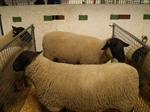 Product and Market
Wool: Good prices can be obtained when conditions in the market are favourable. There are fewer marketing problems associated with wool of good to high quality.
Meat: Lamb and mutton – pure mutton breeds require less management than pure wool breeds. The lamb market is strong in many countries.
Meat and wool: A dual purpose breed can provide the farmer with two products (meat and wool, meat and milk etc), and spreads the farmer's source of income should there be an overproduction one of the two products.
Dairy Product: Dairy sheep are another product option available to producers. Raising dairy sheep involves two production systems—one for cheese and another for milk. Production of sheep-milk cheese is a well-developed enterprise in parts of Europe. Marketing sheep-milk products may present a challenge in some countries where the market is small. Most sheep milk is made into cheese, or into products such as yogurt, ice cream, and soap. Prospective producers must invest the time and effort to learn about product development and marketing. However, a sheep dairy that delivers consistent products in a developed market can be far more profitable than an operation focused only on meat production. Sheep are also easier to handle and less expensive to maintain than cattle. And sheep milk can be frozen and stored for eventual sale as fluid milk or to make into cheese. The East Friesian and Lacaune are common breeds of dairy sheep.
Rearing and Management System
In some countries, sheep may be housed in barns over winter (to avoid the extreme cold), or farmed in an intensive system, where the production of meat, milk or wool can be better controlled. Under intensive and semi-intensive conditions, wool sheep may in some countries provide a higher income than pure mutton breeds. Intensive systems require a much higher standard of management than other rearing methods. Many wool and meat producing sheep worldwide are raised in more extensive grazing systems and in some countries, migratory (nomadic) grazing practices are used.
Sheep enterprises can encompass a breeder flock, wool, a sheep/feeder lamb, a sheep/finished lamb or a lamb feedlot operation. Market options include on farm sales or freezer sales, auction sales, and direct to a feedlot or processing plant.
Is This Course Suitable For You?
The course is self-paced. You can start at any time to suit you.
You can study from anywhere in the world.
Consider this course, if you want to -
- improve your knowledge and understanding of sheep husbandry
- improve your job and career prospects working with sheep
- work with sheep
- understand more about the care of sheep
- develop your own sheep flock
Any Question About the Course?
If so -
Or