Build Your Career in the Media
- Work as a writer, editor, proof reader or publisher.
- Start your own publishing or distribution business.
- Fiction or non fiction; electronic or print media.
- Learn more about creative writing, freelance writing, children's writing and more.
- You can start the course at any time, fully supported by our expert tutors.
Comment from our Principal,
John Mason
"I had my first glimpse of publishing working on my high school magazine in the 1960's. In 1971 I graduated from a horticulture diploma, and that led to me writing a gardening column in a local newspaper in 1973. By the mid 70's I was writing for national magazines in Australia and by 1978, I had my first book published. My formal education did include some modules that covered journalism; but a lot of what I have learnt has also come from working alongside other media professionals. My first editor (Alan Balhorn) had worked for decades for Rupert Murdoch's father; and was not shy of using a red pen on my work. His old school ways taught me a lot though.
During the 1980's and 90's I was editor/writer for several magazines with Express Publications; working with the publisher Charles Vella, who had learnt his craft working for Kerry Packer. Again I was fortunate to learn from a "master".
Today I divide my time between education and publishing. I work with a Sydney publisher writing, illustrating & editing a quarterly green living magazine (Home Grown); and operate an ebook publishing business operating in both Australia and England (producing a new book ever 3 weeks). "
Our tutors on this course are well qualified and experienced in publishing and journalism. Let us show you what we have learnt, and continue to learn about writing and publishing.
COURSE CONTENT
The course consists of 21 modules. Each module lasts approximately 100 hours, with the qualification Diploma In Publishing And Journalism requiring approximately 2100 hours of study in total. The modules are as follows (please follow the links for further information on each module):
Freelance Writing
Advanced Freelance Writing
Creative Writing
Children’s Writing
Technical Writing
Writing Fiction
Publishing l
 Publishing ll
Publishing lll (Business Practices)
Journalism Practice I
Photographic Practice
HTML (Writing an Internet Website)
Project Management
Advertising and Promoting
Digital Photography
E-Commerce
Workplace Health & Safety
Research Project I
Research Project II
Research Project III
Plus 100 hours relevant industry meetings or work experience - you can find more on workplace projects below.
How the Diploma In Publishing And Journalism is Assessed
The Diploma In Publishing And Journalism requires approximately 2,100 hours of study. It is made up of twenty 100 hour modules, research projects and 100 hours of industry experience/work experience.
To pass the course –
- Pass all assignments on the 100 hour modules. There will be an assignment at the end of each lesson to submit to your tutor for marking and feedback.
- Pass 17 examinations – one on each module. These are usually taken at the end of the module and can be arranged at a time and location to suit you.
- Complete Research Project I, Research Project II and Research Project III.
- Complete a Workplace Project. The project should last around 100 hours. There are four options available to you to satisfy this requirement. Don’t worry if you are not sure at this stage, your tutor will be there to help you every step of the way. This includes evidence of work experience or other studies or workshops, a research project or completion of Workshop I.
Where Can Writers Find Work?
The options are broad, and continually changing. Here are some examples of where our students and graduates have found work in the past.
Social Media
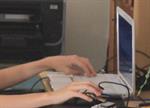 Social media has become increasingly popularised in recent years. Social media largely evolved as a means through which people were able to keep in touch with their friends. However, nowadays it is also extensively used by businesses as a way of maintaining contact with their existing customers and for targeting new customers.
The style of writing used in social media is quite different to other forms of creative writing. For example, the number of characters permitted is often restricted. It is often impossible for a writer to provide an entire story. As such, writing often includes links to the author's website, or other websites, where readers can access the full story.
However, in order to attract the reader in the first place, the short post on a social media site needs to be compelling. For example, a post might read "More animals added to endangered species list – ecologists claim 30% increase in the next decade and a 10% loss of species by 2050. This will hopefully attract the attention of your potential readers.
Magazines
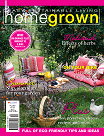 Magazines are another outlet for creative writing. There are magazines published on just about every subject imaginable - candle making, cake decoration, flower arranging, science fact, romance, cars, celebrity gossip, real life stories, and much more.
The way that a writer creates a magazine article will depend on the theme of magazine they are hoping to be published in. Some magazines are more sober than others and require great attention to factual detail in which case it would be difficult to write a creative non-fiction article. Others may call for opinions and conjecture along with factual accounts of events.
Before beginning to write for magazines, it is as well to review as many magazines as possible in the same area. Familiarise yourself with their submissions policies. Observe the type of stories they include, and start from there. If you understand the requirements of your preferred magazines you are more likely to meet them. Creative non-fiction is more likely to be found in topical magazines and magazines which are geared towards writers.
E-zines
E-zines are electronic magazines. They are found online on websites. They might also be emailed to subscribers of a website, or can be downloaded by those who are interested. Readers who subscribe to receive an e-zine may have to pay for it, or it may be free.
E-zines may also be used as a means of advertising products. For example, a bookshop may produce an e-zine which contains articles about their upcoming title releases, interviews with authors, and so on. Writers are involved in the development of e-zines. You are more likely to find creative non-fiction in e-zines associated with publishers, authors, journalists, people and institutions involved in other areas of the media, and other types of writers.
Blogs
The internet is strewn with blogs. Although they may also be used to advertise products, they are primarily a portal for individuals to voice their views about certain topics. Some blogs are merely the mundane ramblings of buffoons who think everyone wants to listen to what they have to say. Others are hosted by intellectuals and people who are genuinely interesting thinkers. They may use their blog to post essays depicting their views from a creative non-fiction standpoint. As with the personalities of the hosts, there is much variation in the quality of the writing.
Sometimes blogs are used as a way to showcase talent. Many authors will write blogs to promote themselves, their upcoming books, to demonstrate their new work, to discuss elements of previously published work, and so on. They may write to maintain a connection with their readership. Some authors permit questions to be posted on their blog sites which they will personally respond to. Advertisements on sites may represent a source of income for the host.
Newspapers
Many writers work for newspapers, whether full time or part time. Although many are journalists others might work in different fields and write a weekly column or occasional expert report.
Many newspapers have political affiliations which can impact upon how information is presented. Even those which are relatively unbiased politically have their own style of presentation. Tabloids tend to publish simplistic views and sensationalised stories. Broadsheets offer a more in-depth analysis. If you are asked to write for a newspaper or your work will be edited to comply with their standards. Creative non-fiction in newspapers may be something which is limited to weekend supplements.
Websites
Websites may employ writers to develop content for their websites. Many writers also have their own websites, which may or may not include a blog.
The best scope for creative non-fiction on websites is on sites which are dedicated to the discussion literature in its various formats.
Biographies
A biography is a detailed account of someone else's life. Usually an author chooses to write a biography of someone who they hold in high regard, since it can take an enormous amount of time and research, especially if the subject is deceased. If the author is not especially interested in the person it can become an onerous task.
Sometimes a writer is employed by the subject to write their biography. In other instances, an author may seek permission to write a biography about someone and it becomes an 'authorised biography' if permission is granted. In the latter two cases, the subject will usually co-operate and willingly provide useful information.
In case where a subject does not agree to have a biography written about them, the author must rely on other sources to obtain information which can make research more difficult. The reliability of sources and accuracy of information must be determined.
Misinformation might be construed as libel and lawsuits could follow. Accuracy of factual information is also one of the chief tenets of creative non-fiction.
Marketing
There are job opportunities within the marketing industry in terms of writing advertisements, blogs, e-zines, magazines, leaflets, and so forth to advertise products. Whilst these mainly involve the presentation of non-fictional writing there may be some limited scope for creative non-fiction.
Ghost Writing
Ghost writing is when a writer writes for another person. For example, someone may have a fascinating story to tell but they lack the literary skills to write it and so they employ an author to do this for them. So long as the story is based on fact, the author can use this to develop a creative non-fictional account.
Education
Writers may develop educational courses, textbooks, journal articles, teaching materials, and so forth. Usually a writer of educational material will be experienced and qualified in the area they are writing about, though sometimes writers may delve into related areas they are not so familiar with. Typically, educational writing will be cross referenced to ensure accuracy and edited by other experts in the field.
Student Testimonial
" Thanks for the tips you gave me on the journalist job... I was given the job of writing an article... the experience was great and at least I will be published for the first time"
- Gavin, studying journalism
WHAT NEXT?
Register to Study - Go to “It’s Easy to Enrol” box at the top of the page and you can enrol now.
or
Get Advice – Email us at info@acsedu.co.uk OR
Use our FREE COUNSELLING SERVICE to contact a tutor
CLICK TO CONTACT US