Earth Construction
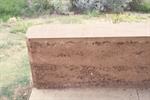 Mud brick building is also known by the alternative name `adobe'. There are other ways of building with mud apart from `adobe'. Of all the mud building techniques, `adobe' or `mud brick' is the most fool proof. For the novice, there is not a lot which can go wrong if you choose to build with `adobe'.
In 1983, our Principal built the school's first office from mud brick for a total cost of $300 and since then we've been helping others learn about building with mud.
Earth Building Techniques Can Vary From Place to Place
Earth building has been, and continues to be, a traditional form of construction in dry climates such as the Middle East, parts of Asia, and North Africa. If rainfall is low, mud buildings are not going to deteriorate so readily; and less effort may be required for repairs.
Earth buildings can, and are, nevertheless, still successful in wet climates, where the eroding affect of rain can be controlled by either:
- Putting a waterproof coating over the earthy wall,
- Impregnating the mud with a water resisting material during construction (e.g. cement or a plastic type material)
- Capping walls with an overhanging top (e.g. wide eves on a building, Concrete tiles or stone slabs on top of walls, etc.).
Building laws will also vary from place to place around the world. In some places, mud brick construction may even be illegal; or if not, heavily regulated. In other places, mud construction is no more restricted than any other form of construction.
What Type of Soil Do You Need for Mud Bricks?
The best soils for mud bricks would be 'clays', 'clay loams', 'silty clay loams', or 'silty clays'.
Sandy clay loam requires additional clay and/or organic matter to be added (e.g. straw) to make an effective brick mixture.
Basic mud bricks are made by mixing earth with water, placing the mixture into moulds and then drying the bricks in the open air. Straw or other fibres can be mixed or added to the bricks to prevent cracking.
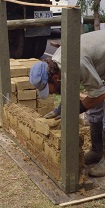
Before you build anything with mud bricks, you need to be able to make quality bricks. The strength and longevity of a mud brick will be influenced by what you make it with, how you make it, and the eroding effects of water (rain) and wind that impact on it.
Some types of earth can simply be mixed with water to a particular consistency, and then filled into a mould to create a brick. As the level of clay, sand and organic matter changes within the earth you use, the characteristics of a brick can change:
- It can become more likely to crack or crumble.
- It can loose structural strength (becoming less capable of supporting heavy weights).
- It can become more prone to erosion.
Mud bricks have been used for thousands of years all around the world and are still used today in most countries as an affordable and environmentally friendly alternative to current building products. Mud bricks provide thermal insulation in winter and summer. They are fire resistant, sound proof and can be entirely chemical free. Best of all, they can be made on site in any shape, colour or size.
The moulds can also be made for both single brick or can be made to make two or more at a time. Mud brick moulds can be made from wood or metal.
How to Create a Mud Brick
The process involved in making a mud brick is basically as follows:
- Obtain the right type of earth. Sandy soils are obviously not suitable. Most clay type soils are okay to use, but may need the addition of straw or some other material.
- Use a mould is purchased (or made) to form the bricks.
- The earth is mixed with water to a plastic consistency. This can be done mechanically or by hand.
- The mixed mud is placed in the mould, and then the mould is removed.
- Dry the brick, before using. This can be done in some type of drying chamber or under cover, though it is often sun dried in the open.
[27/04/2024 07:30:39]