Project Management
Project management as a skill and field of study is essential for successful organisational management. As a formal management function, project management is found in government, industry, and almost all other organisations.
Project Management may be called any of a number of other names such as:
- Program Management.
- Product Management.
- Construction Management.
Project management as a field of action can often be seen in self-help schemes or outreach programs. Whatever the objectives, project management involves a number of phases and skills which are essential to a project’s completion.
All projects go through a series of phases or stages. The following is a common sequence:
Phase One: Project Identification And Initiating Process
This phase involves identifying project ideas and needs. The individual or group responsible for a potential project will refine an idea or concept into a project. Such a person draws up a project proposal which identifies tasks to suit their objectives. If a project is considered to be feasible, in other words realistic or with attainable objectives, then the next phase (project planning) follows.
The steps in this phase include:
- Recognising that a project should be done.
- Identifying the (target) outcomes of the project.
- Identifying the expectations of customers, management and other interested parties (stakeholders).
- Selecting the members of the project team.
- Establishing the chain of command, and the communication processes.
It is important at the outset to set realistic goals, otherwise the project is likely to fail or become too cumbersome to manage from the outset. The acronym SMART provides the structure for this, with outcomes that should be:
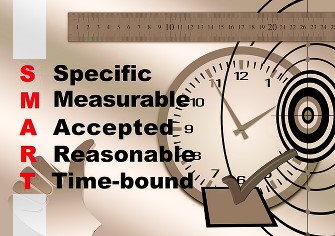
- Specific.
- Measurable.
- Accepted.
- Reasonable.
- Time-bound.
Phase Two: Project Planning
This phase involves preparing a plan or design of what the project entails, in particular planning the length or "lifespan" for the expected project, the project costs, and preparation of possible task alternatives in the event of unexpected changes. Consideration is given to the needs, alternatives and techniques that may have to be applied, and once completed, the implementation phase follows.
- Refining the scope of the project.
- Listing tasks and activities.
- Sequencing activities in the most cost efficient and time effective way.
- Getting the plan agreed to and approved by the relevant people.
Phase Three: Project Implementation, Execution And Controls
This phase involves operationalising the plans, or the actual development of the project. The project is implemented in a planned and controlled manner. This includes supervision and monitoring the actual progress of a project within the scope of the plan. If successful, the project then requires closing, and the results are compared with estimations determined earlier in the project cycle. Once this step is finalised, the final phase follows.
- Getting the necessary resources – money, people, equipment and time to do the project.
- Leading the team.
- Communicating effectively with team members.
- Communicating with stakeholders.
- Controlling the progress by monitoring.
- Corrective action and changes, if necessary - e.g. rescheduling.
- Monitoring all resource utilisation.
- Problem solving.
Phase Four: Project Completion And Evaluation
This phase involves determining whether the objectives set out, or the needs identified in the earlier part of the cycle, have been successfully concluded.
Evaluating a projects success is measured by contrasting the original goal or set of objectives, with the final outcome. This is the last and final phase of the project's cycle.
- Acknowledging achievements and results.
- Writing a final report.
- Reviewing the process with all team members.
- Concluding the project – budget analysis and report etc.
LEARN MORE with ACS
Do you want to learn more about working within a project team or managing projects?
- Learn about defining goals.
- Understand the processes involved with planning a project.
- Learn about developing strategies and frameworks.
- Learn about evaluating and reporting.
- Develop your skills in working and resolving issues with others.
We offer a range of Business and Management courses to suit your goals and professional development. If you are interested in Project Management you could study our Project Management course or undertake a Certificate In Applied Project Management. Our courses have been developed by highly experienced specialists and cater for differing levels of knowledge and experience - from foundation courses to Advanced Diplomas. A selection of courses of interest and links to our Business and Management course directory are shown lower down this page.
If you have any questions or want help in determining your study pathway, please get in touch with our specialist Business and Management tutors today; they will be happy to help you.
[27/04/2024 02:43:01]