Identifying Plants
Ecotourism and Plant Identification
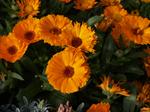 Many people care so much about the Natural World that they take their holidays in areas of outstanding biological diversity. Among these are oceanic islands, tropical woodlands, and the Mediterranean-type regions. Some people want to contribute more than their foreign money to the economy of these regions. These tourists want to help as volunteers on conservation projects, and they make a very valuable contribution. Among the work carried out by these volunteers is surveying the abundance and distribution of the species of plants and animals. In order to carry out this work you have to be able to tell one species from another.
Plants are given two different types of names:
Common Names
These are English language names usually given to plants by amateur gardeners as a descriptive, easy to remember tag. Many plants have more than one common name, and sometimes the same common name can be given to several quite different plants. This along with the fact that there is no real control over common names makes them inaccurate and unreliable for plant identification.
Scientific Names
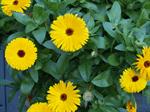 Based on Latin language, these names often seem more complex than common names at first glance, however they have a system to them which can make plant identification much easier. The system of scientific naming is strictly controlled and co‑ordinate by botanists throughout the world. Scientific names should always be used in preference to common names.
In the scientific system, plants are classified by dividing them into groups that have similar characteristics. These groups are then divided into smaller groups with similar characteristics. These are divided again and so the division of group to sub group and sub group to further sub groups goes on - until you finally have only one type of plant in each group.
Plant Divisions
The main levels of division are as follows:
- The entire plant kingdom is divided up into Phyla.
- Phyla are divided into Divisions.
- Division is divided into Classes.
- Classes are divided into Orders.
- Orders are divided into Families.
- Families are divided into Genera (singular: Genus).
- Genera are divided into Species.
- Species are sometimes divided into Subspecies and Varieties.
The main plant phyla we are concerned with in horticulture are:
- Anthophyta (i.e. angiosperms) this group includes all of the plants which produce flowers (e.g. eucalypts, roses, lettuce, grasses, orchids etc.). The majority of horticultural plants are angiosperms.
- Coniferophyta (i.e. conifers). This includes all plants which produce cones (i.e. pines, cypress etc.).
- Pterophyta (i.e. ferns). This includes ferns and fern allies.
Other phyla include such things as mosses, fungi, bacteria and algae.
Monocotyledons vs Dicotyledons
Anthophyta (the angiosperms or flowering plants) is divided into two classes:
- Dicotyledonae. These plants are known as dicotyledons. In dicotyledons, the first leaves to appear from a germinating seed are in a pair (two leaves appear at once). Dicotyledons generally have one major tap root, and the veins in the leaves are not parallel. Dicotyledons include marigolds, eucalypts, pumpkins, roses, etc.
- Monocotyledonae. These plants are known as monocotyledons. In these plants, the first leaf to appear when a seed germinates is a single leaf. Veins in the leaves are usually parallel to each other and the plants generally have a fibrous root system with no main tap root. Monocotyledons include grasses, orchids, palms, bamboos, lilies, etc.
Although there are many different levels of division, the main ones which we use are just a couple at the bottom end of the scale.
The plant names which you see in books or on plant labels in a nursery will usually consist of two words:
- The first word is the ‘genus’ name of the plant.
- The second word is the ‘species’ name of the plant.
The genus name begins with a capital letter. The species name is usually written beginning with a small letter. The cultivar or variety name starts with a capital letter and is inserted in speech marks.
Both the genus and species name should be italicized or underlined. For example:
Macrophylla excelsa
Macrophylla excelsa
Sometimes a third word (and perhaps a fourth) is added to follow the species. These words would refer to the variety of that particular species for example:
Heliconia psittacorum ‘Andromeda’
- Heliconia is the genus.
- Psittacorum is the species.
- ‘Andromeda’ is the cultivar.
Plant Families
It can be seen above that you can distinguish between dicotyledons and monocotyledons by a couple of very simple characteristics. (Be aware, however, that there are always exceptions to the rule). In the same way, we can usually distinguish which family a plant belongs to by a few basic characteristics. For example:
- Lamiaceae family - foliage is perfumed and flowers have two distinct lips.
- Araceae family - leaves are usually heart shaped (e.g. Philodendron) and plants are commonly tropical/indoor plants.
- Asteraceae - have daisy type flowers.
- Apiaceae - flowers occur in an umbrella like head on a single stalk.
Plant family names end in “aceae”. Some old plant family names had different endings. Students have sometimes called the family name a genus. Note that a genus name virtually never ends in the letters "aceae".
Hybrids, Varieties and Cultivars
You may occasionally be confused by the difference between hybrid and variety.
A hybrid plant is one which has resulted from two different species cross breeding. The hybrid is a combination of characteristics from two different species - something bred or selected out of nature or by man. They are usually represented with an x between the names for example:
Heliconia x spathocircinata
A variety or cultivar is just a particular type of plant in one species. A variety does not have parents from two different species, but a hybrid does. Cultivars are distinctly different plants that may have come about through breeding, by mutation or by selection from a species that is naturally occurring.
Learn All About Plants with an ACS Course!
ACS offer a varied selection of courses on plants - whether in the garden, or in the wild - for developing knowledge for your own personal interests or for your career development. Gain knowledge of plants and plant life to use in your work as a Tour Guide, working in a Zoo, working in or running a nursery and more.
Our courses have been extensively developed by specialists in Horticulture and are available for you to study by distance learning. You can start at any time, and many of our courses include practical exercises so that you can learn by applying techniques and knowledge providing added depth to what you have been studying.
Find our more - use the links lower down this page to look at our course directories, or get in touch with our specialist tutors today. They will be happy to answer your questions.
[26/04/2024 21:44:48]
More from ACS
Over 150 short courses, certificates and diplomas covering landscaping, crops, plants of all types and general gardening.