COURSE CONTENT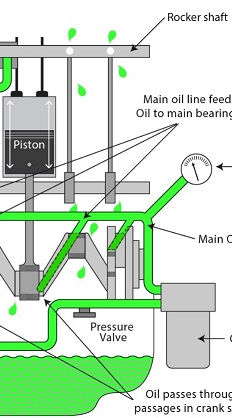
This course has 8 lessons as follows:
Lesson 1. Introduction to Engines and Motors
- Introduction
- Power Sources
- Engines
- Steam Engine
- Petrol
- Engine Operating Cycle
- Engine parts
- Four stroke Ignition Engine Cycle
- Two Stroke Ignition Engine Cycle
- Electric motors
- Parts of an electric motor
- AC and DC motors
- Induction and Synchronous motors
- Applied tasks - Changing a wheel, Mending a puncture
Lesson 2. Engine Characteristics
- Measurements and mechanical principles
- Force, Load, Pressure
- Atmospheric pressure, Absolute pressure
- Force of gravity, Centre of gravity, Specific gravity
- Density, Vacuum, Volumetric efficiency
- Work, Power, Energy
- Pistons - motion, bore, piston displacement
- Compression ratio
- Engine efficiency
- Features of electric motors
- Applied tasks - spark plugs
Lesson 3. Machines and their parts
- Parts of a machine
- Engine systems
- Lubrication system
- Cooling system
- Fuel system
- Transmission -gearbox, clutch, transmission, drive shaft, PTO
- Power source
- Ignition system - distributor, Coil pack
- Other machines
Lesson 4. Drive Mechanisms -Transmissions, Gears, Belts
- Introduction
- Cog drive machinery
- Belt drive machinery
- Transmission drive machinery
- The transmission system
- Clutch
- Gearbox
- Differential unit
- Applied tasks - replacing drive belts
Lesson 5. Managing Deterioration
- Splash feed lubrication system
- Pressure system
- Combination pressure and splash
- Oil contamination
- Cooling system - air cooling, water cooling
- Lubrication - oil viscosity
- Types of filter systems
- Materials deterioration
- Properties of materials - metals, non ferrous alloys
- Seals
- Applied tasks: servicing filters
Lesson 6. Optimising Function and Longevity
- Adjustments
- Controlling power
- Carburetors - float system, number of barrels, injectors
- Lubrication
- Exhaust systems
- Catalytic converter
- Muffler
- Extractor
- Turbocharger
- Intercooling, waste gate, blow off valves, twin vs single turbo, boost controller
- Superchargers
- Applied tasks - servicing a carburetor
Lesson 7. Brake Systems
- Introduction
- Drum versus disc brake
- Drum brakes and shoe pad
- Disc brakes
- Pneumatic, Hydraulic and Electric Brakes
- ABS - Anti lock brake system
- Regenerative braking
- Applied tasks - servicing brakes
- Jacking up a vehicle
- Changing disc brakes
- Changing drum brakes
- Motor cycle and push bike brakes
Lesson 8. The Mechanics Workshop – equipment, tools, safety etc
- Introduction
- Tool maintenance
- Work bench
- Vices and clamps
- Lifts, ramps, jacks, ladders
- Tightening pullers
- Pulleys
- Winches
- Generators, battery chargers
- Cleaning equipment
- Grinders, sharpening equipment
- Work pits, hoists
- Measuring equipment
- Hand tools
- Spanners and Allen keys
- Pliers and grips
- Screwdrivers
- Files
- Cutting equipment
- Hammers, chisels, punches
- Tap and die cutters
- Lubrication equipment
- Power tools - Drills, saws
- Soldering and welding
Lesson 9. Maintenance and Repair
- Introduction to maintenance
- Servicing a typical motor car
- Changing spark plugs
- Inspect coolant levels
- Inspect tyre pressure
- Change fuel filter
- Brakes and brake fluid
- Wheel alignment
- Power steering fluid
- Electrics
- Servicing Garden Equipment
- Oil & Dirty Spark Plugs
- Mowers
- Chainsaws
- Outdoor Electric Machines
- Treating Rust
- Painting Metal
Each lesson includes set tasks, and is completed with an assignment which the student submits to their course tutor.
Your tutor will mark the assignment and return this to the student with comments and suggestions for further learning.
COURSE AIMS
- Explain how different types of engines and motors work.
- Describe the features that differentiate the quality and work capacity of engines.
- Describe the scope and nature of components of a machine.
- Explain different ways of converting the movement of energy to perform useful work tasks.
- Describe how machinery can deteriorate over time, and responses to both prevent and repair deterioration.
- Explain how engines and motors have their power output regulated.
- Explain the mechanisms used to slow or stop any form of motion by applying force.
- Describe machinery workshop tools and equipment, and explain their safe and appropriate use in maintaining and repairing machinery.
FREQUENTLY ASKED QUESTIONS
What does the Course Cover?
First learn the different parts of a machine through not only online work but also field work where you engage with different machines and people, expanding and deepening your learning through observation and dialogue. You then learn about tools and techniques used in a mechanics workshop to maintain and repair machinery.
How much Support Do I Get?
Our policy is to provide all the support needed to meet the lesson aims (stated above). We have a team of academics with workshop experience, who have studied mechanics at a tertiary level. They stand ready to support you if and whenever you become stalled - and it is our well established policy to put our students first. Commonly we respond on the same day if not immediately; and if not, within one working day. We take pride in the fact that past students frequently tell us that the level of support is exceptional.
What Level of Study is this?
It is an entry level course, but one that takes you further than many of the other starter courses. It has proven useful to train anyone working in mechanics who lacks formal training, as a gap filler. Some students have also undertaken this course as a career starter, refresher or just out of their own interest in mechanics. Every student is treated as an individual; and because the course is self paced, the more challenged student can take their time and be supported through any difficult topics. On the other hand, other students can move through faster if they choose to.
How Practical is the Course? Do I Need a Workshop?
You definitely don't need a workshop; but if you want one we can advise on setting up or improving what you have
Sure, a workshop might be needed if you are studying mechanics full time for a number of years, in a n engineering degree or apprenticeship; but this course would be more like one month of full time study and there is a lot that can be learned from an online course punctuated with excursions away from the computer to look at machines you have access to, nearby businesses, events and people who have knowledge of mechanics. The course will guide you where to go and what to do in order to learn more in the field, keeping you to a well constructed learning pathway that gives you a foundation that you can build on after your studies finish.
Buying or making a machine, maintaining and repairing machinery requires a well organised and equipped workshop.
This course helps you to not only understand machines, but also the tools used to work with machines, and what tool is appropriate for what job.
Every job you undertake may be achievable with a variety of different tools, but to do the job properly and achieve the best result with the least effort, you should use the best tool for the job and not just an “acceptable compromise”.
To choose the best tool for any job you need to understand all of your equipment options, the techniques for using that equipment, and what is needed to keep that equipment in good condition.
Learn About Machines - Increase Your Awareness of how they Work.
- Learn to choose, use, maintain and repair the right machinery for the job.
- The course covers cars to household equipment.
- Gain an understanding of working with all machines.
- Increase your knowledge as you study - each lesson builds upon what you learnt in the previous ones, gradually expanding your awareness and understanding of how and where engines can be used to power machines, and how different types of machines function.
Start the Mechanics course at any time.
Any questions?
Our tutors are more than happy to help and advise you with any questions regarding the course. Please contact us if you have any questions at all.
If you want to know more about machines, how they work and how to maintain and repair them, then this is a great course for you.
Study when and where you want to. Why delay? Enrol today!
Contact Us
Use our FREE COURSE COUNSELLING SERVICE to connect with our expert tutors.
By Email:info@acsedu.co.uk
By Phone: (UK) 01384 442752