COURSE CONTENT
 Start Date: Start at any time - study at a pace that suits you, and with full tutor support for the duration of your studies.
Lessons: The course comprises 7 lessons as detailed, below.
1. Calving and Culling
Introduction
Research into raising dairy calves
Principles of good calf rearing
Pre-calving management
Managing the cow for a healthy calf
Colostrum management
Calf selection
Estimated Breeding Value (EBV)
Culling
Assessing calves for suitability in a rearing system
2. Calving Management
The birth of a calf
Signs that the birth is close
Stages in a normal birth
Calving problems
Important points
Abnormal presentations
The calf at birth
Colostrum
Stress and pathogen exposure
Managing stress
Managing pathogen exposure
The calf digestive tract
Rumen development
Bacteria
Liquid in the rumen
Outflows of rumen materials
Absorptive qualities
Substrate (Dry feed Intake)
3. Calf Health Management
Overview
Common calf diseases
Scours
Coccidiosis
Round Worm Scours
Lung worm
Calf diphtheria
Pneumonia
Clostridial Disease
salmonella
Navel and joint ill
Stress and the young calf
Transport stress
Feeding stress
Heat and cold
4. Calf-Rearing Systems
Birth to weaning
Natural Systems of Calf Rearing
Single suckling
Multiple suckling
Foster suckling
Race suckling
Early weaning
Artificial systems of calf rearing
Teaching the calf to drink
A basic Feeding program
Milk Substitute
Common calf rearing systems
Rearing calves at grass
Five and a half day system
Once a day system
Cold milk system
Acidified milk replacers
Mildly acidic milk replacers
Strongly acidic milk replacers
Milk-fed veal production
5. Calf Housing
Ventilation
Isolation
Comfort
Economy
Calf Pens
Metal crates
The calf hutch
6. Weaning
Stress at weaning
General weaning transition strategies
Providing water
Weaning at twelve and eight weeks
Weaning at five weeks
Weaning at four weeks
7. Post-weaning
Post weaning period
Calf husbandry practices
Reducing surgical stress
Cattle identification
Castration
Bloodless castration
Surgical Castration
Dehorning
When to dehorn
Dehorning instruments and equipment
Tetanus
Vaccination and Worming
COURSE AIMS
- Know how to select calves for specified purposes, including dairy stock, and breeding stock.
- Explain the methods of managing calving operations on a farm.
- Explain the diagnosis of common health problems which may occur in calves.
- Explain different techniques of calf rearing.
- Explain the housing requirements of calves in an animal production situation.
- Explain the procedures for weaning calves in a commercial situation.
- Explain the post-weaning requirements of calves, in a commercial situation.
WHAT THE COURSE COVERS
Here are just some of the things you will be doing:
- Explain the phenotype factors related to the selection of calves.
- Explain the genotype factors related to the selection of calves.
- Write a checklist of criteria for selecting calves for dairying.
- Explain how breeding can assist in obtaining calves for three different specified purposes.
- Describe the different stages in the normal birth of a calf.
- Explain the process of calving, in response to either observations of a calf being born, or the viewing of a video of a calf being born.
- Explain at least five problems that can occur during calving, on a typical property in the learner's locality.
- Analyse two case studies of problematic calving incidents.
- List at least four methods for over-coming specified calving problems.
- List the common health problems which can occur with calves in the learner's locality.
- Describe the symptoms of at least three common calf diseases, including scouring.
- Explain the possible effects of stress on a calf.
- Explain an appropriate treatment for at least three common calf diseases, including scouring.
- Develop guidelines for stock culling, for a specified property.
- Analyse data in a case study in order to diagnose the health problems of a calf.
- Report on an examination of the condition of a calf inspected by the learner.
- Describe calf husbandry techniques observed by the learner, including - Earmarking; Castration; Dehorning; Branding; Tattooing; Drenching.
- Compare natural calf rearing techniques with artificial calf rearing techniques.
- Determine the appropriate method of calf rearing for a specified property.
- List the criteria which need to be satisfied in the design of calf housing facilities, in the learner's locality.
- Compare the suitability of different building materials for calf housing facilities, in different climates.
- Analyse calf housing facilities on a specified property in order to determine the appropriateness of their design.
- Prepare a design for a calf housing facility, including - A sketch/concept plan; A description of materials; An estimate of cost.
- Explain the stages of weaning a calf on a property with which the learner is familiar.
- List the possible problems which may arise in weaning calves.
- Recommend suitable treatments for the weaning problems.
- Explain the stages of post weaning for a normal calf on a property with which the learner is familiar.
- List the problems which may arise with calves during the post-weaning period.
- Explain any variations that may be applied to the procedure of post-weaning a calf.
Some Breeds are Easier to Raise
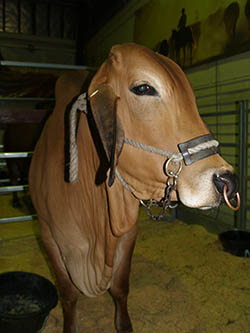 Different breeds have different characteristics, and depending upon what we want the cattle for, we may find greater benefit in one breed than another. Breeds differ in terms of many things, including; the ease with which they give birth, the quality of milk they produce for their calves, and the strength of their mothering instinct.
Today cow breeds can be broken up into four purpose types: Beef (meat), Dairy, Draft, and Multi-Purpose (Beef-Draft, Dairy-Draft, Beef-Dairy and Beef-Dairy-Draft). Many of the older breeds were breed as dual-purpose or multi-purpose cattle. Today we see most of the newer breeds specialise in one purpose, however they are more efficient at this specific purpose, i.e. beef cow breeds still produce milk but are nowhere near as efficient as the dairy cow breeds. They have a greater tolerance to ticks and parasites. Some breeds tolerate certain conditions better than others, while other breeds are more desirable because of the characteristics that are found in the milk or meat.
Characteristics We Might Value in a Cattle Breed
- Hardiness to climate – heat, humidity, cold, wet.
- Resistance to health problems – e.g. foot problems, eye problems, cancers, ticks.
- Size and growth rate.
- Colour – skin, hoof and eye colour can have a relationship with health issues. Colour of coat may affect heat or cold tolerance.
- Longevity.
- Fertility and Calving – When it starts, how many years it lasts, how easy calves are produced, how much work is involved raising calves, etc.
- Gestation and birth weight.
- Milk production – quantity or quality, ratio of fat to protein, type of protein, etc.
- Meat Production – quality and quantity, rate of growth, tenderness, marbling, etc.
- Temperament – docile cattle may be better for dairying or draught animals.
- Horns or no horns (i.e. Polled) – horns can make cattle more difficult to manage.
- Lack of genetic defects.
The Birth is only the One Part of the Job
Production of calves involves caring for the mother during pregnancy; managing the birth, and ensuring the calf develops properly over a period after it is born.
Typically, a calf will begin to breathe and struggle to its feet immediately it is free of the cow. It should also attempt to suckle very soon after birth. This is an important process upon which much of the subsequent health and growth potential of the calf depends.
If the calf is slow to start breathing, the following methods may help:
- Clear any membranes or mucus from the nose and mouth.
- Hold the calf by the hind legs and swing it around a few times.
- Insert a fairly rigid piece of straw well up into the nostril and moving it up and down may stimulate breathing.
- Place the calf on its brisket with its front legs pointing forward and apply intermittent pressure to the lower part of the chest.
- Throw a bucket of cold water over the head and chest of the calf.
- If all else fails (and you are really keen) blow into the calf’s mouth in ‘mouth-to-mouth’ fashion.
The first milk from the cow is called colostrum and, among other things, it contains immunoglobulins that can provide protection against disease for the calf until its own immune system can develop.
Both the level of immunoglobulins and the calf’s ability to absorb them quickly diminish after birth. For this reason, it is important that the calf receives at least one good colostrum feed (2 to 4 litres) within the first six hours of life.
Two elements of calving management that make a big difference to new born calf health are:
- Stress.
- Pathogen exposure.
Managing Stress
There are a number of good management factors that occur prior to calving that can reduce the chances of a difficult calving. In addition to this, management practices at calving can make a difference to how much assistance is needed by the cow. In difficult cases, timely diagnosis and intervention can affect the amount of assistance needed and the subsequent amount of stress on the calf.
Managing Pathogen Exposure
A clean calving environment is always better than contaminated or dirty environment. Make sure that the cow, the bedding, and the air are as clean as possible. If assistance is needed ensure that aseptic practices are followed as closely as the environment will allow.
HOW THE COURSE WORKS
You can start the course at any time.
It is studied by distance learning, so you can study in the comfort of your own home. But this doesn't mean you are all alone in your studies. Our highly qualified and friendly tutors are there to help you every step of the way. If you have any questions at all, they are always happy to help.
Each lesson includes set tasks, and is completed with an assignment which the student submits to their course tutor. The tutor will mark the assignment and return this to the student with comments and suggestions for further reading.
WHY STUDY CALF REARING WITH US?
-
Our courses are recommended by other students. Just one example - R. Beitlich said "I would recommend this course to anyone who wants to raise calves."
-
Our courses are written and taught by specialists with real world experience of calf rearing.
-
You can start at any time to suit you and work at your own pace. This means you can fit this course in around your existing committments.
-
Your tutor is there to help you throughout the course. There is an assignment at the end of each lesson to submit to your tutor for marking and feedback. But you can also contact your tutor throughout the course with any questions and issues for their specialist help and advice.
-
You can study online or by e-learning.
WHO IS THIS COURSE SUITABLE FOR?
The course is suitable for:
- Farm workers
- Farmers
- Vets and veterinarian staff
- Rescue workers
- Smallholders
- Anyone who wants to develop and improve their knowledge of calf rearing.
Enrol to develop your calf rearing skills.
Any Questions?
Please do ask. Our calf rearing and animal studies tutors are happy to answer any questions about our courses.
Or