Course Structure
There are 8 lessons as follows.
1. Introduction, Terminology and Breeds
- History of Poultry
- Terminology
- Contract Growing
- Regulations
- Management Factors
- Small Scale Production
- Breeds
- Classifying Fowls (Egg Laying Breeds, Meat or Table Birds, Dual Purpose Breeds)
- Cross Breed Poultry
- Sex Linkage
- Brooders
- Skeletal System
- Poultry Husbandry (Stock Selection, Feeding, Watering, Housing, Health)
- Turkeys
- Geese
- Ducks
2. Poultry Nutrition
- Digestive System (Gullet, Crop, Proventriculus, Gizzard, Intestine, Caecum, etc.)
- Nutrient Sources (Carbohydrate, Protein, Minerals, etc.)
- Rationing
- Palatability
- The End Product
- Modern Feed Requirements
- Phase Feeding
- Limited Feeding
- Consumption Feeding
3. Diseases
- Avoiding Stress
- Viral Diseases
- Bacterial Diseases
- Mycoplasmosis, Fungal and Protozoan Disease
- Non-infectious Diseases
4. Layers
- Extensive (Free-Range) System
- Semi-Intensive System
- Intensive Systems
- Housing
- Deep Litter System
- Feeders
- Battery Units
- Feeding the Laying Hen
- Replacing the Flock
5. Broilers
- Caponising
- Brooding Period
- Feeding Broilers (Starter Period, Finisher Period)
- Housing
- Hygiene and Health
6. Incubation
- The Natural Method (Using Broody Hens)
- The Artificial Method (Using Incubators)
- Selecting Eggs
- Storing Hatching Eggs
- Turning Eggs
- Managing an Incubator (Temperature, Humidity, Testing, Hatching)
- Reasons for Poor Hatchability
7. Brooding
- Heating
- The Canopy Brooder
- The Infra-red Lamp
- The Battery Brooder
- The Haybox Brooder
- Feeders
- Drinkers
- Floor Space
- Rearing
- Problems during Rearing
8. Record Keeping, Economics and Marketing
- Growth Records
- Egg Production Records
- Small Scale Business
- Compatible Ventures (Manure, etc.)
- Preparing a Farm Business Plan
- Finance
- Land Management
- Analyzing the Market Place
- Developing a Marketing Plan
Course Aims
 Select appropriate poultry breeds for use in different production situations.
- Explain the techniques used in the management of condition, including both feeding, and pest and disease control, of poultry.
- Explain the management of poultry as layers.
- Explain the procedures for the management of poultry as broilers.
- Explain the techniques used in the management of poultry incubation.
- Explain the management of brooding poultry.
- Develop management strategies for a poultry business.
Course Duration
100 hours - Work at your own pace. Some students spread this over a year or more, while others complete it within a couple of months.
What The Course Covers
Here are just some of the things you will be doing:
 Distinguish between cross bred and pure bred poultry, being grown in your locality.
- Categorise different breeds of poultry, including ducks, geese, chickens and turkeys; into groups, including: Egg laying birds, Meat/Table birds, Dual purpose breeds.
- Explain the advantages of cross breeding poultry for two different specified purposes.
- Label the parts of a chicken on a supplied unlabelled illustration.
- Evaluate ten different poultry breeds to determine the most suitable breeds for three different specified purposes.
- Label on an unlabelled illustration, the parts of the digestive tract of a fowl.
- Describe the function of different parts of the digestive system of poultry.
- List the dietary sources of different nutrients for poultry.
- Describe the function of five different ingredients in specified poultry feeds.
- Explain how rations of feed are determined for poultry.
- Describe the feeding of poultry stock in a specified situation.
- Describe possible dietary disorders in poultry.
- Describe commercially significant pests and diseases in poultry.
- Develop a checklist to be used for regular inspections to detect signs of ill health in poultry.
- Explain the treatment of six different pests and diseases in poultry.
- Describe a poultry vaccination program for a specified property.
- Explain the techniques for, and the value of, quarantine procedures for poultry.
- Compare extensive (free range), semi-intensive and intensive production systems, in terms of management, production cost, product quality product quantity.
- Describe different housing requirements for poultry.
- Explain a commercially viable method of collecting eggs, used on a specific poultry farm.
- Explain three procedures used in an egg production system which are critical to the efficient operation of a specified farm.
- Develop a production plan for laying poultry, which includes details of birds required, facilities required, materials needed, a schedule of husbandry tasks, cost estimates.
- Describe the brooding period for a typical fowl, on a specified property.
- Explain how brooders are successfully fed, on a specific property visited by you.
- Explain appropriate housing for broilers being provided at a poultry farm, as observed by you.
- Explain how hygiene and health are managed in a broiler production system, as observed by you.
- Evaluate the successful management of broilers in a specified situation.
- Describe daily routine tasks carried out in farming of broilers at a poultry farm visited by you.
- Describe the process of incubation, as observed by you on a poultry farm.
- Compare natural with artificial incubation methods, to determine appropriate applications for each type.
- List criteria for selecting eggs for incubation in a specified situation.
- List five different reasons for poor hatchability.
- Compare two different incubator designs with respect to cost and application.
- Describe the management of a specific incubator which the learner has inspected.
- Describe the characteristics which distinguish brooding poultry from other poultry.
- Explain how to create an appropriate brooding environment for a specific situation.
- Compare different types of brooders.
- Describe the operation of different brooding equipment.
- Prepare a timetable of husbandry tasks from hatching to maturity for a brooding fowl.
- Explain problems that may occur during rearing, including crowding and cannibalism.
- Develop a checklist for monitoring the condition of a brooding fowl.
- List records which should be kept by a poultry farmer.
- Analyse purchasing procedures for routine supplies, used by a specified poultry farm.
- Explain the value of different records kept by a poultry farmer, including growth records and egg production records.
- List the minimum machinery required for a specified poultry enterprise.
- Calculate the cost of production, showing a breakdown of the costs, of one marketable produce item in a small poultry business.
- List factors which may be critical to successful marketing for a poultry farm.
- Explain any legal requirements which apply to a specified poultry enterprise.
- List poultry products being marketed in your locality.
- Write a job specification for one member of staff on a poultry property.
- Prepare a report on innovations in the poultry industry being used in your locality.
- Develop a detailed poultry production plan.
- Describe a successful marketing strategy employed by one supplier of poultry products in your locality.
- Recommend an innovative approach to marketing for a poultry enterprise which you are familiar with.
- Match credit to business needs of a poultry farm to develop the most suitable strategy for the enterprise.
Learn about all types of poultry
This course focuses heavily on chickens, but will also teach you about other types of poultry as well.
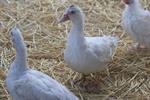
There may be more to poultry than what you have thought: consider ducks for instance. Ducks have a life span of around 10-15 years. A male duck is called a drake, a female is a duck and their babies are called ducklings. They require a little more open space than chickens however they are less maintenance overall.
Generally ducks have a friendly, intelligent, and sometimes clumsy temperament. Ducks vary in purpose; some are bred for eggs, some meat and others ornamental. There are around 40 different of breeds to choose from, and to suit a variety of backyards and families. Breeds vary in size, colours, temperaments and production quality. All duck breeds display their familiar ‘honk’ noise –however some ducks are quieter than others.
Ducks a social birds, it is for this reason that it is recommended you own at least two birds. They get along well with chickens and other domestic poultry so you may be able to keep them with other poultry you own.
Ducks unlike chickens can fly a fair distance, so you may wish to consider getting a flightless breed, or getting the birds wings clipped. As a general rule the larger duck breeds are unlikely to fly as they are too heavy for long distance travel.
In most domestic duck breeds, males (drakes) usually have a curled tail feather (called the drake feather) while females (ducks) have straight tail feathers.
Ducks usually reach laying age at around 6 months old. One duck egg is approximately equal to one and a half chicken eggs, though the size of the egg will vary with different duck breeds and different sized birds.
Who should do this course?
Over the years this course has benefited everyone from amateur poultry breeders, to people who work in or are starting up a commercial poultry farm.
The way it is delivered to you offers great flexibility; you determine where to focus your attention, according to where your interests and needs lie, at least to some degree. Through our unique student support services, and course notes, you can access resources that are not readily available elsewhere.
Our tutors and course developers include experts in animal husbandry with university qualifications as well as years of hands-on experience.
Whether a small flock for home use or a start up commercial farm, you don't need a large acreage and you can start seeing results (e.g. egg production) much faster than you might see with other types of animal production. This course covers all aspects of poultry care and management including: Terminology, Breeds, Nutrition, Diseases In Poultry, Layers, Broilers, Incubation, Brooding, Record Keeping, Economics & Marketing.
A solid foundation course for:
- Farm Workers.
- Hobby Farmers.
- Enthusiastic Amateurs.
Why Study This Course?
This course -
- Is self-paced. You can start at any time to suit you and work at your own pace. We do not set deadlines or time limits. You study when you can to fit around your home and work life.
- Was written and is taught by poultry experts. They are there to mark your work and answer any questions you may have during the course.
- Is useful for job and career prospects. If you would develop or improve your knowledge of poultry husbandry, then this is the course for you.
- Is useful for people who want to own poultry in their home, smallholding or similar.
A great course for anyone interesting in keeping poultry for personal or business use.
Any Questions?
Our Poultry tutors are more than happy to help with any questions you may have.
Or